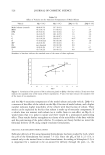
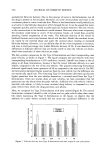
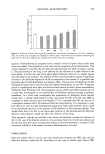
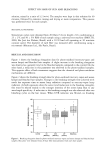
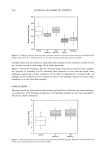
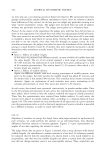
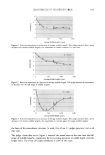
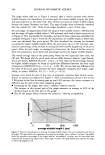
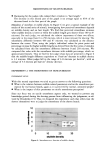
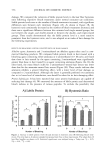
558 JOURNAL OF COSMETIC SCIENCE Therefore, our results shown in Figure 4 accurately reflect the soluble protein amounts released from hair, but not supplemented peptides. Supplementation with either wheat or soy peptides decreased the labile protein level as compared to the control bleaching agent (Figure 4), though the effect of wheat was not significant, whereas soy peptide significantly decreased the index. This result indicates that wheat peptide prevents bleach-inductive hair damage without decreasing the bleaching effect. Thus, it is likely that the damage-preventive effect of supplemental peptides is largely dependent on the protein source. CONCLUSION The labile protein level is shown to be a useful index of hair damage and capable of quantitative evaluation of consumer bleaching lotions under normal use conditions. Further, the hair damage index utilized in the present study is useful for the screening of cosmetic materials designed to prevent hair damage, as well as for evaluation of hair-bleaching products. REFERENCES (1) M. L. Tare, Y. K. Kamath, S. B. Ruetsch, and H.-D. Weigmann, Quantification and prevention of hair damage, J. Soc. Cosmet. Chem., 44, 347-371 (1993). (2) T. Horiuchi, The nature of damaged hair, J. Soc Cosmet. Chem. J/re., 11, 15-28 (1977). (3) T. Inoue, K. Kizawa, and M. Ito, Characterization of soluble protein extracts from keratinized tissues: Identification of ubiquitin universally distributed in hair, nail, and stratum corneum, BioJd. Biotechr•o/. Biochem., 65, 895-900 (2001). (4) T. Inoue, M. Ito, and K. Kizawa, Lablie proteins accumulated in damaged hair upon permanent waving and bleaching treatments, J. Cosmet. Sc]., 53, 337-344 (2002). (5) D. E. Deem and M. M. Rieger, Mechanical hysteresis of chemically modified hair,J. Soc CoJmet. Chem., 19, 395-410 (1968). (6) R. Kon, A. Nakamura, and K. Takeuti, Artificially damaged hairs: Preparation and application for the study of preventive ingredients, I,t. J. Cosmet. Sd., 20, 369-380 (1998).

Cosmet. Sci., 55, 559-562 (November/December 2004) Abstracts Journal of the Society of Cosmetic Chemists Japan Vol. 38, No. 1, 2004* The Gelation Mechanism and Application to Commodities of Non - Water Gel Comprising PEG Toshiyuki Kashiwai, Takashi Sugiyama, Ikuko Toki, Shinichi Nagashima, Hajime Goto, Norio Iida, Yoshifumi Yamagata Material Science Research Center, Pharmaceutical Research Laboratories, Lion Corporation We developed a non - water gel product comprising HPC and PEC• reacting hydrafion with water. We investigated the gelation mechanism of HPCJPEG gel by means of a stress - controlled rheometer and an X - ray diffractometer. According to the results, the mechanism has two factors:entanglement of the HPC polymer chain and cross - linkage of the microcrystal domain of the HPC main chain. The HPCJPEG gel is useful as the basic material of the cosmetic plaster that causes skin surface temperature to rise and the blood stream to accelerate. A Novel Polymer Anti - Irritant Barrier Film for Cosmetics Ayako Kuroda, Hirokazu Iyanagi, Products R&D Laboratories, POLA Chemical Industries, Inc. Currently, we encounter many chemical substances that can affect the skin through contact in our daily life. To keep these irritants away from us, it is very effective to create a derreal barrier film that can prevent penetration of irritants into the skin. For the purpose, we evaluated the permeation characteristics of currently available film - forming polymers, but almost all were found ineffective as barriers. Our investigation led us to fiuoroalkylacrylate - polyglycolmethacrylate - alkylmethacrylate - copolymer (F - copolymer) , a new acrylic copolymer. This polymer is soluble in water and can easily be incorporated into various cosmetic products. It consists of hydrophilic and lipophilic groups with fluorine units, and forms a durable, continuous film that is resistant to both water and oil upon drying. Testing on human subjects has demonstrated F- copolymer's effectiveness in countering irritation caused by water - soluble materials, including methyl paraben, lactic acid, and oil- soluble materials, like butyl paraben and methyl saricylate. "Silicone Resin Polypeptide," and Its Application Yuka Ueda, Akihiro Segawa, Masato Yoshioka Seiwa Kasei Co., Ltd. Many studies on the preparation and application of microcapsules have been reported in the literature. We developed an innovative encapsulation technology by using silicone - resin - polypeptide as the encapsulating material. The resultant microcapsule was easily prepared from silicone- resin- polypeptide. For this microcapsule not only was the extent of encapsulation as high as 90%, but the particle size could be controlled to obtain very small sizes (average particle diameter was 2.2 •t m) as well. Moreover, these microcapsules were resistant to relatively high shear forces and were stable over a long time period. * These abstracts appear as they were originally published. They have not been edited by the Journal of Cosmetic Science. 559
Purchased for the exclusive use of nofirst nolast (unknown)
From: SCC Media Library & Resource Center (library.scconline.org)