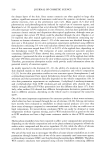
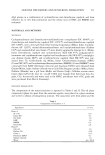
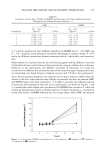
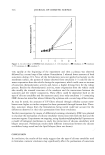
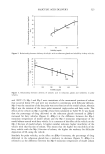
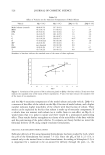
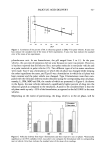
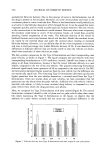
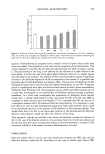
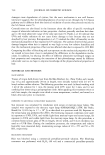
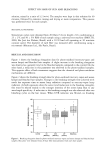
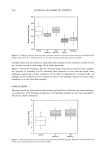
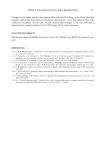
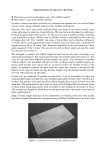
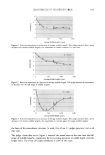
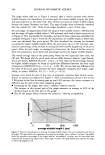
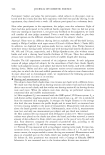
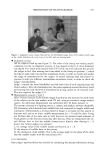
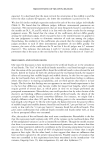
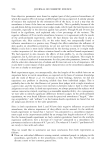
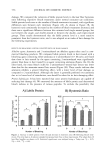
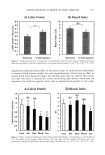
556 JOURNAL OF COSMETIC SCIENCE damage. We compared the variations of labile protein levels to the hair fiber hysteresis ratio following repetitive bleach treatments under normal consumer use conditions. Lablie protein levels rose as the number of bleach treatments increased, with significant differences seen between each treatment (Figure 2A). As shown in Figure 2B, the hysteresis ratio consistently decreased as the number of bleach treatments increased, and there was a significant difference between the untreated and single-treated groups, but not between the single- and double-treated or between the double- and triple-treated groups. These results demonstrated that the labile protein level is a more sensitive parameter than the hysteresis ratio, and it was adopted as an index of hair damage for the following experiments. EFFECTS OF BLEACHING LOTION CONSTITUENTS ON HAIR DAMAGE Alkaline agents. Ammonia and 2-aminoethanol are alkaline agents often used in com- mercial bleaching products. We compared labile protein levels in hair treated with a bleaching agent containing either ammonia or 2-aminoethanol (0.7 M each), and found that those in hair treated by the agent containing 2-aminoethanol were significantly greater than those in hair treated by an agent containing ammonia (Figure 3A). On the other hand, the mean bleach index for 2-aminoethanol-treated hair tresses was lower than that for the ammonia-treated hair tresses (Figure 3B). These results indicate that ammonia exhibits a greater bleaching effect, with a lower level of hair damage, as compared to 2-aminoethanol. Although the latter is generally preferred over ammonia due to its lower level of stimulation, care should be taken for its hair-damaging effect. Protein hydrolysates. It has been reported that some protein hydrolysates are capable of reducing hair damage (6). We measured the amounts of labile protein and determined bleach indexes in the presence of various peptides. To exclude the possibility that A) Labile Protein B) Hysteresis Ratio 1.4 0.22 •E 0.8 • 0.6 .) 0.4 -• 0.2 0.21 o • 0.2 ._• • o.19 •. o.18 0.17 0 0.16 * I' I 1•1 NS I I NS 0 1 2 3 0 1 2 3 Number of Bleaching Number of Bleachings Figure 2. Increase in labile protein levels (A) and decrease in hysteresis ratio (B) following bleach treat- ments. The error bars in A indicate standard deviations from three or four experiments. The values from 20 hair fiber bundles are shown in B. Statistical significance was analyzed using a Tukey test. *p 0.05, **p 0.01, V4Sp 0.05.

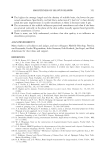
LABILE PROTEIN AS INDEX OF HAIR DAMAGE 557 0.9 • 0.6 '-' 0.5 ½ 0.4 o • 0.3 ß • 0.2 o.] A) Labile Protein I I 10 9 8 7 6 5 4 3 2 1 0 B) Bleach Index NS I I Ammonia 2-Aminoetanol Ammonia 2-Aminoetanol Figure 3. Comparison between ammonia and 2-aminoethanol. The error bars indicate standard deviations from four experiments. Statistical significance was analyzed using Student's t-test. **p 0.01, NSp 0.05. supplemented peptides had an effect on the protein assay, we added protein hydrolysates to extracted labile protein samples, but such supplementation did not have an effect on protein levels when measured using a dye-binding assay (data not shown). We consid- ered that this result is characteristic of the dye-binding assay system, which does not respond to the small-size peptide chains used as supplemented peptides in this study. A) Labile Protein B) Bleach Index 1.6 1.4 'a 1.2 "• 1 E ._c 0.8 •. 0.6 -• 0.4 0.2 7 6 4 3 2 1 o Cent Silk Wool Wheat Soy Cent Silk Wool Wheat Soy Figure 4. Effect of protein hydrolysate. Each of the protein hydrolysates, corresponding to a dry weight of 2%, was added to the standard bleach lotion. The error bars indicate standard deviations from four experiments. Statistical significance was analyzed using a Dunnett test. *p 0.05, **p 0.01, NSp 0.05.
Purchased for the exclusive use of nofirst nolast (unknown)
From: SCC Media Library & Resource Center (library.scconline.org)