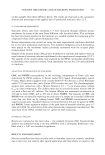
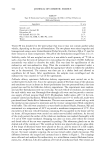
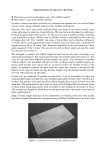
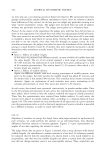
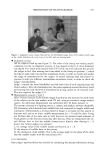
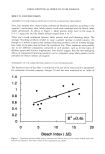
SMOOTHNESS OF SHAVEN BEARDS 541 © How does perceived smoothness vary with stubble length? © How does it vary with stubble density? In order to answer the above questions, we designed two separate series of artificial beard stimuli, each varying different aspects of the stubble distribution. &laterials. The "skin" part of the artificial beards was made of two layers of jelly, more or less reflecting the structure of real-life skin. We tried to have the elasticity coefficients of the jelly approximate those of skin. To this end, we used a double gel layer, resulting in an E-modulus of about 100 N/m (up to 100 Hz), which is reasonably in line with that of human skin (18). The "stubble" was made of nylon fiber, with a bending stiffness of 3.4 GPa, which nicely approximates that of human hair (19). Each patch consisted of a regular array of 10 by 10 nylon "hair" filaments embedded in the two-layered gel. Each patch measured 18 by 18 mm 2. On one bed of artificial beard eight such patches could be produced (see Figure 1). We managed to produce the stubble length of each hair of each patch according to an individual specification. We mostly specified only one stubble length per patch in a few cases we specified three different stubble lengths per patch. The minimum achievable stubble length value was about 300 pm. In order to obtain shorter stubble lengths, we shaved some patches with various devices. In order to lower the number of hairs in the patch, we manually plucked the hairs from the beard bed, leaving a minuscule hole behind. In all cases we made sure that the hair lengths were distributed roughly equally over the 100 positions on the patch. In this way we produced 18 patches on four beds. A set of minimally six hairs was measured afterwards to obtain the exact stubble length above the gel "skin" level for each of them. For patches with three specified stubble lengths three sets of six hairs were also measured. The measurements were done by means of an Olympus BX microscope, using its Sony linear measuring system with micrometer scale reading for the point of focus. The average hair length (L) of the hairs on the patch was then calculated on the basis of these measurements. J•dges. Twenty judges took part in this experiment: six females, seven men who usually dry shave at home (dry shavers), one person using a Philips CoolSkin device at home, and Figure 1. Artificial beard bed with eight different patches

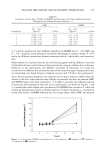
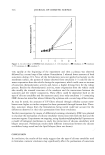
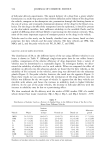
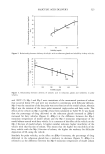
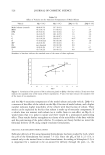
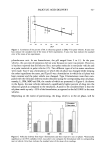
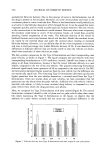
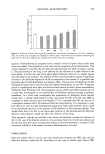
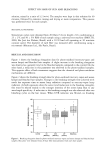
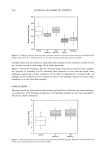
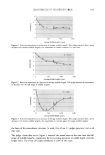
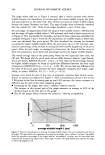
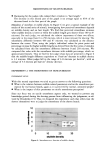
542 JOURNAL OF COSMETIC SCIENCE six men who use a wet-shaving system at home (wet shavers). We anticipated that these groups could possibly employ different smoothness criteria. Since we wanted to observe these differences if they existed, we did not give our judges any particular training as to what "tactile smoothness" means. The judges were recruited from our pool of subjects without any particular restrictions. The judges participated on a voluntary basis. Protocol At the outset of the experiment the judges were told that they did not have to shave in this experiment, but instead they were asked to judge prepared artificial beards. They were invited to see and feel an artificial beard bed, and they were told it was made to resemble a shaven male beard in various forms. During the sessions, the judges were not able to see the stimuli, since they were felt through an opaque screen. At each stimulus presentation, the judges were asked to assess the smoothness of the stimulus by giving it a mark between 0 and 10. If needed, they were explicitly instructed to decide themselves what smoothness actually means. The stimuli were presented in two separate series: © Series 1: Effects of stubble length: In this series we presented ten different stimuli, in most of which all stubble hairs had the same length. The set of ten stimuli spanned a wide range of average lengths (0-1365 microns). Six replications of each stimulus were given, adding up to a total of 60 stimulus presentations. The session lasted 15-20 minutes, after which a 10- minute break was inserted. © Series 2: Effects of stubble density: Again, ten different stimuli, now with varying percentages of stubble present, were given to the judges. For three patches the stubble length was about 87 microns, and for another four it was around 489 microns. This stimulus series mimics various hair densities. Again, six replications of each stimulus were given, amounting to 60 stimulus presentations in total. This series also lasted 15-20 minutes. In each series, the stimuli were presented consecutively in pseudo-random order. Prior to the 60 stimulus presentations of each series, five representative introductory stimuli were added, which served to help the subjects establish the range of stimuli presented. These first five presentations were omitted from further analysis. In each series, the stimuli were placed in pseudo-random order, according to a diagram-balanced Latin square (16). This order assured an even distribution of all repetitions of a given stimulus over the presentation order, as well as that each repetition of a given stimulus is preceded by a different stimulus, in order to avoid order effects. RESULTS Dependence of smoothness on average hair/ength. Since each judge assessed six replications of each stimulus, we could perform the analyses on an individual basis, thus allowing differences between subjects to become apparent. Figures 2-4 give representative ex- amples of our data regarding the stimuli in series 1. The judge whose data are given in Figure 2 assessed, after a steep decrease with shorter stubble lengths, the smoothness to remain constant at a low level. In voluntary remarks he indicated that for him the smoothness of a shaven beard is very much related to its acceptability, and that once the stubble lengths rose above a certain level, the smooth- ness did not change anymore since it was unacceptable anyway. Thus, acceptabi/ity was
Purchased for the exclusive use of nofirst nolast (unknown)
From: SCC Media Library & Resource Center (library.scconline.org)