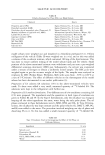
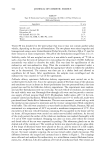
SALICYLIC ACID DELIVERY 521 Table II Vehicles Evaluated for Their Effect on Model Sebum Chemical Source Propylene glycol (PG) Dimethyl isosorbide (DMI) Diethylene glycol monoethyl ether (Transcutol, T) Maleated soyabean oil (glycerid acid, MSO) Labrafil M 2125CS (L) Isopropyl myristate (IPM) Oleic acid (OA) MP Diol (MP) Butanediol (B) Glycerin (G) Sigma Chemical Co., St. Louis, MO Sigma Chemical Co., St. Louis, MO Sigma Chemical Co., St. Louis, MO International Speciality Products, Wayne, NJ Gattafosse Corporation, Westwood, NJ Sigma Chemical Co., St. Louis, MO Sigma Chemical Co., St. Louis, MO Lyondell Chemical Worldwide Inc., Houston, TX Sigma Chemical Co., St. Louis, MO Sigma Chemical Co., St. Louis, MO model sebum were weighed out and dissolved in chloroform-methanol (3:1). Fifteen milligrams of the vehicle (Table II) were weighed out in a vial, and to this was added a volume of the co-solvent mixture, which contained 100 mg of the lipid mixture. This was done to ensure uniform mixing of the model sebum lipids and the vehicle. Small portions of the above-mentioned mixture were withdrawn and put onto a pre-weighed differential scanning calorimetry (DSC) pan. Subsequently, the solvent was evaporated under a stream of nitrogen to obtain a uniformly mixed sample. The DSC pans were weighed again to get the accurate weight of the lipids. The samples were analyzed in triplicate by DSC (Perkin Elmer, Wellesley, MA) with scans from -50øC to 100øC at a rate of 5øC/minute. The effect of different vehicles on the thermogram of the model sebum has been documented in our earlier publication (3). Preparation of SA solutions. SA solutions (1%) in the above-mentioned vehicles were made. To these were added a very small, measured quantity of •4C-labeled SA. The solutions were kept in the refrigerator until further use. Preparation ofSA emMsionformMations. Two different sets of o/w emulsions containing SA (1%) were prepared. The ingredients and the quantities in both types of emulsions are given in Tables III and IV. In the Type I formulations, only the oil phase was changed, keeping all the other ingredients the same, water being the only polar phase. The oil phases evaluated in these formulations were L, MSO, IPM, and OA. In Type II formu- lations, the oil phase (L) was kept constant and the polar vehicles (G, DMI, T, MP, PG, and B) were added to the water. The procedure involved weighing out the oil phase and dissolving SA in it. To this was added a small measured quantity of •4C-labeled SA. Table III Type I Emulsions Used in Investigating the Effect of Oil Phase on Follicular Delivery Ingredient % w/w Salicylic acid 1.00 Preservative (Germall II) 0.30 Polysorbate 80 5.00 Oil (L, MSO, IPM, or OA) 21.71 Water 71.99

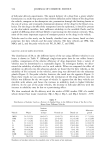
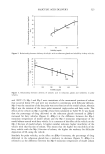
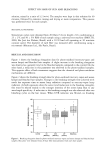
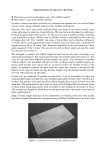
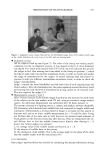
522 JOURNAL OF COSMETIC SCIENCE Table IV Type II Emulsions Used in Investigating the Effect of Polar Vehicles on Follicular Delivery Ingredient % w/w Salicylic acid 1.00 Preservative (Germall II) 0.30 Polysorbate 80 5.00 Oil (Labrafil M 2125 CS) 21.71 Polar vehicle (G, DMI, T, MP, PG, or B) 19.74 Water 57.25 Tween 80 was dissolved in the water phase that may or may not contain another polar vehicle, depending on the type of formulation. The two phases were mixed together and homogenized using a sonic dismemberator (Fisher Scientific, Fairlawn, NJ) at 35 rpm for three minutes at room temperature. The pH of the formulations ranged from 2 to 2.3. Solubility studies. SA was weighed out and to it was added a small quantity of 14C-SA in such a way that the ratio of radioactive to non-radioactive drug was 1:20,000. Sufficient acetonitrile was added to dissolve the solid. This was done for equilibration of the radioactive and non-radioactive drug. Then the acetonitrile was evaporated under a stream of air. To this dry drug was added the appropriate vehicle in which the solubility was to be determined. The mixture was then put in a shaker bath and allowed to equilibrate for 48 hours. After equilibration, the samples were centrifuged and the radioactivity was counted in 5 pl of the supernatant. Follicular delivery experiments. Follicular delivery experiments were carried out as de- scribed earlier by Lieb (12). Since the optimum uptake of SA from most of the solutions and emulsions occurs in about six hours (preliminary data not presented here), this time period was used for the follicular delivery experiments. The experiments were random- ized and five formulations were run every day. For each vehicle or emulsion, six replicates for each vehicle were run. Bronaugh flow-through cells were used to provide a continu- ous supply of fresh receptor fluid (0.05 M phosphate buffer saline, pH 7.4) for tem- perature control and hydration. Whole Syrian hamster ears (10-12 weeks old, male) were purchased from Charles River Laboratories. The ears were mounted, ventral side up, with the medial section exposed to treatment and the receiver compartment filled completely with buffer. The cells were attached to a water bath/circulator (Haake, Paramus, NJ) and maintained at a temperature of 38øC to provide a membrane temperature of 32øC. Five microliters of the neat vehicle/emulsion containing SA was applied to the donor side for six hours. All experiments were carried out under non-occluded conditions. At the end of the study period, the surface of the whole ear membrane was washed thoroughly with 3-4 ml of 50% water-methanol. Stripping was done six times, after which the ventral and dorsal sides of the ear were separated by peeling. (The sebaceous glands are on the dermal side of the ventral ear.) The ventral ear dermis was placed side up on a glass slide. A few drops of deionized water were placed on the ear, and by means of a dull scalpel, the ear was scraped three times by application of mild force without tearing or cutting the ear. To insure complete scraping, the ear was viewed under a light microscope. The difference between the scraped and untreated ears is shown in Figure 1. The scrapings were collected and analyzed for radioactivity in a scintillation counter (Beckman Instru- ments, Inc., Fullerton, CA) after addition of 10 ml of scintillation fluid. The ventral and
Purchased for the exclusive use of nofirst nolast (unknown)
From: SCC Media Library & Resource Center (library.scconline.org)