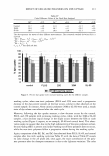
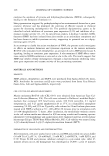
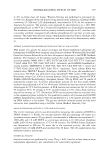
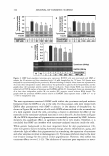
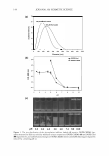
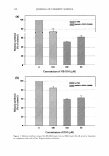
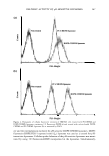
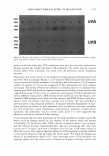
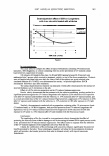
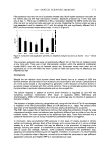
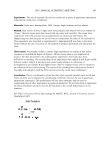
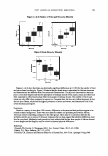
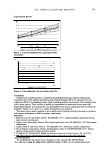
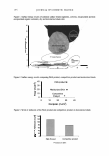
2007 ANNUAL SCIENTIFIC MEETING Experimental Results oe 14 24h 48h Tme 72h -A ····•····B ---+ • D --.-A+C -• - B+C • • • D+C Figure 1. Color development after application of the test articles Db• 10 ..•...•••• •·······················································o···························: • 0.5 1,5 \• A ■B ,6.D oA+C ;:i:B+C eD+c\ ... oa• 96h Figure 2. Color induced by the test articles after 72 h Conclusions 189 Commercially available polymers - Dimethylacrylamide/Ethyltrimoniwn Chloride Methacrylate Copolymer (A) at 1.5% (active) and Hydroxypropyl Starch Phosphate (B) at 5% (active) levels were evaluated in DHA (3%) containing systems. Both A and B generated a good intensity of the resulting color with A being superior. These systems (A and B) also outperformed a commercial sunless tanner (D). Experimental polymer C accelerated the color development when used in conjunction with test articles (A, B and D). Further in vitro and in vivo studies of the polymers are underway. The swlless tanner market continues to grow rapidly and our findings can help to develop new products with superior performance to fulfill consumers' expectations. References 1. Robinson Larry R. and Tanner Paul R., US 5,603,923 (1997), Artificial tanning compositions having improved color development 2. Lentini Peter, Muizzuddin Neelam, Pelle Edward and Punto Louis, US 5,503,824 (1996) Skin tanning compositions 3. Ziegler Philip D. and Crotty Brian A, US 5,232,688 (1993), Self-tanner cosmetic compositions 4. Dueva-Koganov Olga, Russo Thomas and Sanogueira James P., US 2007/0003496 (2007), SW1less tanning composition and method of sunless tanning 5. R. Jennann, M. Toumiat and D. Imfeld International Journal of Cosmetic Science, 24, 1-8 (2002) 6. htm.�/Llv.W.w.Jm§:Y�i!&Qm/.inrimD.!.'Yi§it7P-�th=Alx66xly1xa,Q�lx65ylxc6x1x65ylxccxlx65 Acknowledgements We are grateful for the support of our colleagues at Ciba, especially Dr. Mervin Wood. We would like to thank Dr. John Sottery and Peter Sottery of IMS, Inc. for valuable discussions.

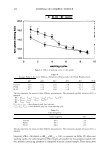
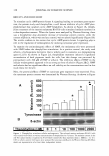
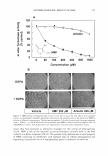
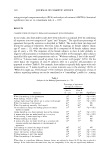
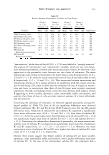
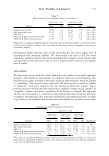
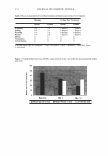
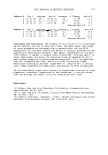
190 JOURNAL OF COSMETIC SCIENCE THE INVESTIGATION OF A NOVEL PEPTIDE HORMONE RESPONSIBLE FOR MODULATING SKIN TONE Barbara Brockway, Ph.D., Sarah Jindal, Catherine Zorzopian, Christopher Murphy, Peter Dow and Durant Scholz Active Concepts, LLC Objective: To determine whether antagonists for the MCl receptor can reduce areas of hyper-pigmentation and even skin tone. Introduction: Traditional skin lighteners have not focused on reducing hyper-pigmentation at the initial stage of melanogenesis, the binding of hormones to the Melanocorti.n 1 Receptor (MCl� on the melanocyte. The Agouti Signal Protein (ASP) has been recognized as a regulatory protein capable of reducing the expression of the MClR involved in melanin production. In this study, small pentapeptide and hexapeptide fractions of ASP, antagonists for the MCl receptor, were added to a generic emulsion to determine whether they reduce hyper-pigmentation and even skin tone on human volunteers. Color measurements taken over the course of several weeks confirm a visible reduction in skin pigmentation by an average 6E of 9.01 and average change in L values of 16.58%. The results indicate that areas of hyper-pigmentation, particularly solar lentigines, are especially sensitive to manipulation by MCIR antagonists. Experimental: 2% of an ASP analog solution was added to a generic, oi� in-water emulsion. Fifteen volunteers applied the cream twice daily for twenty-eight days to areas of their arms marked by hyper-pigmentation. Three color measurements of the brown maculas were taken weekly for the duration of the experiment. The results generated are the differences of the averaged L and delta E values for each person. Results: Abbreviated data from the first five volunteers is shown in Table 1. Three measurements from each location were recorded. The delta E values are calculated from the first, second and third set of colorimetry readings taken initially and the first, second and third set taken on final day[l]. These results confirm a visible reduction is skin pigmentation by an average delta-E of 9.0 and an average change in L values of 16. 6%. Table 1: Color measurements taken initially and on Day 28. Subject 1 Day 0 Average Day 28 Average % Change delta-E L 33 37 34 34.7 43 42 43 42.7 23 .1% 11.6 a 23 22 23 22.7 20 18 19 19 16.2% 6.5 b 28 29 27 28 23 28 25 25.3 -16.2% 10.1 Average delta-E 9.4 Subject 2 Day 0 Average Day 28 Average % Change delta-E L so 52 51 51 49 49 51 49.7 -2.6% 8.3 a 16 15 15 15.3 14 17 15 15.3 00% 7.0 b 25 26 25 25.3 33 32 28 31 22.4% 3.0 Average delta-E 6.1 Subject 3 Day 0 Average Day 28 Average % Change delta-E L 42 44 40 42 52 ss ss 54 28.6% 11.8 a 21 21 22 21. 3 19 17 17 17.7 -17.2% 13.6 b 34 34 35 34.3 28 28 28 28 -18.4 17.3 Average delta-E 14.3
Purchased for the exclusive use of nofirst nolast (unknown)
From: SCC Media Library & Resource Center (library.scconline.org)