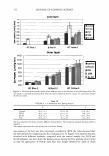
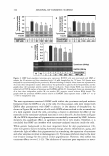
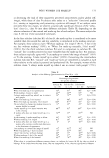
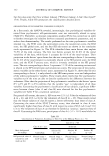
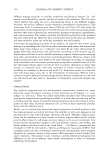
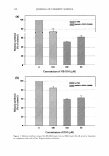
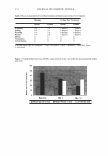
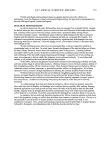
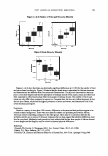
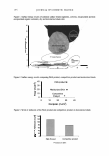
112 JOURNAL OF COSMETIC SCIENCE outer layer � · 1.4 +--- - --------------- - - =F----- .ea 1.2 +- - - ------------- ---__. 1 1.0 +------ - - ..=. 0.8 -+-- --- ------------ j 0.6 g- 0.4 -+-----"'1""'---- - -------1 !:. 0.2 HC Blue 2 B.Red 51 inner layer HCYellow2 ■ control CJ PLUS ■250 CJ30M ■SL-60 14.0 �---------------------, "i:" ii 12.0 �- - - - ------- - - - - ---- -----------,- ,e» 10.0 +------------------------,�"T- E 8.0 +--- - ---- - - ------ -- ...3: 6.0 --t---- - ---------· 4.0 ,---- ----------. � 2.0 -,---------------- 0.0 HC Blue2 B.Red 51 HCYellow2 ■ control □ PLUS 30M SL-60 Figure 2. Variation of the µmoles uptake of the different dyes in the function of dyestuff composition. The dye uptake is expressed as µmoles/g hair. The outer layer consists of the hair cuticle the inner layer consists of the hair cortex. Control PLUS SL-60 Yak Table III CIELAB, L, a, b Parameters after Dyeing Process L a 45.2 ± 1.1 22.9 ± 1.4 48.5 ± 3.8 21.3 ± 3.1 46.4 ± 2.2 21.4 ± 3.0 69.3 ± 1.3 0.6 ± 0.1 b 12.6 ± 0.3 8.9 ± 2.0 10.3 ± 0.8 8.7 ± 0.9 The data represent the means of three different measurements. The estimated standard deviation (S.D.) is reported. Yak sample represents the value of the yak tress before dyeing. dye uptake on the hair was then calculated, considering 100% the value obtained after the dyestuff process comprising the first washing cycle. In Figure 3 are reported the data obtained with different dyebaths, compared with the control sample: the PLUS and SL-60 polymers can slow down the fading process during the first washing (third cycle) so that the appearance of freshly dyed hair lasts longer. Beyond the sixth or ninth

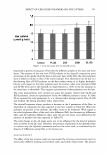
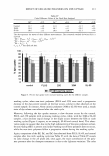
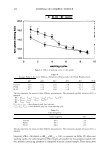
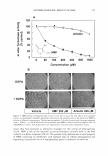
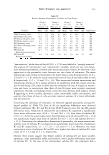
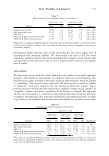
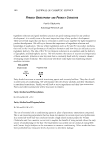
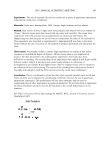
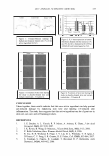
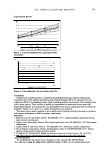
EFFECT OF CELLULOSE POLYMERS ON DYE UPTAKE 113 Table IV Color Difference Values of the Dyed Hair Analyzed LlE 1 ±S.D. Llc2 ±S.D. LlL3 ±S.D. Control 32.7 ±1.0 21.9 ± 1.3 -23.5 ±0.1 PLUS 29.0 ±4.9 20.7 ±3.1 -20.2 ±3.6 SL-60 30.6 ±3.3 20.8 ±3.0 -22.3 ±1.8 The data represent the means of three different measurements. The estimated standard deviation (S.D.) is reported. 1 LlE = [(Ldyed - L) 2 + (adyed - a) 2 + (bdyed - b.) 2 ] 112 2 LlC = [(adyed - a.)2 - (bdyed - b.) 2 ] 112 3 LlL = Ldyed - L. L., a., b 0 = non-dyed yak hair. 100 l · ·-··-····· - - .... ·------- · 90 80 � 70 J! 60 CL ::::1 50 � 40 � 30 20 10 0 control PLUS 250 30M I ■ 3 □ 6 9 washing cycles ! SL-60 Figure 3. Percent dye uptake with increased washing cycles for the different samples. washing cycles, when non-ionic polymers (PLUS and 250) were used, a progressive decrease in the dye percent present on the hair occurs, similar to that observed on the control sample. In contrast, when cationic polymers (30M or SL-60) were used, a steady state of dye release was achieved after the sixth cycle. Moreover, following the dye uptake amount, a slow decrease occurs for the control, PLUS, and 250 samples with increasing washing cycles, while, with the 30M or SL-60 samples, a fast decrease (rapid change in the slope) occurs between the fifth or sixth washing cycles (Figure 4 reports, as an example, SL-60 and control data). This obser- vation seems to suggest that, due to the high substantivity of the ionic polymers on hair, the anti-fading effect is present until a fast washing out of these polymers does not occur, while the non-ionic polymers follow a progressive release during the washing cycles. Again, comparison of the '1E, L1L, and '1C data obtained from PLUS, SL-60, and control samples after the ninth washing cycle (see Table V) with the data of Table IV reveals no color change in the alb plane and, once again, the main contribution of the poly- mer presence after the shampoo treatments is due to the lightness variation. The color
Purchased for the exclusive use of nofirst nolast (unknown)
From: SCC Media Library & Resource Center (library.scconline.org)