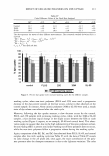
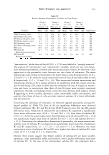
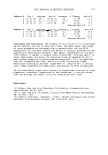
2007 ANNUAL SCIENTIFIC MEETING 191 Subject 4 Day 0 Average Day 28 Average % Change delta-E L 25 31 28 28 34 30 32 32 14. 3% 11.2 a 23 21 21 21. 7 17 23 21 20.3 -6.2% 3.7 b 26 24 25 25 29 27 28 28 12.0% 5.0 Average delta-E 6.7 Subject 5 Day 0 Average Day 28 Average % Change delta-E L 42 44 42 42.7 51 50 52 51 19.5% 9.5 A 13 13 13 13 16 14 16 E.3 17.9% 6.1 b 37 35 35 35.7 37 35 36 36 0.9% 10.5 Average delta-E 8.7 Discussion and Conclusion: The purpose of this study is to investigate an ASP analog's ability to even skin tone. This data shows that areas of hyper-pigmentation are sensitive to rranipulation via the MClR Antagonists for the MClR reduce the amount of melanin produced by the hyperactive melanocytes. Moreover, age spots, represented by the data from Subject 3, appear to be particularly affected. Such age spots, or solar lentigines, are known for elevated leve� of endothelin (ET-1) and related receptors on associated melanocytes[2]. ET-1 up-regulates both MCl receptors and their ability to bind the agonist alpha Melanocyte Stimulating Hormone (alpha-MSH) [3). Despite ET-l's central role, these disorders are especially susceptible to MClR antagonists. As outlined above, there are a variety of mechanisms involved in hyper pigmentary disorders. Regardless of the mechanism, it hasbeenshown that ASP analogs are useful tools for modulating skin tone. References: [l] Noboru Ohta and Alan Robertson, Colorimetry: Fundamentals and Applications, 25-98, 2006 [2] M. Yaar and B.A. Gilchrest, Clinical and Experimental Dermatology 26, 583-591, 2001 [3] Andrzej Slominski, Desmond J. Tobin, Shigeki Shibahara and Jacobo Wortsman, Physiological Reviews, 84, 1155-1228, 2004

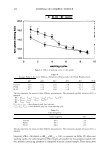
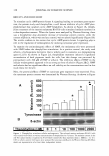
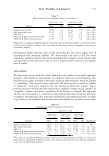
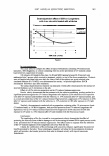
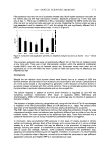
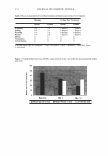
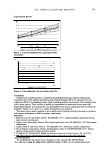
192 JOURNAL OF COSMETIC SCIENCE LINKING SURFACE ENERGY TO COSMETIC BEAUTY ON THE SKIN Adriana Altuve1, Ph.D., Steve Page2, Sarah Vickery1 and Stephen Jones3 1 The Procter & Gamble Company, Color Cosmetics, Hunt Valley, MD 2 The Procter & Gamble Company, Beauty Technology Analytical, Cincinnati, OH 2 Ciba Specialty Chemicals Corporation, Tarrytown, NY Introduction: Effective color cosmetic foundations provide the look of flawless skin without introducing an unnatural appearance. The design of a natural looking foundation is inspired by a combined knowledge of the chemistry of the foundation ingredients and skin surface with the optical properties of healthy skin. One key element for improving product performance is surface energy optimization between liquid make up formulations and skin. Matching the surface energy (SE) of the particulates in the foundation to that of the skin can create consumer noticeable benefits in a multitude of areas. Among the benefits to matching skin SE, particularly the polar component of SE, are improved skin comfort, a more beautiful finish, visibly closer fit to the skin, and higher overall preference versus traditional colorants. 1 ' 2 A detailed SE study was undertaken for which measurements of SE of dry and moisturized skin, individual foundation raw materials (including new to the world encapsulated organic colorants), and the product as a dried film on the skin were performed. In order to correlate SE values to application properties and end look benefits, panelists were asked to apply a Procter and Gamble (P&G) foundation as well as a leading competitive foundation. The results showed that when the encapsulation and/or coating material minimized the difference in SE between skin and colorants, then improved aesthetic attributes (such as even spreading and natural appearance) occurred. As a result of this work, we were able to correlate SE to product deposition onto the skin, and further demonstrated that our foundation was superior to the competitive product for providing a more natural look with better adhesion properties. Method: Surface tension of liquids was determined by the Wilhelmy plate method (total surface tension) 3 followed by sessile drop or advancing contact angle analysis on Teflon sheets (nonpolar component of surface tension)4. Surface energy of pigments was detennined by compressing the pigments into a pellet. Sessile drop or advancing contact angle analysis was performed on the pellets using diiodomethane, formamide, and water. In-vivo sessile drop contact angle analysis on facial skin was performed using video imaging. Mineral oil, glycerin, and water were used on facial skin. SE of dry skin, moisturized skin and skin with foundation applied were determined. The Fowkes equation of state was used to convert contact angles into surface energy values. 5 Designing Colorants that Match the Surf ace Energy of Bare Skin: A key opportunity for improving cosmetic foundations is to develop colorants which more closely match the SE of skin. Commonly utilized iron oxides have SE characteristics that are very different than those of bare skin, which can have a negative impact on foundation aesthetics. Spreading properties, adhesive properties and overall appearance of the colorants can be improved by more closely matching the SE components of skin. 1 • 2 Interestingly, internally conducted research shows that 81 % of liquid foundation users apply a facial moisturizer prior to using their liquid makeup. These habits and practices will significantly alter the SE of the face, and as a result, the SE of moisturized skin must be taken into account when optimizing the surface treatments and/or encapsulation material of colorants in a foundation. Organic colorant encapsulation technology developed by Ciba Specialty Chemicals Inc. 2 •6 has been specifically designed to enable the highest degree of natural look benefits in a foundation (i.e., chroma variation comparable to naturally flawless skin, increased vibrancy, and SE matching to the skin). Measurements of SE have been conducted on a wide range of commonly available organic and inorganic colorants along with a broad range of surface treated pigments and solvents. In Figure I, the results of these measurements are plotted along with measures of SE for the novel encapsulated organic colorants tailored to match dry and moisturized skin. As Figure 1 reveals, common uncoated and ITT treated iron oxide pigments, as well as silicone and alkyl silane coated pigments, have a SE that is very different from that of skin. To address this issue, two different sets of encapsulated organic colorants were designed with different SE profiles. In contrast to the traditional colorants, when the SE of the two types of encapsulated organic colorants is plotted alongside that of the moisturized or dry skin, it can be seen that the SE components are extremely well matched. Figure 1 further shows that the SE value of the non-encapsulated colorants is different than that of the encapsulated material. This proves that the chemistry of the encapsulation matrix actually drives the SE differences, and most importantly, provides the chemical flexibility to match the SE of these novel colorants to the SE of different skin types. These results show that proper choice of the encapsulating material can improve upon the difference in SE between skin and colorants. Subsequently, this can allow for improved aesthetic attributes when these skin-matched SE colorants are incorporated into foundation products.
Purchased for the exclusive use of nofirst nolast (unknown)
From: SCC Media Library & Resource Center (library.scconline.org)