]. Cosmet. Sci., 59, 399-418 (September/October 2008) A study of the chemical composition of traditional eye cosmetics ("kohls") used in Qatar and Yemen ANDREW D. HARDY, Centre for Medical History, School of Humanities and Social Sciences, University of Exeter, Exeter EX4 4R], Devon, UK ALEXANDER J. FARRANT, Department of Chemistry, School of BioSciences, University of Exeter, Exeter EX4 4QD, Devon, UK GAVYN ROLLINSON, Camborne School of Mines, University of Exeter in Cornwall, Tremough Campus, Penryn TRIO 9EZ, Cornwall, UK PETER BARSS, Faculty of Medicine & Health Sciences, United Arab Emirates University, PO Box 17666, Al Ain, United Arab Emirates and RAGINI VAISHNAV, College of Medicine, Sultan Qaboos University, Box 35, Al Khod 123, Sultanate of Oman. Accepted for publication February 29, 2008. Synopsis This study looks at the chemical composition of traditional eye cosmetics ("kohls") used in Qatar and Yemen. Of especial interest was how many samples in each country contain the toxic element lead. In Qatar 19 observably different kohl samples were obtained, and in Yemen ten such samples obtained. The analytical techniques of scanning electron microscopy (SEM) and X-ray powder diffraction (XRPD) were used to study the samples. For the samples from Qatar, six of the 19 (32%) contained galena (lead sulfide, PbS)-all as the main component. However, for the samples from Yemen, five of the ten (50%) samples contained galena as the main component, with another three having it present as a minor component. Overall, the other main components were found to be: amorphous carbon (3), iron oxides (hematite, Fe20 3 and goethite, FeO(OH)) (1), quartz (SiO2) (1), sassolite (H3BO3) (5), talc (Mg3Si4O 10 (OH)2) (1), and zincite (ZnO) (7). INTRODUCTION As part of continuing studies on Middle Eastern traditional eye cosmetics ("kohls"), we have looked at the chemical composition of such cosmetics available in Qatar and Yemen. Of especial interest is the determination of those containing a lead compound (usually lead sulfide), and comparison of the percentages found of such samples in these two countries. It is thought that traditional eye cosmetics are used mainly by the older generations in both Qatar and Yemen, the youngest (e.g., student) generation being more inclined to use the imported Western-made eye cosmetics. Also, when the kohls are used in both 399

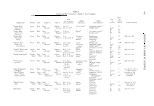
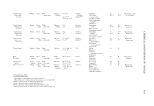
400 JOURNAL OF COSMETIC SCIENCE these countries, they can be applied solely as cosmetics-often being then designated "cold"-or as both cosmetics and eye medicines-these often being designated "hot." In the more industrialized capital city of Doha (Qatar) there are more kohl samples imported from India and Pakistan than are found in the less industrialized capital city of Saana (Yemen). Both cities, as expected given the geographical proximity, have kohl samples imported from Saudi Arabia. To our current knowledge this is the first study of the (chemical) composition of traditional eye cosmetics used in Qatar and for Yemen, while the details of the manu facture and composition of the traditional black dye/body-paint ("hidab") have been studied (1), this is the first study done on traditional eye cosmetics. In the last few years, since our last publication (2), only a few kohl-related studies have appeared in the published literature. Three kohl samples were characterized by the relatively new technique of confocal Raman microscopy (3) a cause-effect relationship has been suggested between the use of lead-based kohls and in the accentuation of periorbital pigmentation and the development of associated anemia (4) and, most recently, a rare case of homicidal poisoning via a lead-based kohl has been presented in the literature (5 ). In our previous studies on the chemical composition of kohls obtained in Oman (6), Cairo (7), and the United Arab Emirates (UAE) (2,8), we found lead (usually as the lead sulfide, PbS) to be present in some of the samples. Thus, presented here, as part of our ongoing study into the presence of lead in traditional eye cosmetics (kohls) and as part of an ongoing education on the toxicity-especially for young growing children-of using such materials, is a comparative chemical composition study of the kohls available in Qatar and Yemen. MATERIALS AND METHODS MATERIALS A total of 28 kohl samples were purchased in the souks of Doha, the capital city of the Gulf state of Qatar. They were regarded as a good "cross section" of all such samples available for purchase in Doha. Of these 28 samples it was found that 19 were observably different. The price per kohl sample varied between 1 and 6 Qatari riyals (QR), where 3.65 QR was equivalent to 1 US$. In Yemen a total of eight kohl samples were purchased: seven in the two souks of the capital city of Saana and one in the souk of Saadh, a mountain town several hours drive northwest of Saana. An additional two kohl samples were obtained, as personal gifts, in Aden. Thus, overall, these ten samples were regarded as a "selection" of those available, rather than a comprehensive survey of all those available, in Yemen. The price of the purchased samples varied between 150 and 500 Yemeni riyals (YR), where 175 YR was equivalent to 1 US$. As in a previous publication (2), it had been decided by us that if a kohl sample's name, origin, and (information on its) container/enclosed leaflet (if present) were all found to be identical to that of another sample-either from this study or from one of our previous studies-then it would usually be assumed that the two samples had identical
Purchased for the exclusive use of nofirst nolast (unknown)
From: SCC Media Library & Resource Center (library.scconline.org)