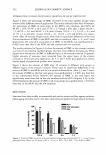
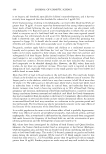
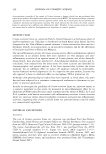
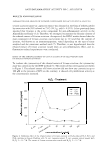
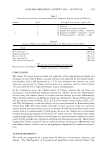
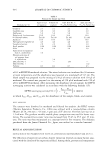
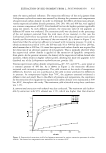
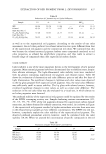
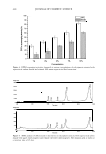
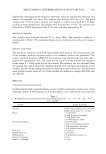
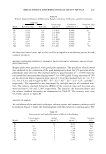
EXTRACTION OF RED PIGMENT FROM L. ERYTHRORHIZON 437 Table II Evaluation of Chromaticity and Color Difference Sample L* a* b* SFE 60.94 50.78 12.06 Ethanol 85.54 12.72 -0.57 47.04 D&C Red No. 6 (C18H14N206S·2Na) 57.28 67.09 21.73 19.31 D&C Red No. 7 (C18H14N206S·Ca) 50.55 63.76 -3.7 22.91 dE*ab 47.04 65.21 61.96 19.31 65.21 26.52 as well as to the supercritical red pigment. According to the results of our color assessment, the red color produced via ethanol extraction was quite different from that of the supercritical red pigment and the commercial red colors. We surmised that this was because the ethanol-extracted pigment harbors more compounds unrelated to red color properties, as ethanol has amphithetic properties, and thus tends to extract a broader range of compounds than does supercritical carbon dioxide. COLOR STABILITY Color stability is one of the most important factors in the development of new natural pigments. Many natural pigments have been discontinued due to stability issues, despite their obvious advantages. The light-illuminated color stability tests were conducted with lip glosses containing supercritical red pigment and ethanol extract. Table III shows the evaluation of chromaticity and color difference prior to and after five days of light illumination. No significant changes in lightness and color values were observed in the lip gloss prepared with supercritical red pigment. Also, the total color difference was sufficiently small to assure stability. The lip gloss with ethanol extract, however, evidenced significant changes in color values, as well as a total color difference. The reduction in the red color value was also evaluated via a visual test, in which almost no red color properties were detected. The profound stability of the supercritical red pigment could be explained by the results of the DPPH scavenging activity test. Samples harboring various concentrations (1 %, 2%, 3%, 5%, 7%, 10%) of the red pigments obtained by supercritical carbon dioxide extraction, and those obtained by ethanol extraction, were tested. As is shown in Figure 4, the supercritical red pigment resulted in higher antioxidant activities than were seen in the ethanol extract samples at every different concentration. The DPPH test did not, however, completely explain the color stability of the supercritical red pigment. The observed profound antioxidant activity, however, could be correlated with the color stability (18,19). When we assessed the concentration of specific compounds in the red Table III Evaluation of Light-Illuminated Color Stability Sample L* a* b* dE*ab SFE day 1 60.94 50.78 12.06 SFE day 5 61.67 48.48 14.69 3.57 Ethanol day 1 85.03 12.72 -0.51 Ethanol day 5 89.61 0.46 7.02 15.62

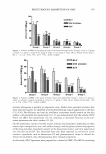
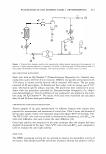
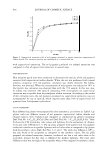
438 JOURNAL OF COSMETIC SCIENCE 100 90 80 0 70 · 60 m C 50 ·a, C 40 m 30 a.. 20 Cl 10 0 1% 3% 5% 7% 10% Concentration Figure 4. DPPH scavenging activities measured at various concentrations of red pigment extracted with supercritical carbon dioxide and ethanol. SFE means supercritical fluid extraction. Voltage (mV) 546.00 437.00 320.00 221.00 113.00 0.00 0.00 8.00 10.00 24.00 32.00 40.00 Time(mm) Voltage (mV) 546.00 437.00 320.00 221.0 113.0 8.00 10.00 24.00 32.00 40.00 Time (mm) Figure 5. HPLC analysis of shikonin and its derivatives in red pigment extracted with supercritical carbon dioxide (the upper chromatogram) and ethanol (the lower chromatogram). The shikonin peak is shown at a retention time of 25 min.
Purchased for the exclusive use of nofirst nolast (unknown)
From: SCC Media Library & Resource Center (library.scconline.org)