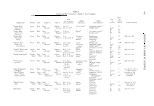
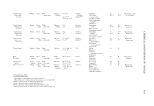
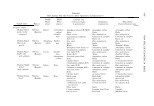
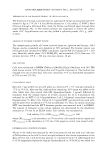
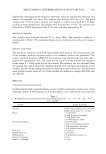
CHEMICAL COMPOSITION OF "KOHLS" 409 of such risk factors as the use of traditional medicines and cosmetics. In Qatar a study (25) of the BLLs in 200 samples collected from children under 15 years of age found that only three of the samples showed values exceeding 25 µg/dl (the then maximum value for normal blood lead in Qatar). The highest BLL value found was 38 µg/dl, and by comparing the results to those done previously in Qatar it was suggested that there had been a significant reduction in such values. As in the Yemeni study, no work was done in this Qatari study to determine if lead-based kohl usage was a risk factor. A wider national survey was recommended, and it was proposed to introduce a new (BLL) action level of 10 µg/dl for children and pregnant women. In a previous publication (7) we discussed the particle size of galena (lead sulfide, PbS) with respect to the associated kohl powder being "shiny" or "matte" in texture and with respect to its rate of dissolution in gastric fluid. It was found by us that at a mean particle size for galena of about 10 µm, the kohl powder (with galena as the major phase) became totally matte in texture. It had previously been found (20) that reducing the particle size of galena leads to a significant increase in its rate of dissolution (in gastric fluid). So, in a very simplistic toxicology sense, it can be said: "shiny is good and matte is bad" (as the latter would be much more easily dissolved in gastric fluid than the former, with the former perhaps going straight through the body with minimum absorption and negligible toxicity). Thus in Tables I and II we have stated if the powder is "shiny" or "matte" in texture when galena is the listed major phase. Only four such samples in this study are described as "matte," and so these four samples are more likely than the other galena-based samples to give rise to lead toxicity. In view of all of the above mentioned toxic effects and the still widespread use of kohls in parts of present-day North Africa/Middle East, it follows that children who have a lead-based kohl regularly applied to them are at risk of serious and fatal toxicities of the nervous system and also of more subtle, sub-clinical, long-term effects-such as the underdevelopment of neural pathways. EXTRA INFORMATION ON CONTAINER/PACKAGING/FROM VENDOR Qatar. Nine of the 19 kohl samples listed in Table I have written qualitative or quan titative "contents data" available (on the container/packaging or on an enclosed leaflet). Table III lists this data, with our best translations/interpretations and their (most likely) chemical/mineral names. When there is uncertainty, a "?" has been added. Only one sample ("Hashmi Kohl Aswad," made in Pakistan) had a major phase (galena) that was not listed in its (qualitative) "contents data." Another sample ("Hashmi Kajal," blue stick/pencil) had zinc oxide (first) listed, but no such phase was found by us. For the other seven samples with "contents data," the major phase found by us matched one listed-usually of high given percentage or at the top of the list when only qualitative data were given. As regards data on the medicinal effects of using a particular kohl sample, it was found that ten of the 19 samples listed in Table I had this (written) information available. The four "Lateef Surma" samples had essentially the same information on all the leaflets that came with the four samples-sometimes in English (the green/red and grey/black boxes) and sometimes only in other languages (the yellow and red or yellow and blue boxes). On any one of these leaflets were various statements, such as: "Excellent for blephritis and red eyes," "Immediate relief from irritating and watery eyes," and "Giateric vision

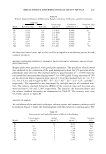
Table III � Kohl Samples That Had "Contents Data" (Qualitative and Quantitativer 0 XRPD XRPD Contents data Major Minor (with percentages, Translation/ (Most likely) Sample name Made in phase phase(s) if quantitative) interpretation Chemical/mineral name A) Qatari samples: "Hashmi Kajal" Pakistan Zincite (Amorphous Amorphous carbon (C/B EXCP) Amorphous carbon Amorphous carbon (pink circular (Karachi) carbon) Herbs Herbs Herbs container) (Paraffin Oxide of zinc Zinc oxide/zincite Zinc oxide/zincite wax) Cinnamomum camphora Cinnamon & camphor Cinnamon & camphor 0 Butter oil Butter oil Butter oil C "Hashmi Kajal" Pakistan Amorphous Paraffin Zinc oxide Zinc oxide/zincite Zinc oxide/zincite z (blue stick/ (Karachi) carbon wax Herbs Herbs Herbs pencil) Waxes Waxes (Paraffin?) Waxes r Amorphous black butter oil Amorphous carbon Amorphous carbon 0 Cinnamomum camphora Cinnamon & camphor Cinnamon & camphor -"Ij (i "Hashmi Kajal" Pakistan Zincite (Paraffin Zinc oxide (B.P.) Zinc oxide/zincite Zinc oxide/zincite 0 (B&W tube (Karachi) wax) Waxes (B.P.) Waxes (Paraffin?) Waxes er, with emblem) (Amorphous Processed carbon black Amorphous carbon Amorphous carbon t:d carbon) Herbs Herbs Herbs ..., Clarified butter A clarified butter A clear/purified butter (i Cinnamomum camphora (B.P.) Cinnamon & camphor Cinnamon & camphor er, "Hashmi® Kohl Pakistan Galena None Zinc oxide (B.P.) Zinc oxide/zincite Zinc oxide/zincite Aswad" (Karachi) Cinnamon in camphor (B.P.) Cinnamon & camphor Cinnamon & camphor t:d z (with emblem) Processed carbon Amorphous carbon Amorphous carbon (i Herbs Herbs Herbs t:d Clarified butter A clarified butter A clear/purified butter "Hashmi Surma Pakistan Galena None Black surma Black kohl Galena/lead sulfide Sunef'' (Karachi) Aniseed oil Aniseed oil Aniseed oil Ground zinc Zinc oxide/zincite Zinc oxide/zincite "A Medicinal herb useful A medicinal herb An unknown herb for the eyes" Other herbs Herbs Herbs• Chinese camphor Camphor from China Camphor Leaf of silver Silver leaf (Metallic) silver
Purchased for the exclusive use of nofirst nolast (unknown)
From: SCC Media Library & Resource Center (library.scconline.org)