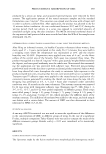
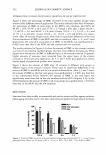
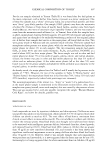
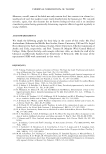
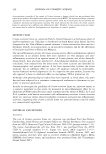
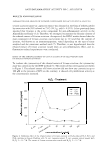
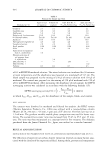
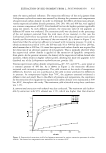
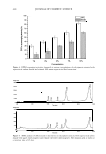
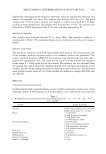
a, .3, 0 - C ::I 0 E C 1 PERCUTANEOUS ABSORPTION OF OMC 393 c:::::J MLV -0/W emulsion -SLN ns *** ns Group 1 Group 2 Group 3 Group 4 Group 5 Figure 3. Amount of OMC in the group of strips 30 minutes after application. Group 1: strips 1-2 group 2: strips 3-7 group 3: strips 8-12 group 4: strips 13-17 group 5: strips 18-22. Values are the mean ± SD, n = 6 ns p 0.05, **p 0.01, ***p 0.001 vs MLV. so ai 40 *** 0 30 0 20 ::II * 0 10 0 Group 1 Group 2 *** *** Group 3 i==:I MLV - OIW emulsion -SUV Group4 Group 5 Figure 4. Amount of OMC in the group of strips 3 hours after application. Group 1: strips 1-2 group 2: strips 3-7 group 3: strips 8-12 group 4: strips 13-17 group 5: strips 18-22. Values are the mean ± SD, n = 6 **p 0.01, ***p 0.001 vs MLV. systemic absorption is possibly an important issue. Studies have provided evidence that some sunscreen agents are absorbed systemically following topical application to the skin (13,14,36). For efficiency and toxicity avoidance, sunscreens should remain on the skin surface, with minimal skin penetration (11). It was demonstrated that the vehicle of UV filters can affect skin penetration (12,13), resulting in decreased function as the sun screen penetrates the skin's surface (11,38). On the other hand, results of several studies indicate that liposomes, depending on their nature (lipid composition, size, and surface charge), and the physicochemical properties of the drug and other ingredients present in the liposomal product, can limit penetration into the skin (8,26,39). Yet liposomes have also been reported as carriers for active cosmetic ingredients such as humectants (9) and pharmaceutical drugs in dermal de livery (10,18-20,23), thus demonstrating their versatile properties. In this study, ML V liposomes were prepared as a carrier for OMC. The ML Vs containing

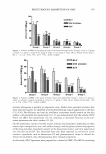
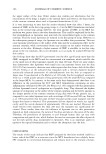
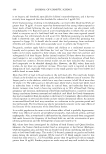
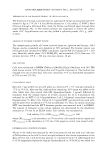
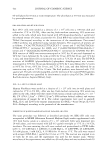
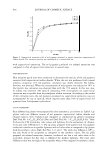
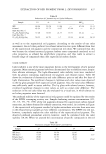
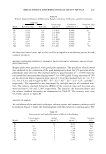
394 40 ..:I- 30 'o 20 'E ! 10 0 JOURNAL OF COSMETIC SCIENCE *- Group 1 Group2 Group 3 c:::JM..V OWenulsion -SLN Group4 Group5 Figure 5. Amount of OMC in the group of strips 5 hours after application. Group 1: strips 1-2 group 2: strips 3-7 group 3: strips 8-12 group 4: strips 13-17 group 5: strips 18-22. Values are the mean ± SD, n = 6 **p 0.01, ***p 0.001 vs MLV. Group 1 Group 2 Group 3 CJM..V OWemJsia, -SU/ Group 4 Group 5 Figure 6. Amount of OMC in the group of strips 7 hours after application. Group 1: strips 1-2 group 2: strips 3-7 group 3: strips 8-12 group 4: strips 13-17 group 5: strips 18-22. Values are the mean ± SD, n = 6 ns p 0.05, **p 0.01, ***p 0.001 vs MLV. OMC were converted to SUVs by probe sonication. The permeation of these two OMC containing formulations and a conventional o/w emulsion into the skin was investigated by tape stripping. The SPF of the OMC formulations was determined by an in vivo method in human volunteers. The results strongly indicate that MLVs are superior vehicles for OMC as a sunscreen due to their higher retention in the stratum corneum, limiting penetration to the deeper layers and providing appropriate SPF. To prepare MLV liposomes containing OMC (28), the fusion method, one of the suitable preparation methods for topical liposomes that provides homogenous MLV liposomes, was used. The presence of homogenous ML V liposomes containing OMC was confirmed by microscopic studies of the ML Vs and also size determination of ML Vs by particle-size analyzer. The fusion method is simple, efficient, reproducible, devoid of organic solvents like chloroform, and yields homogenous liposomes with high encapsulation efficiency. The encapsulation efficiencies for ML V and SUV liposomes containing OMC were 89.66 ± 2.0.8 and 89.7 ± 0.7 (n = 3), respectively, and no crystallization was observed in either formulation. The location of OMC in a liposome is probably associated in the
Purchased for the exclusive use of nofirst nolast (unknown)
From: SCC Media Library & Resource Center (library.scconline.org)