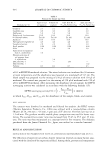
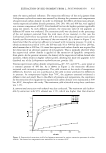
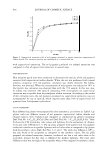
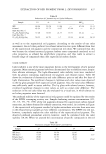
J. Cosmet. Sci.J 59, 441-448 (September/October 2008) Simultaneous determination of heavy metals in cosmetic products SO-MI LEE, HYE-JIN JEONG, and 1H SEOP CHANG, R&D Center, Amore Pacific Corporation} 314-1 Bora-dong, Giheung-gu, Yongin-si, Gyeonggi-do, 446-7 29, Republic of Korea. Accepted for Publication April 9, 2008. Synopsis An extremely small amount of several heavy metals have been detected in cosmetic products as impurities, which can cause skin allergies through percutaneous adsorption on the skin. We present here a fast, accurate, and highly sensitive method for simultaneous determination of Pb2 + , Fe2+, Cu2+, Ni2+, Zn2 + , Co2 + , Cd2 + and Mn2 + in coloring agents and cosmetic products, to be evaluated by ion chromatography. All of these metals are well separated through a bifunctional ion-exchange column (IonPac CSSA) and detected by post-column reaction and spectrophotometric detection. The calibration graphs are linear (r2 0.999), in the range 0.1-1000 µg/ml. Detection limits for a 200-µl sample solution are at the µg/1 level, which is sufficient for judging whether the product is safe or not. The relative standard deviations (RSDs) of the retention time and the peak area are less than 0.21 % and 1.24%, respectively. The recovery rates are 97-104%. The result shows that the proposed determination method is more sensitive, more accurate, and faster than current methods such as HPLC, ICP-MS and Flame-AAS. The new method was applied to analyze the amount of heavy metals contained in 22 cosmetic products and 11 coloring agents. INTRODUCTION Many cosmetic products contain heavy metals such as lead, arsenic, mercury, cobalt, and nickel as ingredients or impurities. Recent research has reported that these metals can easily cause many types of skin problems (1,2). The use of some heavy metals in cosmetics has been controversial due to the biological accumulation of those metals and their toxicity in the human body. In most countries, it is legally prohibited to use lead, arsenic, and mercury in skin cosmetic products. For example, lead is prohibited as part of cosmetic compositions in Korea, the European Union, and China. The maximum allowable level of lead is 20 ppm in those jurisdictions. There are no specific rules on other heavy metals, such as cobalt, nickel, and copper (3 ). It is also reported that those metals can cause allergic contact dermatitis or other skin problems (4,5). To provide customers with safe cosmetics, it is Address all correspondence to So-Mi Lee. 441

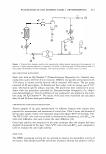
442 JOURNAL OF COSMETIC SCIENCE necessary to manage the amount of heavy metals used in cosmetic products. In this research, a fast and accurate analysis method for the quality control of eight water- 1 bl h 1 h Pb2 + F 2 + C 2 + N.12 + z 2 + C 2 + Cd2 + d M 2 + . so u e eavy meta s sue as , e , u , , n , o , , an n 1n cosmetic products, using IC (ion chromatography) and post-column reaction, is pro posed. The new method is effective in the determination of water-soluble heavy metals in complex matrices such as cosmetic products. ICP-MS, ICP, GF-AAS, and Flame AAS are some examples of heavy metal analysis techniques. ICP-MS is one of the most favored analysis techniques because it is fast and highly sensitive in metal analysis. However, ICP-MS cannot simultaneously analyze trace metals such as Fe, Cu, Zn, and Ni because of the interference from the polyatomic ion that is obtained by the reaction of Ar, N, 0, H, and so on (1,6,7). Also, ICP-MS, GF-AAS, and Flame AAS are not suitable for trace water-soluble metals because of the interference of residual organic materials in the test sample. IC (ion chromatography) is a widely used analyzing technique for ionizable compounds, inorganic cations, and anions. Inorganic ions, transition metals, organometallic com pounds, organic acid, and ionizable surfactant, which were difficult to be analyzed before, can be easily tested since non-chromophoric compounds can be detected by IC. Therefore, IC is a proper method for the separation and determination of water-soluble trace heavy metals in complex matrices because it does not have any interference from residual organic materials. It is useful for the quality control of cosmetic products as it is an inexpensive and accurate technique, for both instrumentation costs and mainte nance. MATERIALS AND METHODS INSTRUMENTATION The ion chromatography was performed on a Dionex ICS 2500 system (Dionex, Sunny vale, CA). The system consisted of a GP50 pump, and AS50 autosampler, a PClO post-column pneumatic delivery package, and a PDA-100 photodiode array detector. Chromeleon software, version 6.60, was used to process all data. The column was a Dionex IonPac CS5A analytical column (4 x 250 mm), which was protected by a guard column (Dionex lonPac CG5A analytical column (4 x 50 mm). REAGENTS The reagents, 4-(2-pyridylazo)resorcino (PAR), pyridin-2,6-dicarboxylic acid (PDCA), formic acid, potassium sulfate, 2-dimethylaminoethanol, ammonium hydroxide, and sodium bicarbonate, were from Sigma-Aldrich (Broendby, Denmark). Metal ion standard solutions of 1000 mg/1 (lead, iron, copper, nickel, zinc, cobalt, cadmium, and manga nese) were purchased from Fluka (Buch, Switzerland). All solvents was analytical grade. SAMPLE PREP ARA TI ON Samples were weighed (1 g) and placed in 15-ml polypropylene centrifuge tubes with 10 ml of ethanol-hexane (1:1, v/v) solution. The mixtures were sonicated for 15 mrn,
Purchased for the exclusive use of nofirst nolast (unknown)
From: SCC Media Library & Resource Center (library.scconline.org)