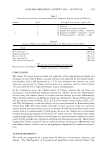
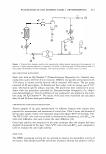
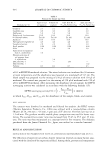
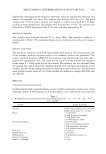
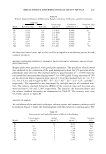
SIMULTANEOUS DETERMINATION OF HEAVY METALS 443 followed by centrifugation for 20 min at 2000 rpm. After the solution was removed, this process was repeated two times. The samples were dried at 60°C for 12 h. The dried samples and 10 ml of eluent solution were heated in a 90°C water bath for 1 h. After cooling to room temperature, the samples were sonicated for 15 min. The solution was filtered on a PVDF membrane filter (0.45 mm) and then analyzed by IC. METHOD OF ANALYSIS The samples were analyzed through IC by using PDA. The operation condition is summarized in Table I. This method utilized a post-column reaction with a color reagent (PAR). METHOD VALIDATION The specificity could be tested with a photodiode array detector. To check the precision of the method, multiple replicate analysis of a standard solution was performed. The relative standard deviations (RSDs) of the retention time and the peak area were calcu lated as the repeatability data. The result for the linearity of the method was evaluated in the range 0.1-1000 µg/ml for the test metals. The recovery rate was obtained from the spiking test, which added the standard solution with constant concentration to the cosmetic product being analyzed in order to check the accuracy of the test. The detection limit (signal-to-noise ration of 3:1) of this method was defined according to IUPAC and the ACS (8). RESULTS CHROMATOGRAPHIC SEPARATION Hydrated and weakly complexed heavy metals could be separated as cations on a cation exchange column. If weak organic acids such as oxalic, citric, and tartaric acid were used Table I IC Operation Conditions for Determination of Water-Soluble Pb2+, Fe2+, Cu2 + , Ni2+, Zn2 + , Co2 + , Cd2+, and Mn2+ System Column Eluent Post-column reagent Flow rate Reagent flow rate Mixing device Column of injection Detector wavelength Dionex ICS 2500 IonPac CS5A analytical (4 x 250 mm) IonPac CG5A guard (4 x 50 mm) 7.5 mM PDCA 66 mM Potassium hydroxide 7 4 mM Formic acid 5.6 mM Potassium sulfate 0.65 mM PAR 1.0 M 2-Dimethylaminoethanol 0.5 M Ammonium hydroxide 0.3 M Sodium bicarbonate 0.7 ml/min 0.35 ml/min 3 75-µl Knitted reaction coil 100 µl 530 nm

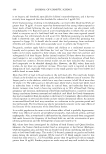
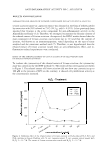
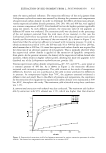
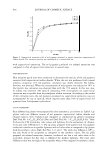
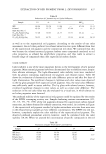
444 JOURNAL OF COSMETIC SCIENCE as chelating agents in the eluent, the net charge on the metal would be reduced, because the chelating agents would be anionic in solution above pKas of the chelating agents. The selectivity of the separation was actually due to the different degrees of association between the metals and the chelating agents that were producing different net charges on the metal complexes. If sufficiently strong chelating agents were used in high concentration, the net charge of the metal complexes could be negative. These anionic metal complexes were separated by anion exchange on the IonPac CSSA column, which allowed metals to be separated as cations and anions on a single column (9). The common chelating agent was oxalic acid, but oxalic acid did not elute the iron. Using this chelating agent, cadmium and manganese were eluted together. From oxalic acid, we could not determine Fe2+, Cd2+, and Mn2+ simultaneously (10,11). In this paper, pyridin-2,6-dicarboxylic acid (PDCA) chelating agent was used for metal separation. PDCA forms strong anionic complexes with most metal ions thus the separation of metals with PDCA on the IonPac CSSA column was an anion-exchange separation. Figure 1 shows that all metals were well separated simultaneously, with better resolution. If this method could be applied to cosmetic samples, it would improve the accuracy of determining toxic metals in the quality control process. OPTIMIZATION OF SPECTROPHOTOMETRIC DETECTION Most hydrated and weakly complexed metals will prec1p1tate in a suppressor and, therefore, cannot be detected by conductivity. Also, with a few exceptions, heavy metals cannot be detected by direct UV absorbance. Therefore, the metal complexing agent was added post-column to form a light-absorbing complex (Dionex Application Note 10, 2000). A number of metal complexing agents were often used for the determination of heavy metals with high sensitivity, e.g., dithizone, 4-(2-pyridylazo)resorcinol (PAR), and 8-hydroxyquinoline-5-sulfonate (HQS) (12). However, dithizone and HQS could not be used under the same conditions for different metals. Consequently, they were not suitable for the simultaneous detection of metals in chromatographic analysis. PAR was used as derivatizing agent because it could produce stable and colorful derivatives with most metals under the same conditions. An optimum flow rate and a concentration combination of PDCA and PAR with a stable baseline and high sensitivity could make 120 mAU 100 80 60 40 20 WVL:530 nm 6-Co 3-Cu 5-Zn Figure 1. Chromatogram of standard metals. Peaks (µg/ml): Pb = 10, Fe = 0.25, Cu = 0.5, Ni = 0.5, Zn = 0.5, Co = 0.5, Cd = 2.5, Mn = 1.0.
Purchased for the exclusive use of nofirst nolast (unknown)
From: SCC Media Library & Resource Center (library.scconline.org)