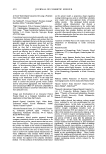
458 JOURNAL OF COSMETIC SCIENCE Surfactants derived from naturally-occurring amino acids Martin Husmann Schilll+Seilacher AG An overwhelming, positive trend toward healthier lifestyles is sweeping today's consumer marketplace. More and more consumers demand all-natural ingredients to complement their concerns for personal health and wellness. Natural ingredients were first investigated for their possible pharmaceutical uses following scientific validation of various natural ingredients, the focus then moved to personal care and will strongly affect also the HI&I market in the future. In recent years, natural products have grown from a niche segment to one of the fastest-growing categories in personal care. Amino acid based surfactants as ingredient in formulations for personal care, household and industrial & institutional end uses are a good answer to meet the aspects of physiological and ecological compatibility. Several amino-acid derived surfactants have been commercially available for many years. N-acyl sarcosinates, were the first amino acid surfactants applied in significant concentration in personal care products in the early 50ies. The naturally occurring amino acid sarcosine is found in muscles and other body tissues or as an intermediate in the metabolism of choline to glycine. The amino acid is condensed with fatty acids to observe amphiphilic character. The group of N-acyl glutamates is based on the amino acid glutamate known as flavor enhancer in food. Nowadays many applications are related to their substantivity on skin and hair, their foam forming power and their mildness to skin and eyes. The effect of floor polish films on the value and the hygiene improvement of a floor surface Martha Herzog, Wim van Drunen INTERPOL YMER GmbH Anwendungstechnik Surface Care Floor-care films are designed to maintain the practical value and aesthetics of floors. However, cleaning alone accomplishes a mere necessary removal of soil, thus, only the application of a care film ensures protection from mechanical exposure. Care products as well as working methods ought to be selected according to the floor type, in order to maintain the desired appearance, surefootedness and resistance against the mechanical walking impact. The care film also protects the floor from resoiling and significantly reduces general cleaning time. The various care methods in combination with the applied care products form a finishing film on the floor with different characteristics and properties. Liquid floor care products, however, can only form a less resistant film than polymer dispersions can. The especially durable film of such is due to their very dense surface that can be densified even further by polishing the film with a high-speed machine. Such coating reduces maintenance time and contributes to improved room hygiene due to a considerable reduction of germs during wet cleaning, in comparison to uncoated floors. Cleaning and disinfection in cosmetic production sites Aneta Senator JohnsonDiversey Polska Ltd. According to the Act on Cosmetics from the 30th of March 2001 "cosmetic product introduced to market ( ... ) cannot endanger human health". The quality and safety of ready cosmetic products are directly dependent on quality of raw materials and production hygiene. The hygiene as such is influenced by numerous factors like selection of the appropriate construction materials for devices and surfaces in the factory, the air conditioning system, but most of all the cleanness and technical condition of production lines. The process of cleaning and disinfection of devices and surfaces inside the production place should be always performed according to the procedure describing in detail run of processes, their frequency, selection of cleaning and disinfecting preparations, their concentration, temperature and time of activity of their working solutions, as well as the process of cleaning and disinfection of devices used for cleaning. The selection of cleaning and disinfection technique depends on the kind of soil and cleansed surface. Its efficacy is additionally influenced by the reaction time with the soil and applied chemical, mechanical and thermal energy.
Purchased for the exclusive use of nofirst nolast (unknown)
From: SCC Media Library & Resource Center (library.scconline.org)