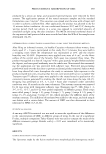
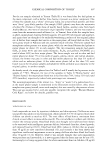
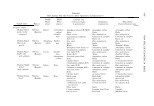
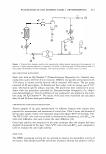
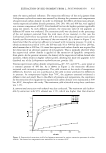
EXTRACTION OF RED PIGMENT FROM L. ERYTHRORHIZON 433 ® @) -® ® Figure 1. Process flow diagram used for the supercritical carbon dioxide extraction of red pigment. (1) extractor, (2) back pressure regulator, (3) seperator, (4) chiller, (5) working tank, (6) CO2 make-up tank, (7) CO2 pump, (8) modifier, (9) heat exchanger, (10) extracted product, (11) CO2 vent, (12) drain. SKIN IRRITATION PATCH TESTS Patch tests with an IQ Chamber™ (Chemotechnique Diagnostics Co., Sweden) were conducted to assess the level of skin irritation. Different test patches were prepared with 17% extract in cosmol, and the lipstick, which contained 10% extract. The test group consisted of 40 participants, 36 females and four males, with an average age of 39. 7 years, who had no specific allergic reactions. The patch tests were conducted in accor dance with the procedures provided by Chemotechnique Diagnostics Co. (http:!/ www.chemotechnique.se/). Twenty milliliters of test preparation was applied to the cham bers using the IQ Chamber™. The results of the tests were monitored and calculated after 24 and 48 hours from patch adhesion. CHROMATICITY AND LIGHT STABILITY TESTS Various samples of lip gloss manufactured via different formula with extracts were prepared for measurement and assessment of visual color. Table I shows the formula of the lip gloss sample. Colors were measured using Color Quest XE™ (Hunterlab, VA). The CIEL*a*b* color scale was utilized to determine the chromaticity, and LiE* ab• the total color difference, was used to assess the color difference (14). Color light stability was measured via the same technique after the samples had been daylight-illuminated for five days. The L*a*b* color scale and LiE* ab were compared in order to evaluate the color light stability. DPPH TESTS The DPPH scavenging activity test was utilized to measure the antioxidant activity of the extract. One hundred and fifty microliters of extract solution was added to 150 µl

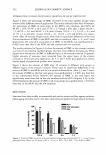
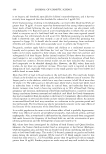
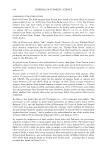
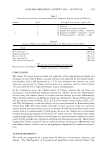
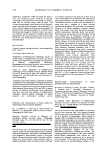
434 JOURNAL OF COSMETIC SCIENCE Table I Formula for Sample Lip Gloss Supercritical Ethanol red D&C Red No. 6 D&C Red No. 7 Formula (wt %) red pigment pigment (C 18 H14N206S·2Na) (C18HHN206S·Ca) Ozokerite 2.1 2.1 2.1 2.1 Candelilla wax 4.0 4.0 4.0 4.0 Polybutene 5.0 5.0 5.0 5.0 Polyglyceryl 2-triisostearate 10.0 10.0 10.0 10.0 Diisostearyl malate To 100 To 100 To 100 To 100 Jojoba oil 10.0 10.0 10.0 10.0 Hydrogenated vegetable oil 4.0 4.0 4.0 4.0 Tocopheryl acetate 2.0 2.0 2.0 2.0 Butyl paraben 0.04 0.04 0.04 0.04 Silica 2.0 2.0 2.0 2.0 Supercritical red pigment from L. erythrorhizon 3.0 Ethanol extraction of red pigment from L. erythrorhizon 3.0 D&C Red No. 6 1.45 D&C Red No. 7 1.02 Perfume 0.3 0.3 0.3 0.3 of 0.2 mM DPPH methanol solution. The mixed solution was incubated for 30 minutes at room temperature, and the absorbance was measured at a wavelength of 517 nm. The blank sample was prepared via the mixing of 150 µl of extract solution with 150 µl of methanol. The control was prepared via the mixing of 150 µl of methanol with 150 µl of 0.2 mM DPPH methanol. After measuring the absorbance of each sample, the DPPH scavenging activity was calculated in accordance with the following formula (15): . . . ( S A bs - B A bs ) DPPH scavenging act1v1ty(%) = 1 - ---- X 100(%) C A bs in which S A bs' BAbs' and C Abs are the absorbance of the sample, blank, and control. HPLC AN AL YSIS The extracts were dissolved in methanol and filtered for analysis. An HPLC system (Thermo Separation Products, Co., USA) was utilized with a reversed-phase column (Waters dC18, 250 mm x 4.6 mm, 5 µm) and a UV detector. The flow rate was set at 1.2 ml/min. The gradient variable mobile phase composition was used for better reso lution. The acetonitrile-to-water ratio was increased from 55:45 to 95:5 over 35 min utes. The ratio was then maintained at a constant level for five minutes. The shikonin purchased from the Junsei Chemical Co., Japan, was utilized as a standard material. RES UL TS AND DISCUSSION EXTRACTION OF RED PIGMENT FROM ROOTS OF LITHOSPERMUM ERYTHRORHIZON SIEB. ET ZUCC. The efficiency of supercritical carbon dioxide extraction depends on many factors asso ciated with the density of the supercritical fluid. Among them, pressure and temperature
Purchased for the exclusive use of nofirst nolast (unknown)
From: SCC Media Library & Resource Center (library.scconline.org)