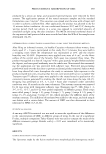
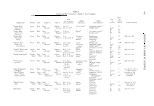
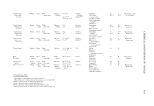
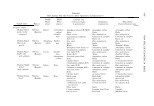
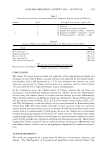
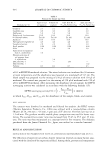
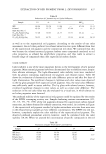
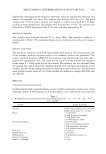
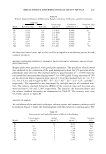
None Powder Grey Yemen (No label) (Saana, old (Y7) souk inside city walls) None Lump (Silver-) Yemen (No label) (shiny) Grey (Saana, old (YS) souk inside city walls) None Powder Black Yemen (No label) (matte) (Saana, old (YlO) souk inside city walls) * Translated from Arabic. + Phases in parentheses are at approx. 5 % or less each. Not given (Yemen?) Not given (Yemen?) Saudi Arabia (Mecca) Si, C, Ca, 0, Al, K, Fe, S (Mg, Ti, Na) Pb, S, C (0) Pb, S, 0, C + + This refers only to information on the container or on an enclosed leaflet. N Data from a previous study on kohls from Abu Dhabi city (8). z Data from a previous study on kohls from the United Arab Emirates (2). Quartz Galena Galena (Calcite) (Unknown) Cerussite Anglesite Anglesite (Cerussite) N N N N N N n l: trJ � 1--1 n n 0 � ""Ci 0 Cf) 1--1 ..., 1--1 0 z 0 'Tj 0 l: r � � 0 V1

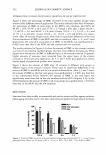
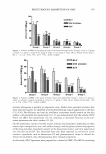
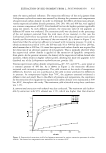
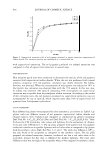
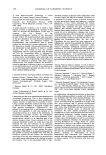
406 JOURNAL OF COSMETIC SCIENCE using a Siemens DS000 X-ray diffractometer operating with CuKa radiation. A step scan, using a step size of 0.02 degree and a time of ls/step, was done over a 2-theta range of 2-70 degrees for each of the samples. These data sets were then used to determine the major and minor components (phases) present in the samples by comparing the obtained data to the reference data in the 2004 JCPDS CToint Committee for Powder Diffraction Standards) database. The major phase was usually defined to be that phase that had a presence estimated to be� 70% any variation from this percentage is mentioned in the Results section below. The minor phases given in parentheses (in Tables I and II) are those estimated to be :s 5% of the sample. Also, each group of minor phases listed are in decreasing order of their estimated percentage presence. RESULTS In Tables I (Qatar) and II (Yemen) the various results/data are given, with the samples being listed in alphabetical order of their names (or translated names). Where samples had no name, they are listed as "None" (all samples in Table II are given a letter ("Y") and a number so they can be referred to in the text unambiguously) and, as previously stated, are regarded as all being observably different from one another. Also, for the few occasions where the same sample name occurred more than once, extra descriptive information is given in parentheses after the listed names. Also given in both Tables, on a simple YIN basis, is whether any written information is given (on the container, pack aging, or an enclosed leaflet)-here and/or in one of our previous studies-on the (chemical) contents of the sample or on the medicinal effects of using the kohl sample. For the 19 observably different samples purchased in Doha (Table I), it was found that six had galena (PbS, lead sulfide) present as the major component (phase). Three of these six (powder) samples were matte in texture and three "shiny," and were grey (1), grey-black (3), or black (2) in color. Three were made in Pakistan and one each in France, India, and Saudi Arabia. Four of these samples had minor phases (between approx. 2% and 8%) of cerussite (PbCO 3 ) and anglesite (PbSO 4 ), where these are regarded as oxidation/weathering products of the original galena ore. A further five (powder) samples had sassolite (H 3 B0 3 ) as the major phase, and all were made in Pakistan. Their colors varied from light grey to black, the grey-black/black colors being caused by the presence of varying amounts of (the minor phases) graphite or amorphous carbon. One sample ("Shamsi Surma," made in the Punjab of Pakistan) had minor phases of halite (NaCl, at about 35%), quartz (Si02 , at about 10%), and, at less than about 5% each: calcite (CaCO 3 ), anhydrite (CaSO4), and sylvite (KCl). Another four (three being greasy and one a powder) samples had zincite (ZnO) as the major phase, and again the black/ grey-black color derived from the presence of (the minor phases) amorphous carbon or graphite. Three were made in Pakistan and one in India. The latter sample also had camphor (C 10 H160) present at about 21 %. Three (two being greasy and one a powder) more samples had amorphous carbon as the major phase, and all were black in color. Two were made in India and one in Pakistan. The powder sample (from India) had talc (Mg 3 Si40 10 (0H)2) present as a minor phase, though its approximate percentage pres ence is uncertain. The final (powder) sample had talc as its major phase, with its black color again being caused by the presence of (a minor phase of) amorphous carbon/ graphite. It had additional minor phases of calcite (at about 41 %), and at less than about 5 % each were quartz and an unknown phase. Its country of origin was Pakistan.
Purchased for the exclusive use of nofirst nolast (unknown)
From: SCC Media Library & Resource Center (library.scconline.org)