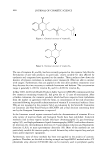
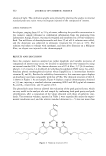
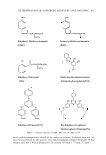
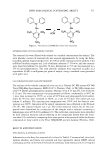
]. Cosmet. Sci.} 59, 459-467 (November/December 2008) Identification and quantitation of vitamins K1 and K3 in cosmetic products for facial skin protection D. DE ORSI, G. GIANNINI, L. GAGLIARDI, I. CARPANI, and D. TONELLI, Istituto Superiore di Sanita, Dipartimento de! Farmaco, Viale Regina Elena 299, 00161 Rome (D.D.0., G.G., L.G.), and Dipartimento di Chimica Fisica ed Inorganica, Universita di Bologna, Viale Risorgimento 4, 40136 Bologna, (J.C., D. T.), Italy. Accepted for publication April 1, 2008. Synopsis A simple and rapid analytical method was developed for the determination of vitamins K 1 and K3 in facial anti-rash creams. The procedure is based on an ultrasonic extraction of the cosmetic sample with dimeth ylacetamide, in the presence of an internal standard, followed by HPLC separation. HPLC was performed using a C18 column and spectrophotometric detection at 333 nm. A linear gradient elution was carried out starting with 50% acetonitrile-methanol (75:25 v/v) and water up to 100% acetonitrile-methanol for 5 min. Linearity was established over the concentration range from 0.2 to 1.0 mg/ml for vitamin K 1 and from 0.02 to 0.1 mg/ml for vitamin K3, with LOD values of 100 ng and 20 ng injected, respectively. The accuracy was verified by spiking experiments on model cosmetic samples. The proposed method has been successfully applied for the analysis of commercial samples of creams. INTRODUCTION Vitamin K is a cofactor for an enzyme that converts specific glutamyl residues in several proteins such as plasma clotting factors. Recent investigations indicate that it is required for the synthesis of osteocalcin, which is important for mineralization in bone. There are two major forms of vitamin K in nature: vitamin K 1 (phylloquinone or phytomenadi one), which is produced by green plants, and the vitamin K3 series (menaquinones), which is synthesised by bacteria. Compounds with vitamin K activity have a common 2-methyl-1,4-naphthoquinone nucleus and a variable alkyl substituent at the 3 position. Vitamin K 1 (Figure 1) has a 20-carbon phytyl side chain, whereas menaquinones have multiple prenyl side chains whose number is indicated by a suffix. Little is known about vitamin K status in humans, and its determination in biological fluids is difficult due to the very low basal concentrations (order of magnitude nM) (1). Menadione, formerly known as vitamin K3 , is a synthetic form that lacks the side chain at the 3 position (Figure 2) and that, despite toxicity problems and limited biological activity, is still available in some countries as a pharmaceutical vitamin K formulation in the form of water-soluble salts (2). 459

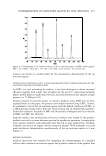
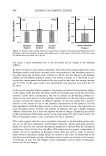
460 JOURNAL OF COSMETIC SCIENCE Figure 1. Chemical structure of vitamin K 1 . Figure 2. Chemical structure of vitamin K3 • The use of vitamins K 1 and K3 has been recently proposed in the cosmetic field for the formulation of anti-rash products. In particular, creams suitable for skin affected by erythrosis and couperose have appeared on the market. These products slow down the kinetics of tyrosine conversion to melanin since vitamins K (VKs) are able to interact with oxygen. Furthermore, they are applied on the skin after aesthetic treatments since they decrease the time necessary to reabsorb hematoma and hedema. The concentration range is generally 1-8% for vitamin K 1 and 0.1-0.8% for vitamin K3" In May 2005, the French Health Products Safety Agency (AFSSAPS) communicated that five cosmetics containing vitamin K 1 had given rise to 12 cases of sensitization. After a further evaluation, the cosmetic products which had been suspected were withdrawn from the market in agreement with the firms, in consideration of the risk of systemic reactions following the possible administration of vitamin Kin sensitized subjects. Since VKs are not regulated in the cosmetic field, an evaluation by the Scientific Committee on Cosmetics and Non-Food Products (SCCNFP) and a final decision concerning their use by the European Commission is expected. In the literature several reports concerned with the determination of vitamins K in a wide variety of matrices (foods and biological fluids) have been published. Analytical methods cited in these reports include thin-layer chromatography (3), gas chromatog raphy (4,5), and high-performance liquid chromatography (HPLC) with either ultravio let detection (6), electrochemical detection (2,7) postcolumn reduction and fluorimetric detection (1,8,9), or mass spectrometry detection (10). Most of the methods are not particularly suitable for routine quality control because they either require long analysis times and/or expensive equipment. Furthermore, none of these methods has been ever applied to the analysis of cosmetic products. Therefore, we decided to develop a simple and rapid HPLC method with a UV photodiode array detector (UV-DAD) that can be routinely used in peripheral quality
Purchased for the exclusive use of nofirst nolast (unknown)
From: SCC Media Library & Resource Center (library.scconline.org)