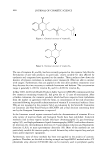
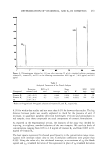
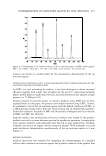
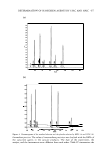
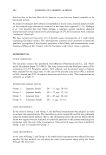
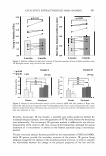
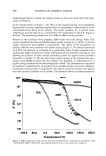
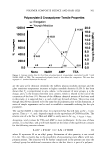
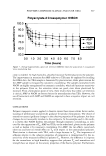
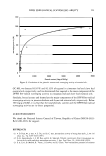
492 � rlJ ·- = � = b ·- ..c = '-" c ·- rlJ = � � a � rlJ ..... ·- = � = ... ·- ..c ... = '--" C ·- rll = � .... � b 1600 1400 1200 1000 800 600 400 200 108 107 106 105 104 103 102 101 0 0 JOURNAL OF COSMETIC SCIENCE 2 20 30 Angle( B) 4 6 Angle( 8) o Eucalyptus : • P1acebo 40 o Eucalyptus ePlacebo 8 50 Figure 10. (a) Results of W AXD analysis: closed marker indicates results from EucalyptuJ extract scalp lotion-treated hair open marker indicates results from placebo scalp lotion-treated hair. (b) Results of SAXS analysis: closed marker indicates results from EucalyptuJ extract scalp lotion-treated hair open marker indicates results from placebo scalp lotion-treated hair. secondary protein structure, we carried out secondary structural analysis using IR spectra of the hair. We measured 36 points per hair on eight hair fibers from both the new-growth part from the Eucalyptus-treated hair and the placebo-treated hair, which were about 5 mm

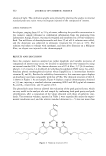
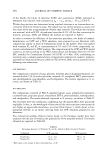
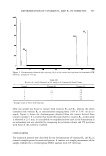
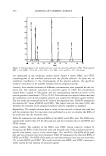
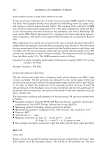
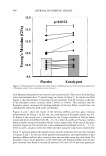
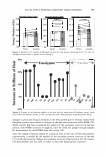
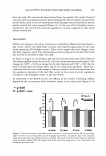
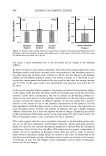
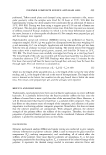
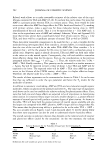
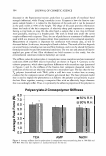
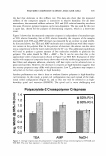
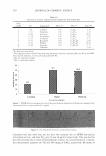
EUCALYPTUS EXTRACT-INDUCED HAIR CHANGES 493 from the scalp. We removed the data obtained from the medulla. The amide I band of each spectrum was analyzed using the Sarver method (24). The secondary structure of the protein of the cortex in the new-growth part of the Eucalyptus extract-treated hair and the placebo-treated hair were compared (Figure 11). In the case of the Eucalyptus extract treated hair, the level of beta structure appeared to increase compared to that of the placebo-treated hair. DISCUSSION Neither the changes in hair gloss intensity nor in bending stiffness have been found in hair tresses, which were made from cut hairs, after repeated applications of the scalp lotion containing 3% Eucalyptus extract. These results suggest that these changes in the hair fiber properties result from the Eucalyptus extract acting not on the hair fiber itself, but directly on the follicle under the scalp. As shown in Figure 12, the diameter and the ratio of minor/major axes of hair fibers do not change significantly by the use of EL in all cases of the aforementioned panelists. The changes are 0.995 ± 0.026 on average for the hair diameter and 0.985 ± 0.016 for the ratio of minor/major axes of hair fibers and are not statistically significant. These facts, combined with the result of the change in Young's modulus, lead to the hypothesis that the qualitative alteration of the hair fiber occurs by the action of active ingredients contained in the Eucalyptus extract on the hair follicle. As mentioned in the Results section, the efficacy of the increase in bending stiffness depends on the concentration of the Eucalyptus extract in the scalp lotion (Figure 5). In *:p0.05 **:p0.01 t-test 110 108 .□ Placebo 106 ** . ■ Eucalyphls 104 � 102 0100 98 96 94 92 90 a-helix /J-sheet /J-tum random Figure 11. Results of analysis of secondary protein structure in cortex by microscopic IR: 36 points/hair, eight hair fibers of the new-growth part of Eucalyptus-treated hair, and placebo hairs were measured, respectively. Data from the medulla have been removed. The spectrum of the amide I band was analyzed using the Sarver method (24). The highest and lowest data were neglected at t-test. Each result was normalized by placebo data.
Purchased for the exclusive use of nofirst nolast (unknown)
From: SCC Media Library & Resource Center (library.scconline.org)