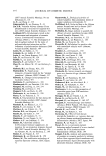
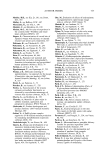
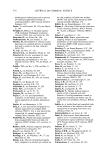
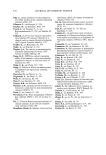
JOURNAL OF COSMETIC SCIENCE (4) S. Naitou, et al., Proc. 9th Int. Wool. Text. Res. Conj, Biella, Vol. 2, pp. 19-30 (1995). (5) G. Kaba, et al., Hair research for the next millennium, Int. Congr. Ser., 1111, 117-121 (1996). (6) H. Tanamachi, et al., The First International Conference on Applied Hair Science, Princeton, NJ, June 9-10, 2004. (7) Y. Masukawa, et al., J. Soc. Cosmet. Chem., 56, 1-16 (2005). (8) Y. Masukawa, et al., 13th International Hair-Science Symposium, Potsdam, Germany, September 10-12, 2003. (9) R. Fukuda, et al., 67th Annual Meeting of the Tokyo Div., Japanese Dermatol. Assoc., February 14-15, 2004. (10) K. Koike, et al., 95th AOCS Annual Meeting, May 9-12, 2004. (11) A. Mamada, et al., 53rd Soc. Polymer Science Japan Annual Meeting, May 25-27, 2004. (12) P. Hallegot, Cosmet. Toiletr., 109(12), 49-57 (1994). (13) Japan Patent No. 2000-205959. (14) Japan Patent No. 3340971 (2002.8.16). (15) R. F. Stamm, et al., J. Soc. Cosmet. Chem., 28, 571-599 (1977). (16) R. F. Stamm, et al.,]. Soc. Cosmet. Chem., 28, 601-609 (1977). (17) Japan Patent No. 1991-289942. (18) S. Kawabata, et al., Senn'igakaishi, 30, 340-348 (1972). (19) A. Mamada, et al., J. Soc. Cosmet. Chem., 58, 485-494 (2007). (20) A. Sogabe, et al., J. Soc. Cosmet. Chem. Jpn., 36(3), 207-216 (2002). (21) J. A. Swift, Int. J. Cosmet. Sci., 17, 245-253 (1995). (22) S. B. Ruetsch, et al., J. Soc. Cosmet. Chem., 54, 579-588 (2003). (23) L. E. Nielsen, Mechanical Properties of Polymers and Composites (Marcel Dekker, New York, 1975). (24) R. W. Sarver, et al., Anal. Biochem., 194, 89-100 (1991). (25) A. N. Parbhu, et al., Biochemistry, 38, 11755-11761 (1999). (26) H. Yoshimizu, et al., J. Mo!. Struct., 246, 367-379 (1991). (27) L.A. Compton, et al., Anal. Biochem., 155, 155-167 (1986). (28) K. Gekko, et al., Biochemistry, 25, 6563-6571 (1986). (29) K. Gekko, et al., j. Phys. Chem., 83, 2706-2714 (1979). (30) K. Gekko, et al., Seibutsu-Butsuri, 24, 91-99 (1984). (31) A. Cooper, Proc. Natl. Acad. Sci. USA, 73, 274 (1976). (32) R. H. Pain, Nature (London), 326, 247 (1987).

]. Cosmet. Sci., 59, 497-508 (November/December 2008) Polymer composite principles applied to hair styling gels DENISE WADE RAFFERTY, JOSEPH ZELLIA, DANIEL HASMAN, and JOHN MULLAY, Lubrizol Advanced Materials, Inc., Noveon® Consumer Specialties, 9911 Brecksville Road, Brecksville, OH 44141-3247. Accepted for publication April 7, 2008. Synopsis A novel approach is taken to understand the mechanical performance of fixative-treated hair tresses. Polymer composite principles are applied to explain the performance. Examples are given for polyacrylate-2 cross polymer that show that the choice of neutralizer affects the film properties of anionic acrylic polymers by plasticization or by hardening through ionic (physical) crosslinking. The effect of these changes in the polymer film on the composite properties was determined by mechanical stiffness and high-humidity curl retention testing. It is shown that both adhesion to the hair and polymer cohesion are important in determining fixative polymer performance. The implications of the results for the formulation of fixative systems are discussed. INTRODUCTION Hair fixative gels are widely used to create and maintain a variety of hairstyles. Two important properties desired in hair gel products are stiffness and hold, which are controlled by the fixative polymer in the formulation. To satisfy increasing consumer demands, performance with respect to these properties must be improved relative to the current fixative polymers. Understanding the science behind fixative gel-treated hair is essential to achieving these improvements. A hair fixative gel is a cosmetic product however, it will be argued here that its performance is governed by polymer composite mechanisms. When a gel is applied to the hair, a polymer-fiber composite is created that is morphologically similar to high performance fiber composites (1) used in load-bearing applications. The differences between fixative-treated hair and industrial fiber composites are primarily in the mode of fabrication and the performance specifications. Industrial composites start with the polymer and add fibers for reinforcement there is a critical amount of fibers that must be achieved for strengthening. In contrast, fixative composites start with fibers (hair), and a minimum amount of polymer gel must be used to achieve composite strength Address all correspondence to Denise Wade Rafferty. 497
Purchased for the exclusive use of nofirst nolast (unknown)
From: SCC Media Library & Resource Center (library.scconline.org)