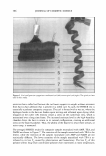
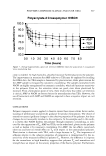
508 JOURNAL OF COSMETIC SCIENCE significant plasticization of the polymer is shown to affect high-humidity curl retention. This suggests that neutralizers that are good plasticizers and humectants, as well as ingredients typically used for humectant properties, should be avoided in a fixative formulation where good curl retention and low tack are essential. ACKNOWLEDGMENTS The authors thank Lubrizol Advanced Materials, Inc. (a wholly owned subsidiary of the Lubrizol Corporation) for permission to publish this work. REFERENCES (1) S. T. Peters, "Introduction, Composite Basics and Road Map," in Handbook of Composites, 2nd ed., S. T. Peters, Ed. (Chapman & Hall, London, 1998), pp. 1--4. (2) M. Piggott, Load Bearing Fibre Composites, 2nd ed. (Kluwer, Boston, 2002), p. 173. (3) ASTM D882-02, Standard test method for tensile properties of thin plastic sheeting, (ASTM, West Conshohocken, PA, 1996). (4) G. L Wilkes, "Mechanical Properties," in Comprehensive Desk Reference of Polymer Characterization and Analysis, R. F. Brady, Ed. (American Chemical Society, Washington, D.C., 2003), p. 634. (5) L. H. Sperling, Introduction to Physical Polymer Science, 2nd ed. (John Wiley & Sons, New York, 1992), p. 304. (6) T. D. Juska and P. M. Puckett, "Matrix Resins and Fiber/Matrix Adhesion," in Composites Engineering Handbook, P. K. Mallick, Ed. (Marcel Dekker, New York, 1997), pp. 144, 146, 158. (7) L. H. Sperling, Introduction to Physical Polymer Science, 2nd ed. (John Wiley & Sons, New York, 1992), p. 314. (8) A. Eisenberg and]. -S. Kim, Introduction to lonomers (John Wiley & Sons, New York, 1998), pp. 45--48. (9) L. E. Nielsen and R. F. Landel, Mechanical Properties of Polymers and Composites, 2nd ed. (Marcel Dekker, New York, 1994), pp. 49-50. (10) I. M. Ward and D. W. Hadley, An Introduction to the Mechanical Properties of Solid Polymers (John Wiley & Sons, New York, 1993), p. 178. (11) H. Matsuura and A. Eisenberg, Glass transitions of ethyl acrylate-based ionomers,j. Polym. Sci., 14, 1201-1209 (1976). (12) J. Graton, F. Besseau, M. Berthelot, E. D. Raczynska, and C. Laurence, L'echelle pKHB de basicite de liason hydrogene des amines tertiares aliphatiques, Can. j. Chem. 80, 1375-1385 (2002). (13) G. Raabe, Y. Wang, and]. Fleischhauer, Calculation of the proton affinities of primary, secondary, and tertiary amines using semiempirical and ab initio methods, Verlag de Zeitschrift fur Naturforschung, 55a, 687-694 (2000). (14) Z. Pawlak, S. Kuna, M. Richert, E. Giersz, M. Wisniewska, A. Liwo, and L. Chmurzynski, Acidity constants of 19 protonated N-bases in cyclohexanone, acetone, and butan-2-one,J. Chem. Thermody nam., 23, 135-140 (1991). (15) P. Smith and L. Goulet, Effect of the addition of amine diluents on the physical properties of poly(methyl methacrylate-co-methacrylic acid) copolymers obtained by partial hydrolysis of PMMA, ]. Polym. Sci. B, 31, 327-338 (1993). (16) R. A. Weiss and P. K. Agarwal, Influence of intermolecular interactions on the melt rheology of a propylene-acrylic acid copolymer and its salts,]. Appl. Polym. Sci., 26, 449--462 (1981). (17) ASTM D790-99, Standard test methods for flexural properties of unreinforced and reinforced plastics and electrical insulating materials (ASTM, West Conshohocken, PA, 1999). (18) C.R. Robbins, Chemical and Physical Behavior of Human Hair, 4th ed. (Springer-Verlag, New York, 2002), pp. 133-134.

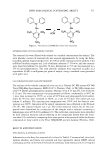
]. Cosmet. Sci., 59, 509-522 (November/December 2008) DPPH free-radical scavenging ability, total phenolic content, and chemical composition analysis of forty-five kinds of essential oils HSIAO-FEN WANG, YU-KANG WANG, and KUANG-HW AY YIH, Departments of Science and Technology for Bioindustry (H.-F. W.) and Applied Cosmetology (K.-H. Y.), Hungkuang University, Shalu, No. 34, Chung-Chie Road, Taichung, Taiwan 433, and Lorien Vana Biotech. Inc., IOF, No. 176, Chang-chun Road, Taipei, Taiwan 104 (Y.-K. W.), R.O.C. Accepted for publication May 28, 2008. Synopsis Forty-five kinds of commonly used essential oils were employed to investigate the DPPH (1, 1-diphenyl- 2-picrylhydrazyl) radical scavenging ability and total phenolic content of major chemical compositions. The free-radical scavenging ability and total phenolic content of cinnamon leaf and clove bud essential oils are the best among these essential oils. One-half milliliter of cinnamon leaf and clove bud essential oils (10 mg/ml EtOH) are shown to be 96.74% and 96.12% of the DPPH (2.5ml, 1.52 x 10- 4 M) free-radical scavenging ability, respectively. Their EC 50 (effective concentrations) are 53 and 36 (µg/ml). One milligram per milliliter of cinnamon leaf, clove bud, and thyme red essential oils were shown to be 420, 480, and 270 (mg/g of GAE) of total phenolic content, respectively. Eugenol in cinnamon leaf and clove bud essential oils (82.87% and 82.32%, respectively) were analyzed by GC-MS. It is clear that the amounts of the phenol compounds in essential oils and the DPPH free-radical scavenging ability are in direct proportion. INTRODUCTION A great number of aromatic, spicy, medicinal, and other plants contain chemical com pounds exhibiting antioxidant properties (1-5). Sources of natural antioxidants are primarily plant phenolics that may occur in all parts of plants, such as in the fruits, vegetables, nuts, seeds, leaves, roots, and barks (6). Essential oils from aromatic and medicinal plants have been known to possess biological activity, notably anti inflammatory (7), antiatherosclerotic, antitumor, antimutagenic (8), anticarcinogenic (9), antibacterial (10), or antiviral activities to a greater or lesser extent (11,12). Many essential oils also have been confirmed to possess antioxidant activity (13-15). An essential oil can be extracted from leaves and seeds it is used as a flavoring agent or Address all correspondence to Kuang-Hway Yih. 509
Purchased for the exclusive use of nofirst nolast (unknown)
From: SCC Media Library & Resource Center (library.scconline.org)