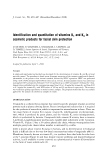
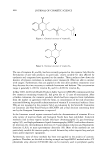
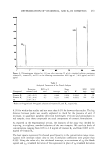
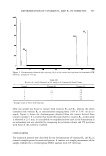
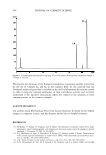
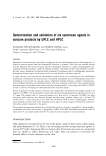
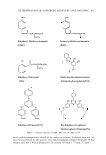
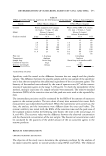
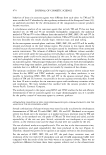
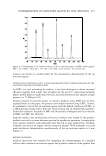
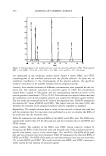
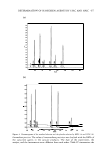
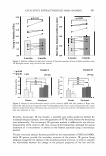
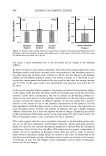
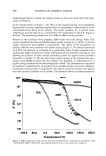
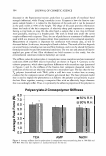
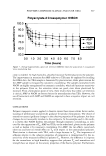
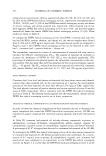
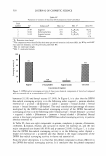
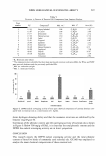
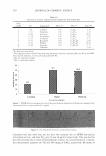
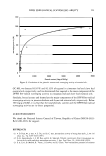
516 JOURNAL OF COSMETIC SCIENCE 100 80 :� 60 c,;S '@) 40 ---Cinnamon leaf --o--Oove bud c,;S 20 VJ ----+-BHA 0 0 10 50 100 150 200 Concentration (µg/mL) Figure 2. DPPH radical scavenging activity in different concentrations of cinnamon leaf essential oil, clove bud essential oil, and BHA. 100 � e..., 80 -- Jasmine absolute :� 60 --o--Thyme red ----+-BHA CQ '6i) 40 CQ 20 VJ 0 0 100 500 1000 1500 2000 Concentration (µg/mL) Figure 3. DPPH radical scavenging activity in different concentration of jasmine absolute essential oil, thyme red essential oil, and BHA. following order: eugenol cinnamon leaf essential oil cx-pinene �-caryophyllene and that the eugenol is the major component of the DPPH free-radical scavenging activity in cinnamon leaf essential oil. In the previous report, the pure eugenol and the equiva lent mass of eugenol from basil (Ocimum basilicum 1.) essential oil show similar DPPH free-radical scavenging activity (2 5 ). In Table IV, three major chemical compositions of clove bud are shown to be detected by GC-MS. We detected eugenol (82.32%), eugenol acetate (11.17%), and � caryophyllen (4.75%). To investigate the DPPH free-radical scavenging activity of the three major components in clove bud essential oil, the following experiments were conducted. In a concentration of 0.1 mg/ml, pure eugenol, �-caryophyllene, eugenol acetate, and clove bud essential oil were employed in an experiment on the DPPH free-radical scavenging activity. In Figure 5, it is clear that the DPPH free-radical scavenging activity is in the following order: eugenol clove bud essential oil eugenol

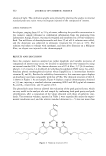
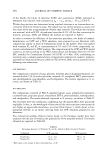
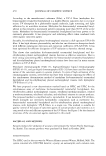
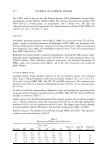
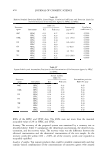
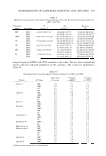
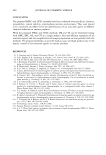
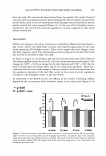
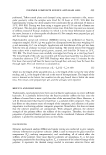
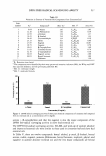
DPPH FREE-RADICAL SCAVENGING ABILI1Y 517 Table III Variation in Content of Essential Oil Components from Cinnamon Leaf Peak number Ra t Compoundb Mol. wt.c Mol. f.d Area(%) 9.04 a-Pinene 136 C10H16 2.05 2 12.10 a-Phellandrene 136 C10H16 0.59 3 12.93 p-Cymene 134 C10H14 1.37 4 16.41 J3-Linalool 154 C10H1sO 1.33 5 24.45 Cinnamaldehyde 154 C 9 H8O 0.19 6 25.13 Safrole 162 C10H18O2 0.96 7 27.87 Eugenol 164 C10H1202 82.87 8 28.75 Copaene 204 C1sH24 0.78 9 30.61 J3-Caryophyllene 204 C1sH24 3.40 10 31.83 Cinnamyl acetate 176 C11H1202 0.74 11 32.10 a-Caryophyllene 204 C1sH24 0.50 12 34.63 Eugenol acetate 206 C12H1403 2.00 13 44.03 Benzyl benzoate 212 C14H1202 1.86 * Unknown 1.36 a R,: Retention time (min). 6 The components were identified by their mass spectra and retention indicators (Rls), the Wiley and NIST mass spectral databases, and the previously published Rls. c Mol. wt: molecular weight. d Mol. f.: molecular formula. 100 80 t -� 60 "i 71.1 63.3 40 20 1.S 4.18 0 a-Pilcne f}-Carophylk:ne Cinumn leaf Concentratm (0. lm&'mL) Figure 4. DPPH radical scavenging activity of three pure chemical components of cinnamon leaf compared with its essential oils at a concentration of 0.1 mg/ml. acetate �-caryophyllene and that the eugenol is also the major component of the DPPH free-radical scavenging activity in clove bud essential oil. The DPPH free-radical scavenging activity, GC-MS, and work-up of jasmine absolute and thyme red essential oils were similar to those used in cinnamon leaf and clove bud essential oils. In Table V, there are twelve compounds: benzyl alcohol, p-cresol, �-linalool, benzyl acetate, indole, eugenol, jasmone, J3-farnesene, benzyl benzoate, isophytol, phytol, and squalene in jasmine absolute essential oil, and the two major compounds are benzyl
Purchased for the exclusive use of nofirst nolast (unknown)
From: SCC Media Library & Resource Center (library.scconline.org)