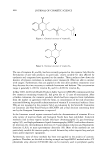
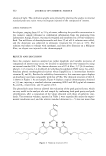
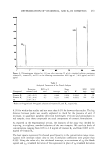
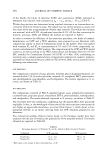
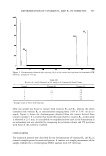
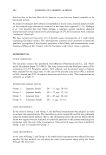
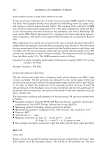
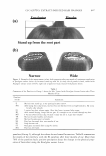
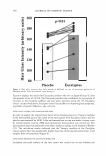
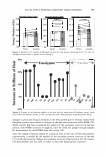
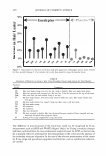
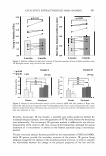
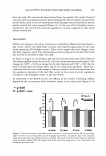
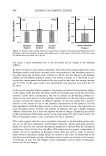
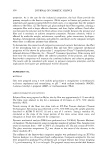
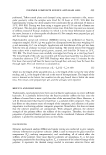
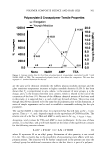
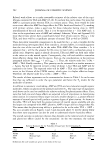
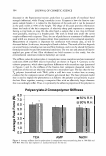
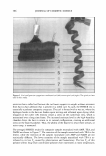
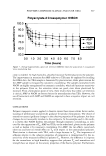
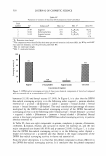
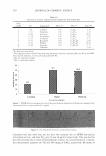
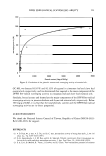
506 JOURNAL OF COSMETIC SCIENCE Figure 6. Curl configuration comparison: traditional curl (left) versus spiral curl (right). The spiral curl was used in this study. sensitive than a rolled curl because the curl must support its weight without assistance from hair-to-hair adhesion that is present in a rolled curl. As such, the HHSCR test is essentially a polymer composite creep test. The curl is formed with a wet set, where the hydrogen bonds in the hair are broken upon wetting and reformed upon drying while wrapped on the curler (18). Gravity creates a stress on the curled hair tress, which is maintained over a long time frame. The increased moisture level in the high-humidity chamber drives the hair to return to its natural configuration, creating an additional stress on the fixative polymer. Thus, the ability of the fixative to resist these stresses, or resist creep, is measured. The averaged HHSCR results for composite samples neutralized with AMP, TEA, and NaOH are shown in Figure 7. The retention of the sample neutralized with TEA is the lowest, while the retention of the samples neutralized with AMP and NaOH are not statistically different. The lower retention of the sample neutralized with TEA is at tributed to its low T g caused by plasticization and humectancy. The low T g of this polymer allows long-chain coordinated polymer chain movement at room temperature

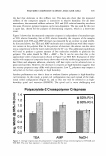
POLYMER COMPOSITE SCIENCE AND HAIR GELS 507 Polyacrylate-2 Crosspolymer HHSCR 100.0 90.0 C: 80.0 C: Ci) Et: 70.0 Ci) --.. _ _...._.....,__...., --+-AMP ---TEA 60.0 c( ---.- NaOH 50.0 0.0 1.0 2.0 3.0 4.0 5.0 6.0 7.0 8.0 Time (hours) Figure 7. Average high-humidity spiral curl retention (HHSCR) values for polyacrylate-2 crosspolymer versus neutralizing base. creep is enabled. At high humidity, absorbed moisture further plasticizes the polymer. The improvement in retention for AMP relative to TEA may be explained by recalling the DMA data: the TEA sample is dominated by plasticization, while plasticization for the AMP sample is mitigated by ionomeric crosslinking. The samples neutralized with NaOH are highly strengthened by ionomeric crosslinks, which add moisture sensitivity to the polymer. Even so, the retention values are good, even when plasticized by moisture. From a formulation point of view, these results show that when curl retention is critical, AMP or NaOH are better choices for neutralization than TEA. However, the use of humectants with AMP and NaOH are expected to have a negative impact on curl retention. CONCLUSIONS Polymer composite science applied to fixative-treated hair tresses allows better under standing of performance and provides guidance for product formulation. The choice of neutralizer causes significant changes in the cohesive properties of the polymer, but these changes do not necessarily translate to the composite. In the example used in this work, it is shown that NaOH hardens the polymer through ionomeric crosslinking, as indi cated by the suppression ofT g· AMP and TEA, on the other hand, plasticize the polymer as well as harden it by ionomeric crosslinking. For AMP, the two effects cancel each other out and have no overall effect on T g with respect to the unneutralized polymer. Plasticization is dominant with TEA, with a large decrease in T g· The importance of adhesion relative to the cohesive properties of composites is demonstrated by the in sensitivity of the measured stiffness to polymer T g· However, the difference in crispness for the neutralizers at high humidity suggests that polymer T g and neutralizer acid strength have an impact on the sensory properties of the fixative polymer. Furthermore,
Purchased for the exclusive use of nofirst nolast (unknown)
From: SCC Media Library & Resource Center (library.scconline.org)