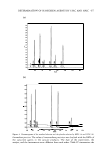
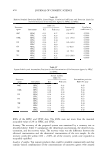
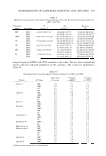
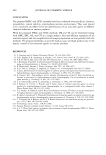
480 JOURNAL OF COSMETIC SCIENCE CONCLUSIONS The proposed HPLC and UPLC methods have been evaluated over specificity, linearity, repeatability, system stability, intermediate precision, and accuracy. They were proved to be convenient and effective for the determination of six sunscreen agents of different chemical behaviors in suncare products. With the proposed HPLC and UPLC methods, TM and TS can be determined along with OMC, IMC, OS, and OT in a single analysis. Fast and efficient separation of six sunscreen agents and the simplification of sample preparation are also possible with the methods. The proposed methods can provide high accuracy and high productivity in the quality control of six sunscreen agents in suncare products. REFERENCES (1) E. Chatelain and B. Gabard, Photochem. Photobiol. 74, 401-406 (2001). (2) D.R. English, B. K. Armstrong, A. Kricker, et al., Cancer Causes Control, 8, 271-283 (1997). (3) F. R. De Gruijl, Skin cancer and solar UV radiation, Eur.]. Cancer, 35, 2003-2009 (1999). (4) J. Krutmann, Ultraviolet A radiation-induced biological effects in human skin: Relevance for photo- aging and photodermatosis,J. Dermatol. Sci., 23, S22-S26 (2000). (5) B. Musial and J. Sherma,J. Planar Chromatogr. Mod. TLC, 10, 368 (1997). (6) D. D. Orsi, G. Giannini, L. Gagliardi, D. Tonelli, et al., Chromatographia, 64, 509-515 (2006). (7) S. Santo, Determination of sunscreen agents in cosmetic products by supercritical fluid extraction and high-performance liquid chromatography,]. Chromatogr. A, 870, 199-205 (2000). (8) A. Chisvert, M. C. Pascual-Marti, and A. Salvador, Determination of the UV filters worldwide au thorised in sunscreens by high-performance liquid chromatography: Use of cyclodextrins as mobile phase modifier,]. Chromatogr. A, 921, 207-215 (2001). (9) C. G. Smyrniotakis and H. A. Archontaki,J. Chromatogr. A, 1031, 319-324 (2004). (10) S. Simeoni, R. Tursilli, A. Bianchi, and S. Scalia, Assay of common sunscreen agents in suncare products by high-performance liquid chromatography on a cyanopropyl-bonded silica column,]. Pharm. Biomed. Anal., 38, 250-255 (2005). (11) D. J. Schakel, D. Kalsbeek, and K. Boer, Determination of sixteen UV filters in suncare formulations by high-performance liquid chromatography,]. Chromatogr. A, 1049, 127-130 (2004). (12) K. Ikeda, S. Suzuki, and Y. Watanabe, Determination of sunscreen agents in cosmetic products by gas chromatography and gas chromatography-mass spectrometry,]. Chromatogr A, 513, 321-326 (1990). (13) C. G. Hayden, M. S. Roberts, and H. A. E. Benson, Sunscreens: Are Australians getting the good oil?, Aust. N.Z.]. Med, 28, 639-646 (1998). (14) D. Steinberg, Cosmet. Toiletr., 118, 81 (2003). (15) European Economic Community Council Directive. 76/768. Annex VII (1976). (16) S. A. C. Wren, Peak capacity in gradient ultra performance liquid chromatography (UPLC),j. Pharm. Biomed. Anal., 38, 337-343 (2005).

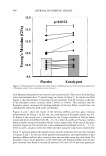
j. Cosmet. Sci., 59, 481--496 (November/December 2008) Changes in hair properties by Eucalyptus extract AKIRA MAMADA, MARIKO ISHIHAMA, REIKO FUKUDA, and SHIGETO INOUE, Kao Corporation, Beauty Research Center, 2-1-3 Bunka Sumida, Tokyo 131-8501 (A.M., M.I., R.F.), and Kao Corporation, Analytical Science Research Laboratories, 1334 Minato Wakayama, Wakayama 640-8580 (S.l.),Japan. Accepted for publication May 28, 2008. Synopsis A long-term usage investigation of a scalp lotion containing Eucalyptus extract, which increases the amount of ceramide in the skin, was carried out to explore the change in physical properties of the hair fiber. Half-head or whole-head usage studies of a scalp lotion with Eucalyptus extract were carried out for the following groups: Japanese female, Japanese senior female, Japanese male, and Caucasian female panelists. As a result, the improvement in hair luster and bounce in the root part of the hair were recognized by the panelists after the long-term application of the scalp lotion with Eucalyptus extract. Measurement of hair gloss intensity and bending stress at the root suggests that this improvement is based on changes in these physical properties. These results indicate that the recognition of panelists is based on an actual change in the hair fiber properties. The efficacy of Eucalyptus extract is expressed regardless of race, age, or gender, since similar results were confirmed in all panelist groups. In order to investigate the cause of these phenomena, we measured the elasticity (Young's modulus) of the new-growth part of the cortex in Eucalyptus extract-treated hair and placebo hair by the nano-indentation method of atomic force microscopy (AFM). These results suggest that the Young's modulus of the new growth part of the cortex in Eucalyptus extract treated-hair increases in comparison with placebo hair. The IR spectra of treated samples of hair show changes that appear to confirm a decrease in the alpha-helix structure and an increase in the beta-sheet structure. INTRODUCTION Plant extracts and the essential oils extracted from plants have been widely used in Chinese medicine and aromatherapy treatments since ancient times (1). For hair care products, many plant extracts and essential oils, such as chamomile, marigold, and rose hip are added, and are important ingredients. Their effects, as found by former studies, however, are limited to a direct influence on hair fibers. It has already been reported (2) that a certain type of ceramides, which consists of long alkyl chains, has a barrier function against external stress in skin. By the application of ceramides on skin, transepidermal water loss (TEWL) decreased. This means that the barrier function of skin was improved (3). Some kinds of ceramides exist in not only the 481
Purchased for the exclusive use of nofirst nolast (unknown)
From: SCC Media Library & Resource Center (library.scconline.org)