]. Cosmet. Sci., 59, 497-508 (November/December 2008) Polymer composite principles applied to hair styling gels DENISE WADE RAFFERTY, JOSEPH ZELLIA, DANIEL HASMAN, and JOHN MULLAY, Lubrizol Advanced Materials, Inc., Noveon® Consumer Specialties, 9911 Brecksville Road, Brecksville, OH 44141-3247. Accepted for publication April 7, 2008. Synopsis A novel approach is taken to understand the mechanical performance of fixative-treated hair tresses. Polymer composite principles are applied to explain the performance. Examples are given for polyacrylate-2 cross polymer that show that the choice of neutralizer affects the film properties of anionic acrylic polymers by plasticization or by hardening through ionic (physical) crosslinking. The effect of these changes in the polymer film on the composite properties was determined by mechanical stiffness and high-humidity curl retention testing. It is shown that both adhesion to the hair and polymer cohesion are important in determining fixative polymer performance. The implications of the results for the formulation of fixative systems are discussed. INTRODUCTION Hair fixative gels are widely used to create and maintain a variety of hairstyles. Two important properties desired in hair gel products are stiffness and hold, which are controlled by the fixative polymer in the formulation. To satisfy increasing consumer demands, performance with respect to these properties must be improved relative to the current fixative polymers. Understanding the science behind fixative gel-treated hair is essential to achieving these improvements. A hair fixative gel is a cosmetic product however, it will be argued here that its performance is governed by polymer composite mechanisms. When a gel is applied to the hair, a polymer-fiber composite is created that is morphologically similar to high performance fiber composites (1) used in load-bearing applications. The differences between fixative-treated hair and industrial fiber composites are primarily in the mode of fabrication and the performance specifications. Industrial composites start with the polymer and add fibers for reinforcement there is a critical amount of fibers that must be achieved for strengthening. In contrast, fixative composites start with fibers (hair), and a minimum amount of polymer gel must be used to achieve composite strength Address all correspondence to Denise Wade Rafferty. 497

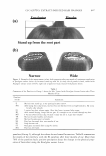
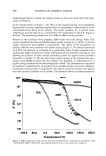
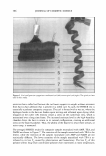
498 JOURNAL OF COSMETIC SCIENCE properties. As is the case for the industrial composites, the hair fibers provide the primary strength to the fixative composite. (With respect to fixative gel products, this sometimes goes against popular belief.) In both cases, it is important that the polymer adheres to the fibers. (2) The fixative gel glues multiple hair fibers together, creating a composite fiber with a larger effective diameter, and thus, higher stiffness. Good adhe sion between the polymer and the fibers allows stress transfer between the polymer and fiber and is necessary to achieve composite properties. Polymer cohesion, which is affected by molecular weight, architecture, crystallinity, polar interactions, hydrogen bonding, environmental conditions, and additives, contributes to the composite strength when there is sufficient polymer-hair adhesion. To demonstrate the connection of composite science and cosmetic formulation, the effect of the neutralizing base on the polymer film and hair fiber composite mechanical properties will be shown for polyacrylate-2 crosspolymer (Fixate™ Superhold polymer, Lubrizol Advanced Materials, Inc., Noveon® Consumer Specialties). Film testing will show how the neutralizer affects the cohesive properties of the polymer, and testing fixative-hair composites will measure the combined adhesive and cohesive properties. The results will be considered with respect to polymer composite principles, and the implications for fixative gel performance will be discussed. EXPERIMENTAL MATERIALS Gels were prepared using 3 wt% (solids) polyacrylate-2 crosspolymer (a (meth)acrylic acid-ester copolymer) and neutralizing to pH 7 with sodium hydroxide (NaOH), 2-amino-2-methyl-l-propanol (AMP), or triethanolamine (TEA). SAMPLE PREPARATION AND METHODS Polymer films were prepared on Mylar the dry film was approximately 0.25-mm thick. The films were allowed to d ry for a minimum of 48 hours at 23°C, 50% relative humidity (RH). Tensile testing of the films was done with an XT-Plus Texture Analyser (Texture Technologies). All testing was performed at 23°C, 50% RH using the sample geometry described in ASTM D 882-02 (3) and a rate of 5 cm/min. Young's modulus (4), calculated as the slope of the linear portion of the stress versus strain curve, and elongation at break were obtained for comparison. Dynamic mechanical analysis (DMA) was performed on a TA RSA3 Dynamic Mechani cal Analyzer (TA Instruments) using rectangular samples of polymer film. Samples were tested in extension from -100° to 200°C at a frequency of 1 Hz and a strain of 0.05%. The glass transition temperature (T ) was chosen as the onset of the decrease in the I g elastic modulus (E ). The stiffness of the fixative-hair composite samples was performed using an XT-Plus Texture Analyser in a three-point bend configuration. Composite samples for this test were prepared by applying 0.8 g of fixative gel to virgin Chinese hair tresses weighing 2. 5 g and measuring 16. 5 cm in length. The prepared tresses were sandwiched between
Purchased for the exclusive use of nofirst nolast (unknown)
From: SCC Media Library & Resource Center (library.scconline.org)