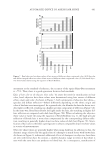
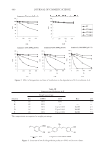
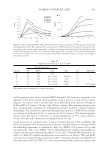
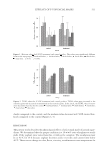
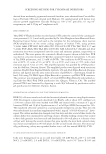
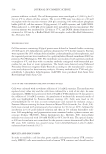
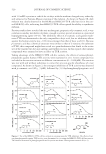
JOURNAL OF COSMETIC SCIENCE 462 hair color is indispensable for automated assessment of hair care products regarding their effects on hair shine. Brown hair tresses or other tresses that have not been aggressively bleached are the test material of choice in this regard. Effect of combing on the objective shine value. To assess the effect of parallelism (combing) of hair tresses on the determination of objective shine values using the opsira Shine-Box, the same tresses were mounted on the carrier with different degrees of parallelism. A com- parison of recorded shine values and the corresponding combing values shows that the higher the objective shine value the better the parallelism of the analyzed hair tress (data not shown). As a consequence, to assure comparability of results between hair care prod- ucts, hair tresses have to be excluded from analysis when a suffi cient degree of parallelism is not given. In such cases the hair tress has to be recombed until suffi cient parallelism is gained. Reproducibility and sensitivity of objective shine values. Provided a tress is well combed, re- peated measurement of shine values at a defi ned position on a hair tress results in variances of only 0.3–1%. In contrast, measurement at different positions on a well-combed tress may result in in variances of up to 5%, and with leave-in products that cannot be distrib- uted homogeneously over the hair tress, the respective variability may be up to 8% (data not shown). As a consequence, to increase the robustness of measurement, the objective shine value of a hair tress is determined by averaging shine values determined at three or four different positions on a given hair tress. The variability of this averaged objective shine value is approximately 1% in repeated measurements, even if different positions on the hair tress are evaluated in repeat measurements. Figure 8. Dynamic range of the change in objective hair shine values of brown (A) and blond (B) hair tresses treated with different hair care products. Brown hair tresses provide a suffi cient dynamic range to as- sess shine-promoting properties of hair care products.

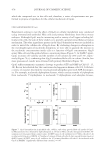
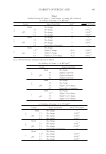
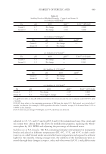
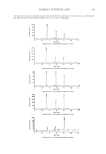
AUTOMATED DEVICE TO ASSESS HAIR SHINE 463 Figure 9 shows data from a side-by-side comparison of four different rinse-off condition- ers (denoted 10 to 40) assessed for hair shine using the opsira Shine-Box (Figure 9A) as well as the corresponding ranking results obtained by 30 independent panelists (Figure 9B). It is clearly visible from the picture that two different tresses may give different average shine values, although treated with the same product. There is, furthermore, some scatter of shine values for each individual tress, depending on the site of measure- ment. Nevertheless, the standard deviation of the mean from all measurements (4 sites per tress × 2 tresses) is rather low, allowing a clear distinction of mean objective shine values generated with different hair care products (high sensitivity). In contrast, the cor- responding subjective assessment of the same tresses and test products by panelists gives a similar ranking of hair shine, although with a substantially lower sensitivity. HAIR SPARKLE Effect of hair color on the objective sparkle value. To assess the need for stratifi cation of hair color for the assessment of objective sparkle values using the opsira Shine-Box, basal sparkle values were determined using hair tresses of different ethnic origin and color. As shown in Figure 10, hair color has a strong impact on objective sparkle values. In this case, objective sparkle values, as determined using the opsira Shine-Box, are lower as the analyzed hair is darker. Thus, stratifi cation of hair color is essential to produce reliable results and to assure comparability of results between studies. Figure 9. Reproducibility and sensitivity of the assessment of hair shine using the opsira Shine-Box. Hair shine was determined for two individual tresses each per test product (conditioners denoted 10 to 40—rinse- off). (A) Individual objective shine values determined at four different sites per tress (closed circles) as well as the mean ± SD from all eight data points (open squares). Higher values mean better hair shine in this case. (B) Corresponding sum scores of ranks determined for the same treated tresses by 30 independent panelists. Lower sum scores mean better hair shine in this case.
Purchased for the exclusive use of nofirst nolast (unknown)
From: SCC Media Library & Resource Center (library.scconline.org)