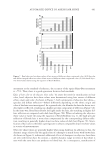
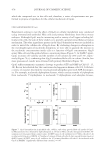
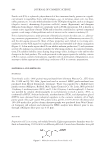
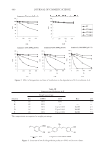
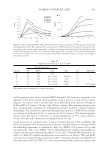
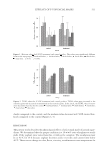
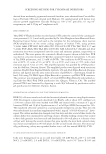
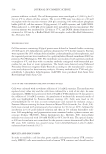
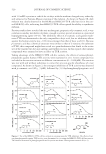
JOURNAL OF COSMETIC SCIENCE 460 the carrier device. The equation defi nes that the higher the contrast between specular refl ection and its background, the higher the objective shine value. In fact, the eye-tracking data clearly demonstrate that panelists also preferentially focused on the area of highest contrast, i.e., the borders of the specular refl ection (data not shown). Thus, objective shine values calculated using the shine box, and subjective rankings of shine made by panelists, are mainly determined by contrast properties around the area of specular refl ection. Panel studies of hair care products can only give ranking results, comparing subjectively one product with another. As a consequence, although measurement of hair shine using the opsira Shine-Box gives quantitative parametric values, comparison of both methods is restricted to rankings. Among nine studies conducted side-by-side using panel assessment of hair care products (≥3 products tested, 2 tresses per product, 30 pan- elists each) and assessment using the Shine-Box, seven studies gave exactly the same rank- ing with both methods. An example of the results of one such study is given in Figure 6. In two studies the ranking of two products was different with both methods. Taking panel Figure 5. Increase in the objective shine value achieved with a leave-in hair care product on blond hair tresses (A), as well as the effect of treatment on the single components’ half-width of specular refl ection, integral specular refl ection, and integral diffuse refl ection (B). Figure 6. Correlation of objective shine values determined by the opsira Shine-Box and subjective shine values from panelist rankings. Peroxide-bleached hair tresses treated with different shampoos (two tresses per hair care product four shampoos in total) were assessed side-by-side using the opsira Shine-Box and a panel of 25 independent raters. In the panelist assessment, the tresses were presented in a randomized pair-wise order to the raters. Each tress was presented in different combinations with other tresses at least three times. Mean panel values depicted in the upper and lower panel were derived from the overall rankings. In the case of shine values determined by the opsira Shine-Box, high numeric values represent a higher objective shine. In contrast, higher numeric values of the mean panel values represent a lower subjective shine.

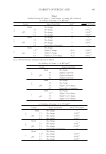
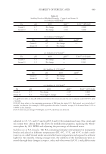
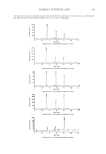
AUTOMATED DEVICE TO ASSESS HAIR SHINE 461 assessment as the standard of reference, the accuracy of the opsira Shine-Box assessment is 75%. Thus, there is a good agreement between both methods. Effect of hair color on the objective shine value. To assess the need for stratifi cation on hair color, basal objective hair shine values were determined using hair tresses of different ethnic origin and color. As shown in Figure 7, both components of objective hair shine— specular and diffuse refl ection—behave differently depending on the ethnic origin and color of the hair tress investigated. As a general rule, the blonder the hair the better inci- dent light is refl ected, resulting in a higher specular component of refl ection (Figure 7A). In the same way, blond hair absorbs less light inside the hair, also resulting in higher dif- fuse refl ection as compared with dark hair (Figure 7B). When calculating the objective shine value or luster (L) using the equation of Reich/Robbins (eq. 1), the high specular refl ection of blonde hair is more than compensated by the corresponding diffuse refl ec- tion, resulting in generally higher objective shine values of dark hair (Figure 7C). Strati- fi cation of hair color is therefore a prerequisite to obtain comparable objective shine values in a series of measurements. Objective shine values are generally higher when using dark hair. In addition to this, the dynamic range achieved by the application of a shampoo is much better with brown hair. As shown in Figure 8, substantial additional effects of shampoos on objective hair shine are seen with brown hair. In contrast, a smaller dynamic range in terms of hair shine is seen with the same hair care products on blond hair. As a consequence, stratifi cation of Figure 7. Basal objective hair shine values of hair tresses of different ethnic origin and color. (A,B) Specular and diffuse integral refl ection values of hair tresses of different ethnic origin and color. (C) Calculated objec- tive shine values (luster) using the equation of Reich/Robbins.
Purchased for the exclusive use of nofirst nolast (unknown)
From: SCC Media Library & Resource Center (library.scconline.org)