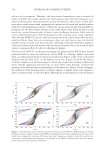
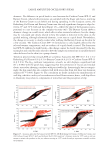
JOURNAL OF COSMETIC SCIENCE 130 LAOS experiments. Using the ARES-G2, dynamic strain sweeps were applied using 25-mm stainless steel parallel plates (R = 12.5 mm) with both smooth and rough surfaces to ascertain the impact of wall slip on the oscillatory stress response. The rough surface was prepared by applying adhesive-backed, 400-grit sandpaper (ARC Abrasives, Inc., Troy, OH) to the top and bottom plates. To attain shear rates more applicable to spreading, the strain sweep was performed at the following settings: transient mode, 1–600% strain, 7 points/decade, 25 half cycles, 128 points/cycle, 2 delay cycles (2 s), ω = 50 rad/s. Note that ordinarily 10–50 delay cycles are used to measure rheological properties of a sample at steady state however, in this study, only two delay cycles were programmed to more realistically approximate the spectrum of microstructural breakdown as a function of suc- cessive iterations at the same shear rate, as well as increasing shear rates. Although some small inaccuracies subsequently propagate to FT analyses for samples exhibiting inherent thixotropy, the very small accuracy loss was less important than monitoring the complete microstructural breakdown of the probed sample. In separate experiments, the presence of wall slip, plug fl ow, and shear banding were crudely characterized by using an iPhone 5s camera (Apple Inc., Cupertino, CA) and a painted marker to assess the visual deforma- tion of the vertical marker as a function of shear rate and angular displacement (see Refer- ences 12 and 17 for a more rigorous analysis). Nonlinear properties were assessed with the TRIOS FT Rheology accessory software package (TA Instruments). The infl uence of elec- trolyte was examined by delivering 500 nmol/cm2 sodium chloride (ACS reagent Al- drich Chemicals, St. Louis, MO) from methanol (ACS reagent, Aldrich Chemicals) to the stainless steel surface of the top plate (transducer side). The treated plate was then predried at 32°C in the ARES-G2 oven before zeroing the geometry gap. Lissajous plots were subsequently generated using the aforementioned strain sweep methodology. Finally, a second set of lower oscillatory shear rate tests was performed to produce Lissajous plots for better visualizing microstructural changes in the apparent at-rest state. The low-frequency strain sweeps were executed with the following settings: transient mode, 1–600% strain, 7 points/decade, 25 half cycles, 128 points/cycle, 2 delay cycles (2 s), ω = 1 rad/s. TEXTURE PROFILE ANALYSIS Texture profi le analysis (TPA) was carried out using a TA.XTPlus Texture Analyzer distrib- uted by Texture Technologies Corp. (Hamilton, MA) and manufactured by Stable Micro Systems (Godalming, Surrey, United Kingdom). It is equipped with a 5-kg load cell with 0.1 g force sensitivity. The Texture Analyzer is essentially a mechanical device with a probe attached to the load arm. Formulations were placed in a sample cell underneath the probe and were subjected to oscillating compression-tension deformation cycles by the probe. A cylindrically-shaped acrylic probe (TA-11 Texture Technologies Corp., Hamilton, MA) was used for the analyses. Typical settings were as follows: probe speed, 1.0 mm/s deforma- tion, 2.0 mm deformation time, 1 s and initial trigger force (point where the 1.0 mm deformation begins), 2 g. Data analysis was conducted with Exponent v6.14.0 soft- ware from Stable Micro Systems (Godalming, Surrey, United Kingdom). SENSORIAL ANALYSIS A fi ve-membered expert panel completed the sensorial analyses. The formulations were evaluated for three distinct sensorial attributes: initial, middle, and fi nish rub-in. An

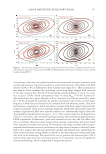
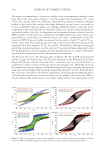
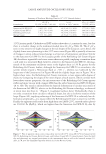
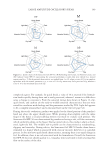
LARGE AMPLITUDE OSCILLATORY SHEAR 131 overall sensorial evaluation was captured for each of the formulations tested. The panel analyzed several sensorial parameters, including cushion, quick break, slip, tack, absorp- tion, and fi nish on skin. Each parameter was evaluated on a scale from 1 to 10. RESULTS AND DISCUSSION Four formulations with distinct textural attributes were investigated by carrying out a battery of rheology tests, TPA, and sensorial analyses. Rheological analyses consisted of both traditional and novel, nonlinear (LAOS) approaches. Traditional methods included stress ramps, steady torsional, dynamic strain sweeps, dynamic frequency sweeps, and preshear and recovery experiments for generating materials characteristics such as appar- ent yield stress, ZSV, elastic modulus [G’(ω)], loss modulus [G”(ω)], complex viscosity [η*(ω)], and tan delta [tan δ(ω)]. Overall, these data revealed a number of important properties about the four texture formulations, related to their at-rest properties, which are reviewed in the Standard Rheology section below. During LAOS testing, each of the texture formulations uniquely responded to the deformation stresses required to realize the high-oscillation shear rates. The resulting Lissajous plots correlated well with initial sensorial parameters, especially quick break and cushion. Finally, this report is supple- mented with a section on TPA, which is another instrumental approach that provides an alternative view of formulation textural properties, and a good determination of fi rmness, compressibility, resilience, and several other parameters. To mitigate complications, parallel discs were chosen for all experiments as three of the tested systems contained emulsion particles that could interfere with smooth fl ow in a cone and plate truncation gap. For parallel discs, the calculated strain is proportional to R/H, where R is the plate radius and H is the sample gap. Hence, the equation implies that the applied shear rate varies with the volume of sample, and that the maximum ap- plied shear rate only appears at the trimmed outer edge. This relationship is key because visualizing the edge of the sample conveys knowledge about how the sample relieves or stores the maximum applied oscillatory energy. Basically, this is where nonideal fl ow and deformation phenomena such as wall slip, plug fl ow, thixotropy, the coexistence of both soft solid and a liquid in yield stress materials, and shear banding may be visu- ally observed—each of these processes affects the meaning of the measured stresses and, hence, the interpretation of the LAOS data and subsequent correlation with sensorial analyses. BRIEF SUMMARY OF STANDARD RHEOLOGY DATA The elegance of LAOS studies can only be realized in light of data captured from standard rheological methods. Standard rheological techniques were applied to provide a frame- work to better comprehend the meaning of the dynamic contours in each Lissajous plot. Where practical, samples were studied with both smooth and rough plate surfaces to as- sess factors such as wall slip. Results from stress growth and stress ramp yield stress (τ0) experiments are possibly related to the low-strain internal loops of the Lissajous curves, and it is expected that each of these properties may have a subsequent relationship with the initial tactile properties, such as pick up, cushion, body, and initial spreadability. Steady torsional and preshear and recovery testing were undertaken to evaluate thixot- ropy, as thixotropic behavior could impact successive iterations at a single strain (or shear
Purchased for the exclusive use of nofirst nolast (unknown)
From: SCC Media Library & Resource Center (library.scconline.org)