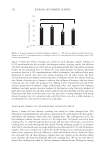
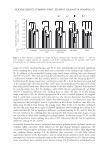
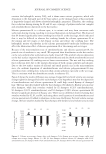
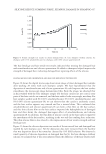
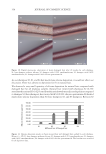
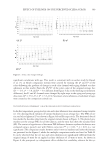
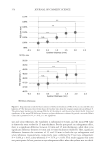
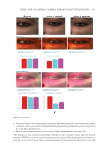
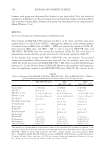
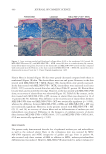
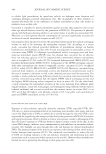
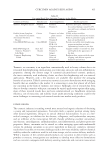
354 JOURNAL OF COSMETIC SCIENCE contains the hydrophilic moiety NH 2 ,and it shows some cationic properties, which aids deposition to the damaged part of the hair surface, as the damaged part of hair normally is negatively charged and shows relatively hydrophilic properties. Therefore, the combing force reduction during rinsing for S2 and S3 was a synergy of polymer-surfactant complex and amodimethicone deposited on the hair surface. Silicone quaternium-18 is a silicone quat it is cationic and may form coacervate with surfactants during rinsing, resulting in increased deposition on damaged hair. We observed that S4 showed significantly lower combing force than S1 at the dry stage, which indicated that it may be difficult to observe the combing benefit for silicone quaternium-18 at the rinsing and wet stages it did deposit on hair and reduce dry combing force. The hydrophilic moiety of polyether in the silicone quaternium-18 molecular backbone may affect the lubrication effect of silicone quaternium-18 at the rinsing and wet stages. Because of the microemulsion state of amodimethicone and silicone quaternium-18, the particle size of emulsion is very small. We expected their distribution on the hair surface can be very uniform after surfactants are clearly rinsed off. This uniform silicone deposition on the hair surface improved the wet (amodimethicone) and dry (both amodimethicone and silicone quaternium-18) combing even at lower concentrations. The wet and dry combing force reduction were due to the synergy deposition of both cationic polymer and silicones. Due to the low surface tension of silicones and small particle size in the microemulsion state, the uniform deposition of amodimethicone and silicone polyquaternium-18 may contribute more combing force reduction than cationic polymer, especially at the wet stage. This is consistent with the dimethicone results in reference (11). Figure 6 shows the results of flyaway area average change (left) and total volume area average change (right) for damaged hair after each shampoo. Our hypothesis was that the deposition of amodimethicone and silicone quaternium-18 could help control flyaway of damaged hair. The hair swatches washed with the base shampoo (S1) showed a flyaway area increase after shampoo, while hair swatches washed by S2 shampoo (0.21% amodimethicone), S3 shampoo (0.42% amodimethicone), and S4 shampoo (0.18% silicone quaternium-18) showed a significant decrease of flyaway area. There was no difference observed among hair swatches washed by S2, S3, and S4, indicating that a small quantity of amodimethicone and silicone quaternium-18 added in shampoo can decrease the flyaway. For total volume average change, the hair swatches washed by base shampoo (S1) showed a total volume area increase -70.00 -60.00 -50.00 -40.00 -30.00 -20.00 -10.00 0.00 10.00 20.00 S1 S2 S3 S4 -40.00 -30.00 -20.00 -10.00 0.00 10.00 20.00 S1 S2 S3 S4 Figure 6. Volume area average change after each shampoo. Left, flyaway area average change right, total volume area average change. Means +/− SD. S1: base shampoo without silicone S2: shampoo with 0.21% amodimethicone S3: shampoo with 0.42% amodimethicone S4: shampoo with 0.18% silicone quaternium-18. Average Change in Flyaway Area Average Change inTotal Volume Area %

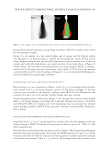
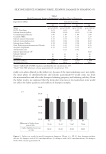
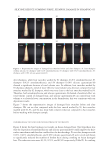
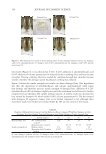
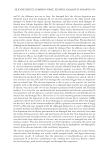
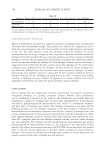
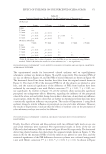
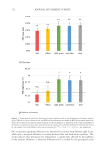
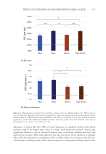
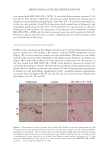
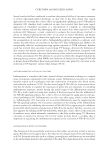
355 Silicone Reduce Combing Force, Flyaway, Damage in Shampoo after shampoo, while hair swatches washed by S2 shampoo (0.21% amodimethicone), S3 shampoo (0.42% amodimethicone), and S4 shampoo (0.18% silicone quaternium-18) showed a significant decrease of total volume area. In addition, hair swatches washed by S3 shampoo showed a trend of more effective total volume area decrease compared to hair swatches washed by S2 shampoo, which was very close to the hair swatches washed by S4. Therefore, both amodimethicone and silicone quaternium-18 showed a beneficial effect on total volume control of damaged hair, and silicone quaternium-18 can control hair total volume at a relatively lower concentration in the formulation this was consistent with our deposition results. Figure 7 shows the representative images of damaged hair swatches before and after shampoo. We can see that compared with the hair swatch washed by S1, hair swatches washed with S2, S3, and S4 also show bulk volume reduction compared to hair swatches before washing with shampoo sample. HAIR BREAKAGE TEST AND HAIR TENSILE STRENGTH TEST RESULTS Figure 8 shows the hair breakage test results on Asian damaged hair. Our hypothesis was that the deposition of amodimethicone and silicone quaternium-18 could improve the hair- surface smoothness and therefore could reduce the hair breakage. To test this, shampoos with 0.21%, 0.42% amodimethicone, and 0.18% silicone quaternium-18 were tested and shown to significantly reduced the number of broken hairs during combing on Asian damaged hair. The reduction rates were 83.3%, 87.3%, and 82.9% respectively (Table II). In combing S1 S2 S3 S4 Figure 7. Representative images of damaged hair swatches before and after shampoo. S1: base shampoo without silicone S2: shampoo with 0.21% amodimethicone S3: shampoo with 0.42% amodimethicone S4: shampoo with 0.18% silicone quaternium-18.
Purchased for the exclusive use of nofirst nolast (unknown)
From: SCC Media Library & Resource Center (library.scconline.org)