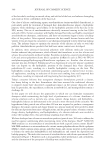
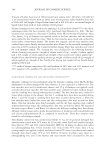
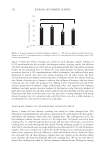
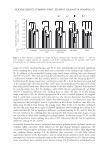
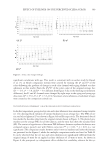
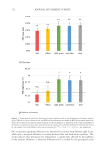
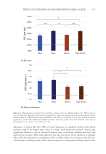
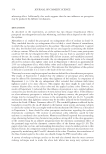
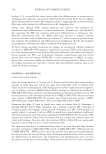
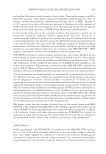
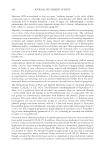
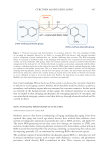
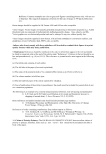
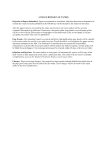
352 JOURNAL OF COSMETIC SCIENCE Figure 4 shows the sebum cleansing test results for each shampoo sample. Addition of 0.21% amodimethicone did not affect the shampoo sebum cleansing results, but addition of 0.42% amodimethicone or 0.18% silicone quaternium-18 did affect the sebum cleansing results. In our deposition data, we observed a very small quantity of silicone deposition on natural hair for 0.21% amodimethicone added in shampoo this indicated that more deposition of silicone may affect the sebum cleansing rate. In other words, the more silicone deposition, the higher conditioning effect of shampoo and the less sebum cleansing rate. Sebum cleansing rate is known to indicate the mildness of shampoo the less sebum cleansing rate, the milder the shampoo (14). Adding 0.42% amodimethicone and 0.18% silicone quaternium-18 showed a high conditioning effect and improved the shampoo mildness, and may prevent excessive washout of the lipid on scalp. Excessive washout of lipid will cause dryness of scalp skin, which could increase the probability of skin irritation. Consumers who don’t wash their hair every day may select a strong shampoo with strong sebum cleansing rate for consumers who wash their hair every day, a mild shampoo is recommended to avoid excessive removal of scalp lipids. HAIR DYNAMIC COMBING TEST AND HAIR FLYAWAY CONTROL TEST RESULTS Figure 5 shows the hair dynamic combing test results on Asian damaged hair. The deposition of amodimethicone and silicone quaternium-18 could improve the hair surface smoothness and therefore could reduce the combing force. The combing force of S1, the base shampoo without silicone, was set as 1.00 larger than 1.00 meant a need for more combing force to comb through the hair swatch, and less than 1.00 meant a need for less combing force to comb through the hair swatch. During lathering, except S3, in shampoo with 0.42% amodimethicone, no bigger difference was observed for S1, S2, and S4 shampoo samples. This is not unexpected, as all S1, S2, and S4 shampoos are conditioning shampoos with cationic polymers the only difference is with and without silicone. From the lather test, we knew that all three shampoo samples were very similar on the shampoo lather score, therefore the foam would hardly affect the combing force. We are not sure why S3 showed less combing force than S1, the base shampoo without silicone. During the rinsing 40.0 50.0 60.0 70.0 80.0 90.0 100.0 S1 S2 S3 S4 *p 0.05 n=3 **Figure 4. Sebum cleansing test results for shampoos. Means +/− SD. S1: base shampoo without silicone S2: shampoo with 0.21% amodimethicone S3: shampoo with 0.42% amodimethicone S4: shampoo with 0.18% silicone quaternium-18. Artificial Sebum Cleansing Rate %

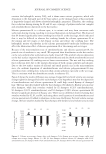
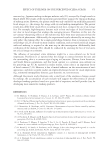
353 Silicone Reduce Combing Force, Flyaway, Damage in Shampoo stage, S2 (0.21% amodimethicone) and S3 (0.42% amodimethicone) showed significant lower combing force both at first half and second half of the rinsing stage compared to S1. In addition, at the second-half rinsing stage, much lower combing force was observed for both S2 and S3. This indicated that the amodimethicone deposited onto hair provided a lubrication benefit to the hair surface, which is consistent with the literature data (11). Furthermore, S3 showed even lower combing force than S2 at both the first and second half of the rinsing stage this indicated that much more amodimethicone was deposited on the hair and provided even more lubrication benefit to the hair surface. This was demonstrated by our deposition data. For S4, shampoo with 0.18% silicone quaternium-18, we didn’t observe a significant difference for combing force at either the first or second rinsing stage compared to S1. As silicone quaternium-18 is also a cationic polymer, we suppose that it could form coacervates with surfactant too the silicone deposition should be even larger than with amodimethicone, which was demonstrated in our deposition data. We hypothesized the hydrophilic moiety of polyether in the silicone backbone may affect the lubrication benefit to hair during the rinsing stage. This needs to be further confirmed. At after the rinse stage (wet stage), S3 showed significant lower combing force (about 42% reduction) than S1, but no significant difference was found among S1, S2, and S4. Data for S4 were similar to the combing-force data during the first and second rinse stages we are not sure why S2 didn’t show combing force improvement. At the dried stage, S2, S3, and S4 showed significant lower combing force (about 20% reduction) than S1, but no significant difference among S2, S3, and S4. It is widely known that anionic surfactant and cationic polymer forms a polymer-surfactant complex called coacervate while diluted on the hair during shampoo application, the coacervate will precipitate and form a lubricating film on the hair surface, thus improving the combing during rinsing (14). In addition, this coacervate can also help silicone ingredients deposit on the hair surface, and the small silicone particles can be more easily entrapped in coacervate and deposit more easily onto the damaged hair (15), thus providing more smoothness (less combing force) during rinsing (11). Furthermore, amodimethicone 0.00 0.20 0.40 0.60 0.80 1.00 1.20 1.40 1.60 Lathering First half of the rinsing stage Second half of the rinsing stage After Rinse Dried S1 S2 S3 S4 *p 0.05 n=3 ************Figure 5. Hair dynamic combing test results on Asian damaged hair swatches. Means +/− SD. S1: base shampoo without silicone S2: shampoo with 0.21% amodimethicone S3: shampoo with 0.42% amodimethicone S4: shampoo with 0.18% silicone quaternium-18. Required Combing Force Blank =1.00 Good-----combing-----Bad
Purchased for the exclusive use of nofirst nolast (unknown)
From: SCC Media Library & Resource Center (library.scconline.org)