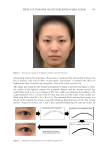
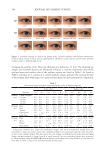
363 EFFECT OF EYELINER ON THE PERCEIVED SCLERA COLOR The contrast between facial features such as the eyes, eyebrows, and mouth and the surrounding skin, called facial contrast, has a significant influence on beauty. Porcheron et al. demonstrated that facial contrast decreases with age, and the aspects of facial contrast are also significantly correlated with perceived age (5). This effect has also been observed in cross-cultural studies (6). This work thoroughly elaborates the beautification mechanism of makeup, as almost all point makeup products, such as mascara, lipstick, and eyeliner, enhance facial contrast. Facial features, especially the color of the sclera, the white part of the eye, considerably change with aging and strongly affect visual impressions of age, health, and beauty (7). Eye makeup products increase eye contrast by darkening and coloring the skin around the eyes. The sclera color does not change directly, but its perceptual color can be changed by visual color illusion effects such as the lightness–contrast illusion. Perceptual color change of the sclera is one of the primary beautification mechanisms of eye makeup. The enhancement of color, texture, and the application region to maximize the change of perceptual sclera color can help improve eye makeup products. According to earlier research on the lightness–contrast illusion, the illusion effect on a test field (a central field with lightness affected by the surrounding inducing field) increases with an increase in the area of the inducing field and the difference in lightness between the inducing and test field (8–11). Therefore, applying a dark color around the eyes is the simplest way to change the sclera’s color perceptually, but it may appear to be unnatural. Alternatively, popular makeup products, such as mascara and eyeliner, make the eyes more impressive by defining the boundary of the eyes. Boundary is a very important factor for lightness perception and illusion (e.g., gradient illusion, figure–ground separation, watercolor illusion, etc. 12–14). Traditional eye makeup methods that define boundaries may also induce color illusions in the sclera through a mechanism different from the lightness–contrast illusion. In the present study, eyeliners were selected as the research target. The relationship between eyeliner designs (thicknesses and colors) and their influence on perception of average Japanese female faces was studied. The mechanisms for the influence of eyeliner color and thickness on eye perception were compared with the above-described visual illusions in the field of vision science. In the first experiment, the influence on perceptual sclera color induced by black eyeliner (the most popular color) was analyzed using a psychophysical experimental method, and the relationship between the influence on perceptual color and eyeliner thickness was elucidated. If the mechanism of the perceptual sclera color change is not the lightness–contrast illusion, the influence on perceptual color should not increase with the thickness. The most popular effect of eye makeup, the eye enlargement effect, was also studied and compared with the influence of perceptual color. In the second experiment, the hue of the eyeliner color was varied, and the effect on perception was measured to explore the relationship between the effects and line chromaticity. Finally, the effects of lightness and hue of an eyeliner for the two influences on perception, color of the sclera and eye size, were studied in the third experiment. MATERIALS AND METHODS MEASUREMENT OF THE SCLERA COLOR CHANGE WITH AGE In the present work, the change in perceptual sclera color was studied along with the sclera color change with age in Japanese females. The measurements provided the direction of color change for the comparison stimuli.

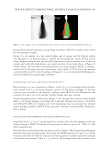
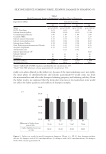
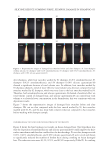
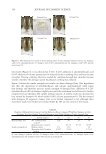
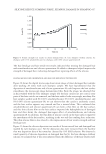
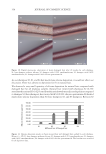
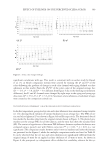
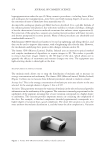
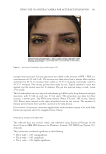
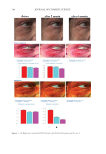
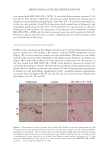
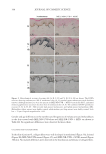
364 JOURNAL OF COSMETIC SCIENCE Frontal facial images of 243 Japanese women aged 20–75 years were used. Written informed consent was obtained from all subjects, allowing the use of photographs for research studies. Facial images were taken in a light box using a white light-diffusion fabric. The subjects placed their faces on a chin rest placed in the light box for photographs. Six strobe lights were set on the left and right front sides (three lights for each) of the light box to illuminate the subject’s face through the diffusion fabric. A single-lens reflex camera (Nikon D300S) with a 105 mm lens Micro-NIKKOR (Nikon, Tokyo, Japan) was placed 1.5 m in front of the subject. The exposure time was 1/250 seconds, f-stop value was 7.1, and ISO was 200. The captured image size was 2,842×4,288 pixels, which was saved as a raw image (Nikon Electronic Format). For all facial images, the RGB values of each pixel were converted to L*a*b* with color calibration using the RGB values of a color chart (X-Rite ColorChecker Mini Chart, X-Rite, Grand Rapids, MI, USA) installed on their chest. From the L*a*b* values of the images, the sclera of the eye was detected using a face detection library, ASMLibrary, and by setting a threshold for L*a*b* values in MATLAB 2016a (MathWorks, Natick, MA, USA) (15). The L*a*b* value of the detected sclera area was measured for all facial images, and its correlation with age was evaluated. PSYCHOPHYSICAL EXPERIMENTAL METHOD In this study, the perceived sclera color and eye size of facial images were measured using various degrees of eyeliners. If eyeliners affect perceptual sclera color and eye size, the measured perceptual color and size should differ from their actual values. The staircase method was employed to measure the point of subjective equality (PSE) as the perceptual sclera color and eye size (16). This experimental method used two groups of stimuli: standard and comparison. The standard stimuli in this study were the measurement targets, eyeliner-applied images. In contrast, the scale images of perception were used as comparison stimuli. In this case, two image datasets given by sequentially modulated sclera color and eye size were prepared as comparison stimuli sets. The PSE for each standard stimulus was measured by determining a perceptually equivalent point on the scale of the comparison stimuli. STIMULUS IMAGES An average face image, generated from the images of 40 Japanese females aged 20–26 years, shown in Figure 1, was used as the stimulus image. Image processing to create standard and comparison stimuli was performed using ASMLibrary and imwarp function in the Image Processing Toolbox of MATLAB 2016a. Eyeliner-drawn images were prepared as the standard stimuli, while the eye-size–modulated images and sclera-color–modulated images were used as the comparison stimuli for the psychophysical experiment. Three stimuli sets were formed from the eyeliner-drawn images: 1) black eyeliners with thickness modulation 2) hue-rotated colored eyeliners and an equal-lightness achromatic eyeliner and 3) brown and blue eyeliners with two different light levels, respectively. Stimuli sets 1, 2, and 3 were used in Experiments 1, 2, and 3, respectively. Experiment 1 evaluated the influence of black eyeliner on perceptual sclera color and eye size, and their
Purchased for the exclusive use of nofirst nolast (unknown)
From: SCC Media Library & Resource Center (library.scconline.org)