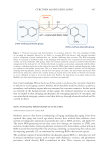
345 J. Cosmet. Sci., 73, 345–361 (November/December 2022) Address all correspondence to Qinghua Li, Qinghua.Li@momentive.com Silicone to Reduce Combing Force, Control Flyaway, Repair Damage in Transparent Shampoo* QINGHUA LI, SUSAN ZOU AND LINDA WEI Momentive Performance Materials Japan LLC, Kawasaki, Kanagawa, Japan (Q.L.) Momentive Performance Materials Inc., Shanghai, China (S.Z.) Momentive Performance Materials Inc., Guangzhou, China (L.W.) *This paper is a summary of a joint project with Beauty Hi-tech Innovation Co., Ltd., KIBC 604, 5-5-2 Minatojima Minamimachi, Chuo-ku, Kobe, Japan 650-0047. Accepted for publication January 19, 2023. Synopsis Currently in the beauty and personal care markets there is a megatrend of the natural and clean. Consumers relate a product’s clear appearance to being cleaner and potentially more natural regardless of the ingredients therein. Formulators continue to look for additives that can be incorporated into clear shampoos to provide superior conditioning. Traditional silicone conditioning agents can cause haze in these formulations. Formulators have attempted to remove silicones, resulting in a challenge to meet consumer needs especially for colored, permed, or damaged hair. In this paper, we have studied the performance of amodimethicone and silicone polyquaternium-18 microemulsion in transparent shampoos. The benefits evaluated were reduction in combing force and controlling flyaway while maintaining the shampoo’s transparency. In addition, hair breakage tests, tensile strength tests, digital microscope observations, and silicone deposition tests were conducted. The apparent hair damage repair was quantified for the amodimethicone and silicone polyquaternium-18 microemulsions in shampoo. We have found a good correlation between the silicone deposition data and performance. INTRODUCTION Repeated coloring, bleaching, and permanent-wave treatments result in damaged hair. This is especially true for the younger generation due to the increase in frequency of these events. These processes strip the 18-methyleicosanoic acid (18-MEA) content of the cuticle, rendering the surface of the hair hydrophilicity. Many attributes such as frizziness, roughness, and poor manageability are attributed to hydrophilicity of the hair. Silicones are known to increase the hydrophobicity of hair, thus reducing the appearance of damage and enhancing the sensorial attributes of the hair. Therefore, silicone has become a unique solution in the hair care category it is widely used for hair care products, in part due to its low surface tension. It can form a very uniform film on the hair shaft keep good alignment
Purchased for the exclusive use of nofirst nolast (unknown)
From: SCC Media Library & Resource Center (library.scconline.org)