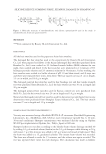
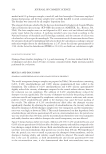
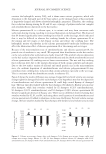
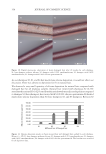
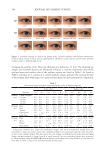
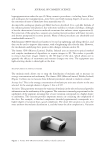
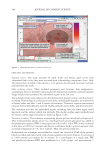
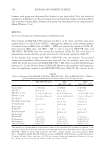
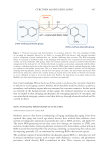
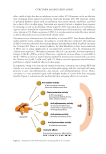
346 JOURNAL OF COSMETIC SCIENCE of the hair shaft, resulting in smooth, shiny, and soft feel of the hair and enhance detangling and result in better combability of the hair (1,2). One class of silicone conditioning agents, amodimethicone (amino-modified dimethicone), is particularly useful for treatment of damaged hair. Amodimethicones impart a hydrophilic property while exhibiting a good affinity to the hydrophilic portions of the hair due to the NH 2 moiety. The use of amodimethicones drastically increased starting in the late 1990s and early 2000s. Certain consumers with highly damaged hair who used highly concentrated amodimethicone shampoos, conditioners, and leave-on treatments began to notice a buildup effect of the product. After repeated treatments the hair would become heavier with less volume. It was necessary for consumers to use shampoos frequently to keep their hair looking clean. The industry began to optimize the structure of the silicones in order to avoid this problem. Amodimethicone products that had lower amine content were developed. In addition, more advanced functional polymers with different molecular structures further enhanced the performance, which allowed the formulators to use less silicone and achieve the same benefits without buildup. Examples include bis-cetearyl amodimethicone (3,4) and amino-polyether-silicone block copolymer ([AB]n) (5) such as PEG-40/ PPG-8 methylaminopropyl/hydroxypropyl/dimethicone copolymer, etc. Another class of reactive silicones was also developed. Polysilicone-29 is a dispersion of a reactive silicone copolymer that can deposit on the hydrophilic portions of the damaged hair. Once deposited, polysilicone-29 cures, resulting in a durable hydrophobic coating on the hair. The hydrophobic coating allows for traditional conditioning agents to deposit better in rinse- off applications, resulting in reduction of friction and combing force and improved hair smoothness, resulting in improved and long-lasting hair manageability (6,7). Today’s consumer believes that transparent shampoo formulations provide a cleaner, less heavy feeling to the hair. Formulators that have removed the traditional silicones to improve clarity have discovered a significant impact on the sensory characters of the hair. In particular, the squeakiness, reduction in smooth feel, and manageability remain a challenge (8). In this paper we will discuss the approaches in which one can formulate transparent shampoos while maintaining the high level of performance of a silicone. Attributes of silicone emulsion such as particle size, amine content, charge density, and hydrophilic– hydrophobic balance are demonstrated to be critical to meet the needs of the consumer. We hypothesized that particle size of less than 100 nm was required to produce a transparent shampoo the amine content and charge density in a silicone molecule were needed to allow for efficient deposition from rinse-off applications and the proper balance of amine content, charge density, hydrophilicity, and hydrophobicity of a silicone molecule were needed to reduce the buildup effect, thus preventing weighing down the hair. We have developed two silicone microemulsion products (particle size 100 nm) to address the need for superior conditioning while maintaining clarity of the shampoo. Silsoft@ AM1021N PMF emulsion is a microemulsion of amodimethicone with a specific amine content. Silsoft@ Silk PMF emulsion is a microemulsion of a cationic amino-polyether-silicone block copolymer ([AB]n+), which contains amino groups, polyether chains, and cationic moieties in the polymer to balance the molecular hydrophobicity and hydrophilicity and control the deposition and buildup property. The molecular structures of amodimethicone and silicone quaternium-18 are illustrated in Figure 1. Properties such as manageability, lather performance, and combability, and the elimination of the perception of buildup were studied herein.

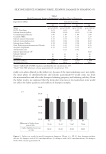
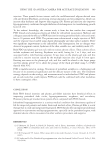
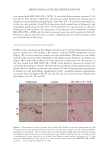
347 Silicone Reduce Combing Force, Flyaway, Damage in Shampoo METHODS ***Tests conducted by Beauty Hi-tech Innovation Co., Ltd. HAIR SOURCE All the hair swatches used in this paper are Asian hair swatches. The damaged flat hair swatches used in the experiments by Beauty Hi-tech Innovation Co., Ltd. were prepared as follows: 1) the Asian undamaged hair swatches (purchased from Beaulax Co., Ltd.) were soaked in 1% Sodium Laureth Sulfate (SLES) solution for one night, then washed and dried 2) the hair swatches were immersed in 1:1 mixture of 6% hydrogen peroxide solution and 2% ammonia solution for 30 minutes 3) after washing, the hair swatches were soaked in a buffer solution of pH 3.0 and then rinsed and 4) steps two and three were repeated three times, then dried. The hair swatch size was 21 cm in length, 5.5 cm in width, and 16.0 g in weight. The damaged ponytail hair swatches used for hair breakage test and hair tensile strength test were purchased from Beaulax Co., Ltd the hair swatch size was 30 cm in length and 10 g in weight. The damaged ponytail hair swatches used for flyaway control test were purchased from Staffs Co., Ltd the hair swatch size was 20 cm in length and 3.0 g in weight. Natural and damaged ponytail hair swatches used for deposition test and digital microscope observations were purchased from Shanghai Canyu Industrial Co., Ltd. The hair swatch size was 27 cm in length and 1.0 g in weight. SHAMPOO BASIC PROPERTY MEASUREMENT*** Viscosity was measured using a Brookfield RVDV-II+P viscometer (Brookfield Engineering Laboratories, Inc., Middleboro, MA, USA) at room temperature (spindle No. 6, 20 rpm, 30-second conditions). Shampoo transmittance was measured directly using an Optima SP-300 Spectrophotometer (Optima, Inc., Tokyo, Japan) at 600 nm. Shampoo lather test was done according to the blender foam volume drainage method (9) by adding 1.0 g of artificial sebum (lanolin) to the 5.0 g of shampoo while diluting to 50 g with water 7 g of this mixture was added to 143 g of water and mixed at high speed. Then the foam was added to a 1 L graduated cylinder. The instant foam volume was recorded. The foam was allowed to settle for 3.5 minutes, and the volume was again recorded. The test was repeated three times for each shampoo. The calculation was made as follows: Figure 1. Molecular structure of amodimethicone and silicone quaternium-18 used in the study: a) amodimethicone b) silicone quaternium-18.
Purchased for the exclusive use of nofirst nolast (unknown)
From: SCC Media Library & Resource Center (library.scconline.org)