405 Curcumin Against Skin Aging (1). Among the extrinsic factors, UV irradiation is the most prominent causative factor for skin aging. The damage due to photoaging on skin can be varied from acute effects such as sunburn and tanning (2), to chronic effects such as inflammation, immunosuppression, and damage to dermal connective tissues (3). Notably, skin-aging traits such as perceived age, age spots, wrinkles, and sun damage are shown to be equally influenced by genetic and environmental factors (4). Hence it is imperative to understand skin biology and the alterations that happen in the dermatological arrangement during skin aging in order to propose strategies for minimizing skin aging. Skin is conventionally viewed as two main layers called the epidermis and dermis. The structure of the epidermis consists of an outer nonviable layer called the stratum corneum, with more proximal layers making up the viable epidermis comprising primarily keratinocytes (90–95% of cells), together with smaller populations of Langerhans cells (2%), melanocytes (3%), and Merkel cells (0.5%) (5). Generally, the stratum corneum has been found to be unaffected during aging in terms of its thickness, barrier properties, and recoverable substances such as sebum, sweat, components of natural moisturizing factor, and corneocyte debris (6). Keratinocytes in the epidermis are shown to change with age in terms of their morphology, proliferation, and intercellular adhesion. Further, melanocytes in the epidermis also change in their numbers and function, which are causative factors for perceived skin aging. Studies have reported that the number of functional melanocytes decline by up to 20% per decade in the basal layer of the human epidermis (7), which leads to less protection against the harmful effects of UVR. In addition, changes in the melanocyte function is a main driving factor for age spots, which contribute more to perceived age (1). On the other hand, the most consistent change that occurs in skin aging is the flattening of the dermo–epidermal junction, which leads to less shear resistance of skin and to a reduced supply of nutrients and oxygen to the skin (8,9). The dermis consists predominantly of connective tissues made out of collagen and elastin, together with sweat glands, sebaceous units, blood vessels, and nerves. Collagen fibers maintain the tensile strength of skin, whereas elastin fibers contribute to the elasticity and resilience of skin (10). Collagen, the body’s most abundant protein, is the key structural component in dermis. The structural and compositional changes in collagen proteins have been shown to affect wrinkle formation during aging (11). In young adults, dermal collagen bundles are well organized to facilitate the extension of skin. However, during skin aging the collagen bundles lose their extensible configuration, becoming fragmented, disorganized, and less soluble (12). This is due to the impairment of collagen synthesis at dermal fibroblasts mainly by reactive oxygen species (ROS), by affecting the functions of transforming growth factor-β, a cytokine that promotes collagen production, and activator protein-1, a transcription factor that promotes collagen breakdown by upregulating matrix metalloproteinases (MMPs) (13). Elastin, a key structural protein uniquely rich in human skin, if impaired, can also give rise to aging traits on skin (1). Elastin is affected mostly during photoaging due to the production of ROS and thereby upregulating MMPs (14). Glycasoaminoglycans are another structural polysaccharide found in dermis that contribute mainly to maintenance of the moisture content of the skin by holding the moisture-trapping collagen and elastin proteins in skin structure. However, glycasoaminoglycan levels in dermis increase with aging, giving rise to “tetrahedron water” in aged skin (1), which leads to an extra dry condition called xerosis observed in aged skin. In addition, degradation of hyaluronan, a key component in the extracellular matrix in connecting tissues including skin, by the activation of the enzyme hyaluronidase, is also a reason for the dryness in aged skin (15).

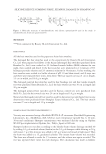
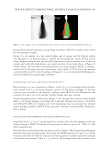
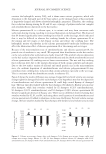
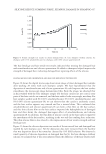
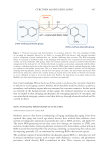
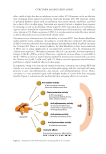
406 JOURNAL OF COSMETIC SCIENCE Moreover, ROS accumulated in skin can cause “oxidative damage” to the skin’s cellular components such as cell walls, lipid membranes, mitochondria, and DNA, which will eventually lead to wrinkle formation, a trait of aging (13). Inflammaging is another phenomenon that describes aging symptoms arising due to chronic inflammation in the body, which is a causative factor for skin aging (16). Therefore, it is imperative that research on antiaging cosmetics should focus on interrupting one or more of the above-mentioned pathways having skin-aging traits. The commonly exploited mechanisms include ROS (generated intrinsically or extrinsically by photo energy) scavenging using antioxidants (17,18) molecular rejuvenation and retarding degradation of elastin and collagen proteins by using elastase and collagenase inhibitors (19,20) maintaining the moisture content in the dermal environment (20) use of hyaluronidase inhibitors and by a combination of several of these strategies. Skin regeneration strategies are also being tried out as a remedy for antiaging (21). Currently, there is an increasing consumer attraction toward antiaging cosmetics with natural and/or organic labels, and hence there is an upward trend in research on plant-derived cosmetics with skin antiaging benefits (13). Curcumin extracted from turmeric rhizomes is one of the extensively studied natural compounds not only for its cosmeceutical benefits, but also for its medicinal and nutraceutical values. Curcuma longa (turmeric) belonging to the Zingiberaceae (ginger) family, although native to India, is now cultivated in many tropical and subtropical Southeast Asian countries. The multifunctionality of curcumin includes, among other factors, antibacterial, antiviral, anti-inflammatory, anti-arthritic, anticancer, and anti-Alzheimer’s properties. As an ingredient for cosmetic formulations, it has been extensively used for skin-brightening, moisturizing, scar-removing, anti-acne, and anti-inflammatory benefits. All of the above- mentioned bioactive functionalities of curcumin are derived from its chemical properties. The International Union of Pure and Applied Chemistry name of curcumin (chemical formula C 21 H 20 O 6 )is (1E, 6E)-1,7-bis(4-hydroxy-3-methoxyphenyl)-1,6-heptadiene-3,5- dione. It is a symmetric molecule in which two aromatic rings are connected through a seven-carbon chain and belongs to the Diarylheptanoid class of compounds. The two aryl groups are symmetrically substituted with methoxy and phenolic groups at ortho positions. The seven-carbon chain consists of an enone moiety and a 1,3-diketone group. Consequently, the reactive functional groups of curcumin include two ortho-methoxy phenolic groups, two enone moieties, and the 1,3-keto enol moiety (Figure 1). Curcumin has ionizable protons at both phenolic and enolic groups, and its pK a values range from 8.5 to 10.7 (22). The computed ground-state dipole moment of curcumin is 10.77 D and has a log (p) value (hydrophobicity parameter) of 2.5–3.6, evidencing its extremely low solubility in water (∼3–6 µg/mL) (22). Curcumin and its chemistry leading to its promising bioactive functions are areas that have been widely reviewed (22,24,26,27). In addition, the extraction methods of curcumin from turmeric is also an area that has been reviewed extensively (26,28). Further, the reviews on the applications of curcumin in a broader perspective, such as in biomedical, pharmacological, and food and nutrition, also can be found (28). Moreover, the advanced delivery method of curcumin to achieve the intended biomedical applications is an area that is currently being investigated by many, and hence being reviewed as well (29,30). However, even though curcumin has historically been used as an ingredient in many traditional cosmetic remedies, a comprehensive review discussing its cosmeceutical benefits is nonexistent to the
Purchased for the exclusive use of nofirst nolast (unknown)
From: SCC Media Library & Resource Center (library.scconline.org)