262 JOURNAL OF COSMETIC SCIENCE
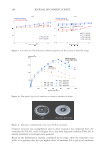
These results determined the process for the rest of the study. As the emulsification mode
had no impact, the indirect emulsification mode was kept for greater convenience (especially
with a view to larger-scale production), followed by mixing with an anchor stirrer. Earlier
preparation steps remained unchanged.
EFFECT OF FORMULATION COMPOSITION: VARIATIONS AND RESULTS
GEL VISCOSITY
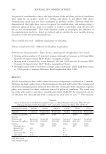
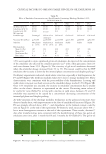
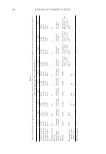
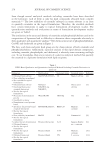
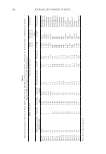
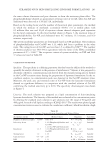
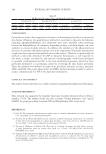
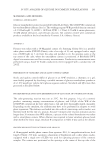
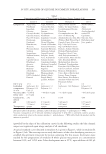
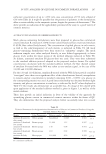
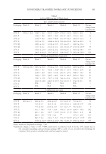
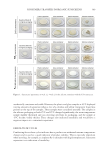
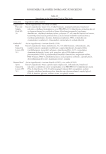
The formulation trials and results in Table III showed that formulations F4, F5, and F6,
containing 0.8%, 1%, and 1.2% of rheology modifier respectively, which is associated with
a viscosity of the internal aqueous gel greater than or equal to 18,000 mPa·s, provided
gel-in-oil emulsions in accordance with the absence of conductivity. These formulations
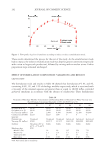
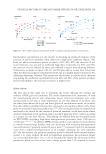
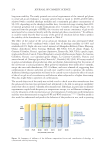
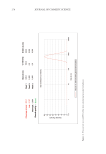
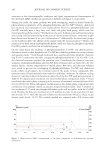
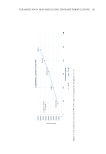
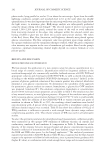
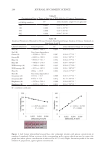
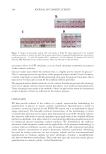
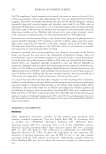
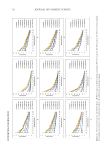
Figure 4. Flow profile of gel-in-oil emulsions according to indirect or direct emulsification mode.
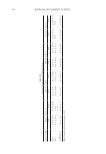
Table III
Variations of Rheology Modifier Concentration and Resulting Effect of Internal Gel Phase Viscosity on a
Fixed Formula Containing: Emulsifier 2.00%, Oil 8.00% (w/w %)
F1 F2 F3 F4 F5 F6
(a) Dose (w/w %)00.40 00.60 00.70 00.80 01.00 01.20
Gel phase (w/w %)90.00 90.00 90.00 90.00 90.00 90.00
Gel viscosity (mPa·s) 240 2,800 8,400 18,000 42,400 64,800
Conductivity D1/M1
(μm/cm)
≅225 ≅227 ≅87 0 0 0
Formula type Cream gel Cream gel Cream gel Gel-in-oil Gel-in-oil Gel-in-oil
Viscosity D1 (mPa·s) ≅500 ≅3,575 ≅7,975 ≅42,700 ≅68,900 ≅89,400
Stability Two phases D7 at
45°C −5°C–40°C
Stable Stable Stable Stable Stable
Rheology data NT(g)
Mean G’ (Pa) 30 69 397 559 753
Mean G’/G” 3.2 2.8 6.1 6.7 7.3
Yield stress (Pa) 2 8 29 37 31
Rate index 0.55 0.66 0.44 0.42 0.38
g NT: Not tested due to instability.
These results determined the process for the rest of the study. As the emulsification mode
had no impact, the indirect emulsification mode was kept for greater convenience (especially
with a view to larger-scale production), followed by mixing with an anchor stirrer. Earlier
preparation steps remained unchanged.
EFFECT OF FORMULATION COMPOSITION: VARIATIONS AND RESULTS
GEL VISCOSITY
The formulation trials and results in Table III showed that formulations F4, F5, and F6,
containing 0.8%, 1%, and 1.2% of rheology modifier respectively, which is associated with
a viscosity of the internal aqueous gel greater than or equal to 18,000 mPa·s, provided
gel-in-oil emulsions in accordance with the absence of conductivity. These formulations
Figure 4. Flow profile of gel-in-oil emulsions according to indirect or direct emulsification mode.
Table III
Variations of Rheology Modifier Concentration and Resulting Effect of Internal Gel Phase Viscosity on a
Fixed Formula Containing: Emulsifier 2.00%, Oil 8.00% (w/w %)
F1 F2 F3 F4 F5 F6
(a) Dose (w/w %)00.40 00.60 00.70 00.80 01.00 01.20
Gel phase (w/w %)90.00 90.00 90.00 90.00 90.00 90.00
Gel viscosity (mPa·s) 240 2,800 8,400 18,000 42,400 64,800
Conductivity D1/M1
(μm/cm)
≅225 ≅227 ≅87 0 0 0
Formula type Cream gel Cream gel Cream gel Gel-in-oil Gel-in-oil Gel-in-oil
Viscosity D1 (mPa·s) ≅500 ≅3,575 ≅7,975 ≅42,700 ≅68,900 ≅89,400
Stability Two phases D7 at
45°C −5°C–40°C
Stable Stable Stable Stable Stable
Rheology data NT(g)
Mean G’ (Pa) 30 69 397 559 753
Mean G’/G” 3.2 2.8 6.1 6.7 7.3
Yield stress (Pa) 2 8 29 37 31
Rate index 0.55 0.66 0.44 0.42 0.38
g NT: Not tested due to instability.