264 JOURNAL OF COSMETIC SCIENCE
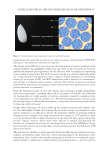
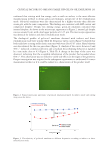
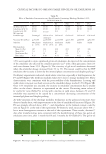
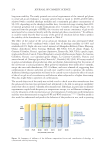
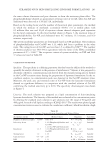
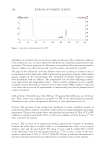
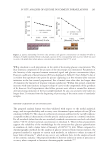
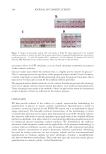
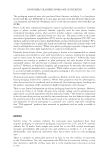
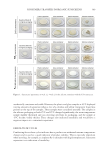
the more homogeneous appearance of F5 and F6 at the end of the experiments (Figure 7).
This improvement between F4 and F5/F6, concomitant with the increasing viscosity of
the emulsion, also suggested that the phenomenon was linked to a modification in the
structure of the product under stress. A sliding artifact effect due only to contact issues
with the device should have strengthened with the increasing viscosity of the formulation.
Interestingly, this weakness of the structure was not detected with conventional stability
monitoring at 1 month.
EMULSIFIER DOSAGE
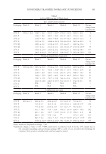
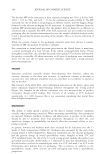
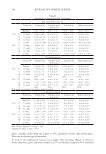
For this part, a slightly greater amount of rheology modifier (a), 1%, was chosen for the
best conditions to determine the lowest efficient emulsifier dose. The formulation variations
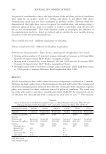
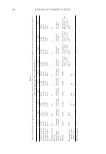
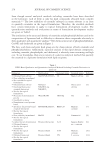
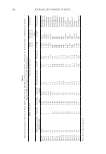
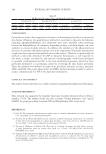
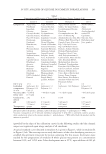
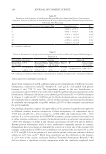
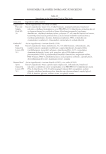
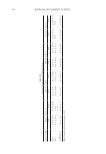
and results in Table IV showed that F7 with 0.5% emulsifier (d) was a defective, unstable
cream gel in accordance with its high conductivity value. F8 with 1% emulsifier (d) evolved
from a gel-in-oil emulsion at D1 to a defective exuded cream gel after 1 month of storage
at 45°C and −18°C. F9 with 1.5% emulsifier (d) showed very little oil exudation after 3
months of storage at −18°C. F10, F11, and F12, with 2%, 2.5%, and 3% emulsifier (d)
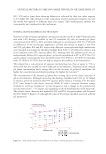
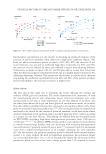
respectively, were stable gel-in-oil emulsions. This shows that a dose of emulsifier (d) above
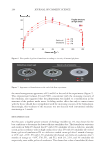
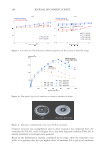
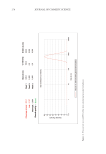
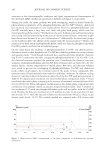
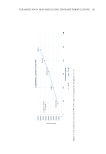
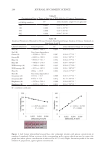
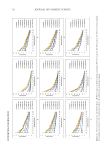
Figure 6. Flow profile of gel-in-oil emulsions according to viscosity of internal gel phase.
Figure 7. Appearance of formulations at the end of the flow experiment.
the more homogeneous appearance of F5 and F6 at the end of the experiments (Figure 7).
This improvement between F4 and F5/F6, concomitant with the increasing viscosity of
the emulsion, also suggested that the phenomenon was linked to a modification in the
structure of the product under stress. A sliding artifact effect due only to contact issues
with the device should have strengthened with the increasing viscosity of the formulation.
Interestingly, this weakness of the structure was not detected with conventional stability
monitoring at 1 month.
EMULSIFIER DOSAGE
For this part, a slightly greater amount of rheology modifier (a), 1%, was chosen for the
best conditions to determine the lowest efficient emulsifier dose. The formulation variations
and results in Table IV showed that F7 with 0.5% emulsifier (d) was a defective, unstable
cream gel in accordance with its high conductivity value. F8 with 1% emulsifier (d) evolved
from a gel-in-oil emulsion at D1 to a defective exuded cream gel after 1 month of storage
at 45°C and −18°C. F9 with 1.5% emulsifier (d) showed very little oil exudation after 3
months of storage at −18°C. F10, F11, and F12, with 2%, 2.5%, and 3% emulsifier (d)
respectively, were stable gel-in-oil emulsions. This shows that a dose of emulsifier (d) above
Figure 6. Flow profile of gel-in-oil emulsions according to viscosity of internal gel phase.
Figure 7. Appearance of formulations at the end of the flow experiment.