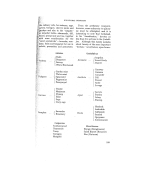
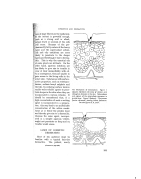
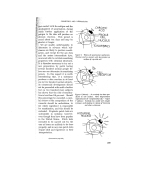
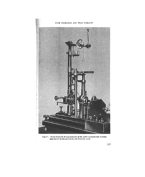
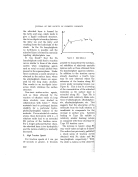
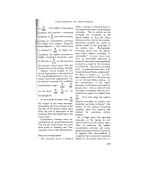
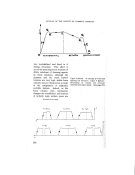
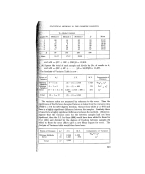
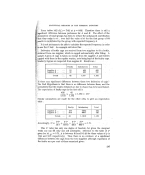
JOURNAL OF TIlE SOCIETY OF COSMETIC CHEMISTS the adsorbed layer is formed by the fatty acid soap, which tends to give a liquid condensed structure, due to ion-dipole interaction between the fatty ion and the fatty acid resulting from the hydrolysis of the oleate. In the Na laurylsulphate no hydrolysis is possible and the adsorbed layer is formed by mutually repelling alkylsulphate ions. It was foundsø that the Na laurylsulphate could lead to traction curves similar to those of the oleate system when complexing agents such as octyl or nonyl alcohol were present in the aqueous phase. Under these conditions a mixed structure is obtained in the surface layer, where the alkylsulphate chains are separ- ated by the long chain alcohols. This results in an ion-dipole inter- action which stabilises the surface structure. Non-ionic surface-active agents, such as those obtained by the 'reaction of ethylene oxide on long chain alcohols, were studied in collaboration with Cohen. • These materials lead to prolonged laminae stability for a particular hydro- phobic/hydrophilic balance in the molecule. For an alcohol of n carbon atoms, these derivatives with n- 3 ethylene oxide lead to an extended RS portion of the traction curve. For a longer polyoxyethylene chain, the adsorbed layer is too hydrophilic and the lamina stability is markedly decreased. 2. High Traction Speeds For traction speeds of 1 cm. per 10 seconds or greater, it becomes 222 ' Figure 5. (See below.) possible to characterise the mechani- cal stabilities of .relatively unstable lamina• such as those obtained from ": Na laurylsulphate aqueous solution. In addition to the traction curves already described, a fourth type :: may be now observed where the .: extension of the lamin.a along RS occurs under increasing tension (see Figure 5). This is due to a lowering of the concentration of the adsorbed . molecules as the surface layer is:! extended along RS.- Type IIa obtained with relatively dilute solu-111111 tions of alkylsulphate, alkylsulphon- if( ! ate, alkylarylsulphonate, etc. suggests that the adsorption of the.!•.•}•'• molecules from the bulk solution insufficient to compensate for increase in surface area. Systems':•:• leading to Type IIa exhibit relatively smaller foaming volume:•ii as compared with those showing Type III traction curve. The increase in tension along RS}j• may reach values as high as 5 The author has previously published•:i• a whole series of traction curveS'i'i• obtained with Na oleate and laurylsulphate respectively.' Witl•?i •I Na oleate a lamina is first observed:i}:

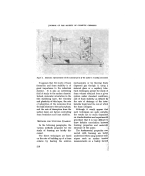
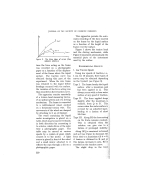
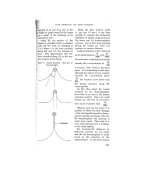
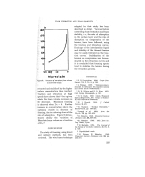
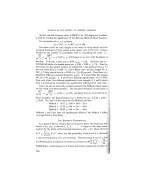
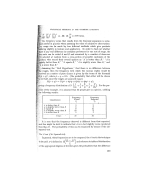
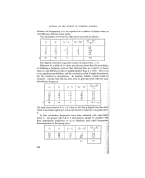
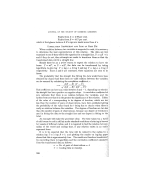
FOAI•I FORMATION AND FOAM STABILITY 2000' The height of the lamina ß creases and reached a maximum M 22 mm. at •, after which a further in concentration decreases height of the lamina. Using Na a very small lamina obtained at M At higher con- i•:. 600 !!centration the lamina increases in height, reaching a maximum value •,•? of 16'6 mm. at . At the same time • •,the traction •urves show that the' •'i•?tension rises as the lamina extends. •"i]i:!11. Traction curves studies at low i'.i:•:•!: :and at high speeds on Na oleate and •? Na laurylsulphat. e lead to the con- • i.clusion that both reagents give rise ?: to extensive foaming over a definite •)::!: concentration range ' •}•:'. 2000 100 :•:::: ':ilfør Na oleate, M M for Na 600'100 ,::i laurylsulphate. ?•:. At concentrations higher than 100 ' : the volume of the foam decreases, . presumably due to an increase in the viscosity of the solution which slows ß :. down the rate of adsorptior• of the molecules from the bulk phase to the surface layer. Furthermore, traction curve ex- periments at low speeds demonstrate that the Na oleate foams are much more stable to drainage and thin- ning than those of the alkylsulphate. Retraction at High Speeds The retraction curve is obtained when a lamina is returned back to the liquid surface before its maximum extension. This is carried out by reversing the movement of . the liquid surface so that the frame immerses in the bulk of the solution. Retraction permits the study in further detail of the properties of the surface layer. Photographic recording shows that the lamina may either behave reversibly or irreversibly. • In most cases, how- ever, an irreversible behaviour is observed, the tension being markedly lowered as a result of the retraction (see _Figure 6). The tension recorded' in R• is markedly logrer than in R. Using alkylnaphthalene su/phonate • • the drop in tension ¾• -- ¾•, = D¾ may easily reach 15 to 20 dynes per cm. for the most dilute systems. As' the concentration of the solute increases, D• decreases and tends to become zero. Tiffs is observed with Na oleate, for example, when the con- centration is equal to or higher than M Over this range the surface 100 behaves reversibly on traction and retraction, as shown in Figure 7, the tension of the laminee remaining constant, since the 'solution has reached its maximum surface pressure. ' Dx is high when the adsorbed molecules on the lamina do not easily desorb from the surface layer. Thus, on retraction, the surface concentration increases and conse- quen. tly the surface tension is lowered. It appears that irreversibility is caused by the fact that the molecules present in the surface layer are in a 223
Purchased for the exclusive use of nofirst nolast (unknown)
From: SCC Media Library & Resource Center (library.scconline.org)