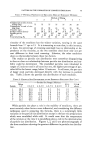
32 JOURNAL OF THE SOCIETY OF COSMETIC CHEMISTS Coming now to the alkylaryl sulfonate, the lather volume in soft and hard water on both "dry" and oily hair is about the same as for lauryl sulfate. On adding the alkylolamide, however, the lathering of the alkyl- aryl sulfonate in the presence of oil is increased remarkably. In fact the blend of alkylaryl and alkylolamide lathers as much in hard water on oily hair as the lauryl sulfate does in distilled water on unoiled hair. Based on this test, blends of alkylaryl sulfonates and lauric diethanol- amide give more foam than lauryl sulfates. Such blends are now commer- cially available. So far, only the volume of lather has been discussed. In all of these tests it was also noted that the "flash" or speed of lather formation was also greatly increased by addition of the amide. After the first few "kneadings" of the test pieces, it was practically always observed that the ones contain- ing amides were generating foam much faster than controls run with lauryl sulfate or alkylaryl sulfonate alone. In other words, the amides increase the flash foam of both types, thus making it possible to obtain good lather- ing on the first application to soiled hair. Another property of lathers considered important is the matter of texture, lauryl sulfates usually showing a smaller-bubbled, creamier foam than alkyl- aryls. Although this difference was difficult to observe in this test, there was some indication that the alkylolamide decreased the bubble size of the alkylaryl sulfonate. One of the main objections to the use of alkylaryl sulfonates in shampoos has been the sticky, or tacky, feeling they impart to hair and skin, especially in hard waters. As a by-product of the above test work, it was noted that the addition of alkylolamides completely overcame this difficulty. For instance, hand-washing tests carried out in hard water with alkylaryl sulfonate. alkylolamide blends, demonstrated that the pronounced tack- iness of the alkylaryls alone on the skin was completely eliminated. This has also been reported to occur on the hair. In other words, the alkylol- amides appear to exert some type of conditioning action, perhaps by being adsorbed onto protein surfaces. They also seem to impart a more slippery or soapy "feel" to the alkylaryl sulfonates, which is considered desirable. Some lathering tests were also carried out with coconut soaps, since these are still widely used in spite of the great popularity of synthetic detergent shampoos. Using the technique described above it was found that at a concentration of 3%, the soaps seems to produce somewhat more lather than the synthetics in either soft or hard water, or even with oil present. Addition of alkylolamides did not seem to increase this lather appreciably. The addition of alkylolamides to soap shampoos is, however, very useful in improving rinsibility by preventing deposition of insoluble limesoap curds onto the hair. Since a lauric diethanolamide like Ninol

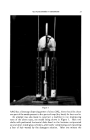
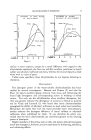
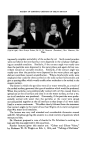
ALKYLOLAMIDES IN SHAMPOOS 33 • . •.. •..• .... .. ., •:•-•'.': :...-:•.,•, •. . ..•... . -. , ,. ::.-: .. . ..... '.:.•' ,, -- . . .: .• ............. :::- -. ....•.•.•.:..... •,:..•.....,...,:, •.•'". .. ,... ,:.'• .. .. ':•' --.•.'--. • .... .. -.. Figure 1 AA62 has a limesoap dispersing power of about 20•, there should be about one part of the amide present to five parts of soap (dry basis) for best results. An attempt was also made to construct a machine to run shampooing tests of the above type, one model being shown in Figure 1. Here two shafts with perforated horizontal disks fixed to the bottoms reciprocated up and down inside glass cylinders, alternately compressing and expanding .a bun of hair wetted by the detergent solution. After one minute the
Purchased for the exclusive use of nofirst nolast (unknown)
From: SCC Media Library & Resource Center (library.scconline.org)