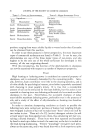
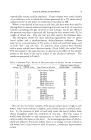
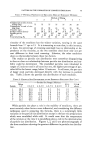
30 JOURNAL OF THE SOCIETY OF COSMETIC CHEMISTS TABLE 1--TYPES OF AbKYLOLAMIDES TABLE 2--MAjo• SURFACTANT TYPES • -- Ingredients .... Non-ionics Fatty Alkylolamides Acid Alkanolamine Properties Glyceryl esters Lauric Diethanolamine Water-soluble Polyglycol ethers liquid Lauric Monoethanolamine Insoluble wax Lauric Isopropanolamine Insoluble wax Oleic Diethanolamine Water-dispers- ible liquid Stearic Diethanolamine Dispersible paste Stearic Monoethanolamine Very hard wax ?lnionics Sulfonates amides Alkylaryl sulfonates Fatty alcohol sulfates Cationics Quaternaries Fatty amines products ranging from water soluble liquids to waxes harder than Carnauba can be obtained from this reaction. In order to see these products in better perspective, the most important types of commercial surfactants are listed in Table 2. It can be seen, the alkylolamides are one of the three major types of non-ionics, and also happ.en to be the only one of the whole surfactant list developed in this country, all the rest originating abroad. With this introduction, the function of the alkylolamides in shampoos can now be examined with respect to a number of important properties. FoA•4 High foaming or lathering power is considered an essential property of shampoos, and is universally demanded by the consuming public. Actu- ally, however, foam contributes very little to the cleaning operation, and is of value chiefly for psychological reasons, since lather is popularly associated with cleansing in most people's minds. It is true that a considerable amount of soil can be entrained by the foam bubbles, but this action is not essential to cleaning since non-lathering sulfonated oils have made excellent shampoos in the past. Nevertheless, the successful shampoo of today must exhibit maximum lathering power, preferably even in the presence of oils, and a study of the effect of alky]olamides on foaming was therefore carried out. In order to simulate shampooing conditions as closely as possible the following tests were carried out: portions of human hair weighing 3.0 gin. were wrapped in pieces of hair net to make loose "buns" about one inch by two inches in size. Three ml. of a 3% (active) detergent solution (in soft or hard water) was then piperred onto them, thus simulating wet hair con- taining a diluted shampoo. These buns were then squeezed and kneaded by hand to work up a lather in much the same way as the hair is worked on the head during shampooing. Twenty "kneadings" were given each piece, always at the same rate, and it was found that with a little experience quite

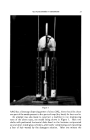
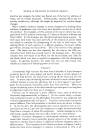
ALKYLOLAMIDES IN SHAMPOOS 31 reproducible results could be obtained. Foam volumes were rated visually on an arbitrary scale in which the volume generated by a 3% amine lauryl sulfate solution in soft water on unoiled hair was taken as 100. Where it was desired to run tests on oily hair, the buns were first oiled by placing them in narrow tubes and piperring onto each one 2 ml. of a pentane solution containing 2.25 gm. mineral oil and 2.25 gm. lanolin per 100 mi. the pentane was then evaporated ofF, leaving the hair treated with 3% by weight of mixed oils. This oily hair was then used in the shampoo tests. The detergents chosen for these lathering experiments were an amine lauryl sulfate and a triethanolamine dodecylbenzene sulfonate. These were run at a concentration of 3% active in both soft and hard water, and on both "dry" and oily hair. In addition, these anionics were blended with a water soluble lauric diethanolamide (Ninol AA62, also called Ninol 979) and tested in the same manner, to determine the effect of the alkylol- amide on the foam of the lauryl sulfate or the alkylaryl sulfonate. The results are presented in Table 3. TABLE 3--SHAMPOO TEST: EFFECT OF DIETHANOLAMIDE ON LATHER VOLUME OF ANIONICS Solution Applied Relative Lather Volume Anionic, % NINOL AA62, Type Water in Solution Unoiled Hair Oiled Hair dmine Lauryl Su/fate 3.0 Distilled 100 4(I 2.0 l'.b' Distilled 100 40 1.5 1.5 Distilled 100 50 0.75 2.25 Distilled 100 60 3.0 Distilled 100 40 3'. b' Hard (350 p.p.m.) 70 10 2.0 1'.•)' Hard (350 p.p.m.) 80 10 1.5 1.5 Hard (350 p.p.m.) 90 30 dmine dlkaryl Sulfonate 3.0 Distilled 100 40 2.0 l'.b' Distilled 100 90 1.5 1.5 Distilled 100 100 3.0 Hard (350 p.p.m.) 80 30 2.0 l'.b' Hard (350 p.p.m.) 90 90 1.5 1.5 Hard (350 p.p.m.) 100 100 One can see, the lather volume of the lauryl sulfate alone is high in soft water hard water reduces it slightly, and oiliness causes a marked reduc- tion. In the presence of both oil and hard water the lauryl sulfate foam almost disappears under the conditions of this test. (For this reason it would seem desirable to add sequestrants to lauryl sulfate shampoos in order to soften the water on the hair.) As increasing proportions of alkylol- amide are added to the lauryl sulfate there is no change in foam volume in soft water, but in hard water or with oil present, a moderate improvement occurs.
Purchased for the exclusive use of nofirst nolast (unknown)
From: SCC Media Library & Resource Center (library.scconline.org)