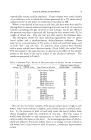
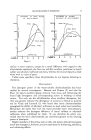
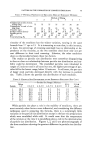
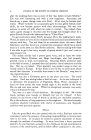
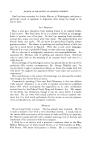
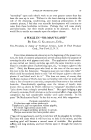
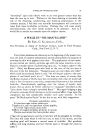
46 JOURNAL, OF THE SOCIETY OF COSMETIC CHEMISTS Fig. 3.--Photomicrograph of Emulsion No. 2 showing particle size distribution of emulsion having the greatest stability. TABLE 3--RATtNG oF EMULSIONS FROM PHYSICAL FACTORS Sample- . Factor I 2 3 4 5 6 7 Original viscosity 1 2 3 4 4 5 6 Viscosiky change after 60 days 7 1 6 3 5 4 2 Surface tension 2 1 7 2 3 5 4 Total creaming, % 3 1 5 2 6 4 3 Creaming rate 5 1 6 2 7 4 3 Particle size distribution,'0-3.9 microns 2 3 6 4 1 7 5 Particle size distribution, 0-5.9 microns 4 2 5 1 3 6 7 General appearance 4 1 4 3 2 6 5 Ease of redispersion 2 1 6 3 4 6 5 The number under each sample indicates its rating as compared with the other products. That is, the number 1 indicates the best rating, 2 the next best, etc. The method of preparation of an emulsion materially affects both its general appearance and viscosity, and the best method of preparation for o/w emulsions is that of pouring the aqueous phase into the oily phase with i'apid and continuous stirring. A stirring speed of 1200-1400 r.p.m. is rec- ommended. The temperature at the time of emulsification influences the viscosity of emulsions and thicker preparations are usually obtained by emulsifying while hot.

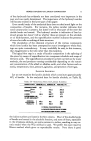
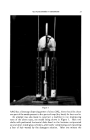
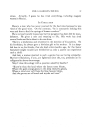
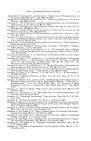
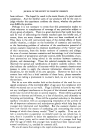
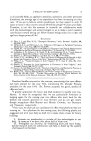
FACTORS ON THE FORMATION OF COSMETIC EMULSIONS 47 . Fig. 4.--Emulsions at start of creaming. ., Fig. 5.--Emulsions at end Of creaming. •'• "With regard to particle size distribution, the smallnes• of particles 'in their owri:riCht does'not appeai• to be a major factor influencing the Stability although their tendency to coalesce to form larger 'ones does. There ap-
Purchased for the exclusive use of nofirst nolast (unknown)
From: SCC Media Library & Resource Center (library.scconline.org)