64 JOURNAL OF THE SOCIETY OF COSMETIC CHEMISTS Klarmann, E., and Wright, E. S., "A 'Semi-Micro' Method For Testing Quaternary Am- monium Disinfectants," Am. 7. Pharmacy, 12{}, 146 (1948). Klarmann, E., "Disinfection and Antisepsis: Trends and Ideas," Ibid., 120, 321,367 (1948). Klarmann, E., "The Cosmetic Aspects of Perspiration and Its Control," Am. Perf. and Ess. OilRev., 52, No. 1, 33 (July, 1948). Klarmann, E., "The Expanding Rationale of Chemical Disinfection," Soap and Sanit. Chem.," 25, No. 3, 122, 25, No. 4, 139 (March-April, 1949). Klarmann, E., "Sunburn and Suntan," Am. Perf. and Ess. Oil Rev., 54, No. 33, 126 (July- August, 1949). Klarmann, E., "Annual Reports on Developments in Disinfectants and Antiseptics," Soap and Sanit Chem., (1930-1947). Klarmann, E., "The Cosmetic Aspects of Estrogenic Hormones," J. Soc. COSMETIC CHEMISTS, 1,406 (1949). Klarmann, E., Wright, E. S., and Shternov, V. A., "Application of the 'Semi-Micro' Method to the Evaluation of Antiseptics," Am. 7. Pharmacy, 122, 5 (1950). Klarmann, E., and Wright, E. S., "Are Quaternary Ammonium Compounds Sporicidal?" Ibid., 122,330 (1950). Klarmann, E., "The Role of Antagonisms in the Evaluation of Antiseptics," Ann. N.Y. Atcad. Sci., 53, 123 (1950). Klarmann, E., Wright, E. S., and Shternov, V. A., "In Vitro Studies Relevant to Control of Secondary Reservoirs or Respiratory Pathogens," Am. 7. Pharmacy, 123, 42 (1951). Klarmann, E., Wright, E. S., and Shternov, V. A., "Prolongation of the Antibacterial Poten- tial of Disinfected Surfaces," Atppl. Microbial., 1, 19 (1953). Klarmann, E., "Phenolic Compounds," in "Antiseptics, Disinfectants, Fungicides and Sterilization," Edited by G. F. Reddish, Lea & Febiger (1954). No. 1,596,613 No. 1,888,827 No. 1,883,952 No. 1,938,911 (Dec. No. 1,938,912 (Dec. No. 1,953,413 (Apr. No. 1,967,825 (July No. 1,969,801 (Aug. No. 1,984,646 (Dec. No. 2,010,595 (Aug. No. 2,078,498 (Apr. No. 2,085,318 (June No. 2,139,550 (Dec. No. 2,253,182 (Aug. No. 2,350,047 (May List of U.S. Patents (Aug. 17, 1926): "2,4-Dihydroxydiphenylmethane and Process of Making It." (Nov. 22, 1932): "Monoethers of Resorcinol." (Oct. 25, 1932): "Hydroquinone Derivatives." 12, 1933): "Substituted Halogen Phenols." 12, 1933): "Substituted Halogen Phenols." 3, 1934): "Germicidal Preparation." 24, 1934): "Bactericidal Compound." 14, 1934): "Hydrocarbon Substituted Bromophenol." 18, 1934) .' "Germicidal Preparation." 6, 1935): "Monoalkylchlorophenols." 27, 1937): "Dentifrice." 29, 1937): "Germicidal Preparation." 6, 1938): "Monoalkylchlorophenols." 19, 1941): "Germicidal Preparation." 30, 1944): "Antiperspirant and Deodorant." There are a number of British• French, Swiss, German, and other foreign patents derived from some of those listed above.

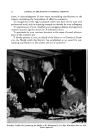
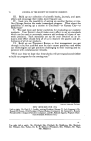
THE MEDALIST'S ADDRESS MR. PRv. smv.•r% MR. TOASTMASTER, Distinguished Eulogists, Members and Guests of the Society of Cosmetic Chemists, dear Friends, Ladies and Gentlemen: TRimswEs ,o o•rE's activity, no matter how laudatory have one dis- advantage they invariably refer to the length of this activity up to a particular climactic point, in this case the momentous occasion of the Medal Award. To this extent one may speak here of a "non-cosmetic" procedure, for the reason that a properly formulated cosmetic is intended to conceal rather than to accent the factor of time. At any rate you have learned tonight that my own activity in the cosmetic field began almost thirty years ago, dating back to a time when cosmetic chemistry, as we understand it today, was in its early infancy. During those years, it has been my earnest endeavor to contribute, within the framework of my association with Lehn and Fink, to a clarification and systematization of a somewhat disorganized assortment of empiricisms which characterized the art of cosmetics of those early days. Please note that I am referring to the "art" rather than to the "science" of cosmetics because I feel that even in view of the current misuse of the term "science," there was hardly any science being squandered on cosmetics in the early twenties. It is gratifying to realize in retrospect that chemists and pharmacists entering the cosmetic field at that time had an opportunity to do some pioneering work by way of directing the formulation of cosmetics into rational chan- nels, of laying the foundation for the standardization and the quality con- trol of both the initial materials and of the finished products, and of de- vising ways and means of promoting the wholesomeness, the safety, and the eflqcacy of cosmetic preparations. This is the place, also, to pay tribute to the pioneering spirit of the managements of those few cosmetic com- panies who were first to recognize the need of placing development, pro- duction, and quality control operations upon a scientific basis, and who in- vited bona fide scientific personnel to join them in this important under- taking. The SocIE,¾ oF CosMy. TIC C•v. mszs has now seen fit to present me with its most coveted gift, its Medal. It would be an understatement to say that I am completely overwhelmed by this act. While I am most grateful to those of the Sociv. T¾'s members who nominated me for this
Purchased for the exclusive use of nofirst nolast (unknown)
From: SCC Media Library & Resource Center (library.scconline.org)