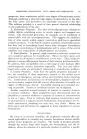
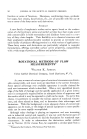
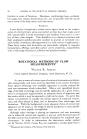
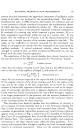
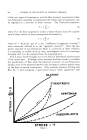
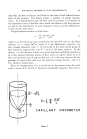
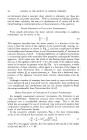
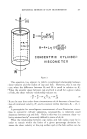
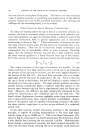
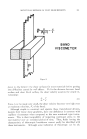
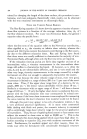
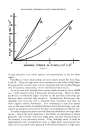
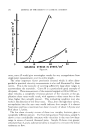
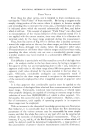
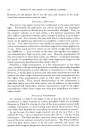
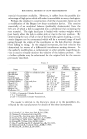
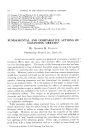
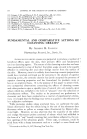
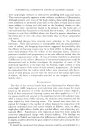
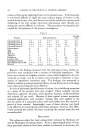
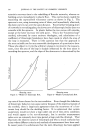
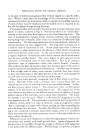
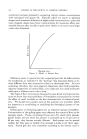
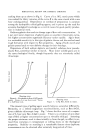
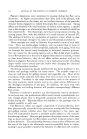
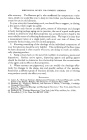
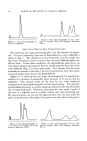
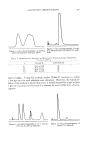
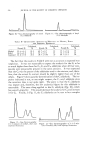
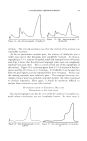
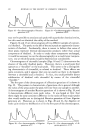
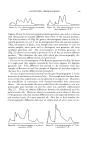
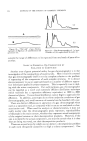
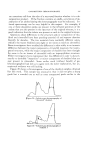
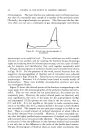
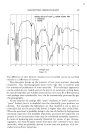
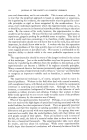
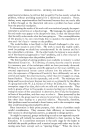
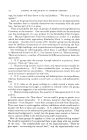
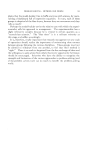
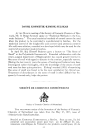
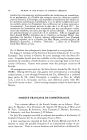
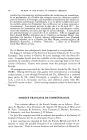
GAS-PARTITION CHROMATOGRAPHY 323 Figure 22.--Gas chromatography of synthetic geranium oil I. Figure 23.--Gas chromatography of syn- thetic geranium oil I]. Figures 22 and 23 show two typical synthetic geranium oils, and it is obvious that these peaks are entirely different from those of the natural products. The third synthetic oil (Fig. 24) gives a chromatogram closest to that of a natural geranium oil, yet it can be distinguished from the natural product. Thus, the pattern of peaks, even though they vary somewhat in ratio for similar samples, serve quite well to distinguish true geranium oils from synthetic geranium oils. The chromatogram of Turkish geranium oil (Fig. 25) shows it is not really a geranium oil at all but an entirely different product. This illustrates the ease with which gas chromatography dis- tinguishes between different kinds of essential oils. Far out in the chromatogram of the Reunion geranium oils (Fig. 26) there is a single peak that appears consistently but never appears for Algerian geranium oils. This difference has proved to be consistent with four samples of Reunion oil and four samples of Algerian oil, and thus might be the basis for a routine differentiation procedure. An area of great potential practical use for gas chromatography is in the detection of adulteration of essential oils. Not enough work has been done to be certain that adulteration can be detected in any given oil. However, the possibilities in connection with rhodinol-citronellol were mentioned above. Also two lavender oils were studied from this standpoint one was presumably pure lavender oil and the other was carefully sophisticated (Fig. 27). There are definite differences between the adulterated and the pure lavender oils. However, there is no question, as was shown in the case of the geranium oils, that natural differences are to be expected between one and another batch of a pure essential oil. One has to find whether the chromatographic differences between an adulterated oil and a pure oil are Figure 24.--Gas chromatography of synthetic geranium oil III. Figure 25.--Gas chromatography of"Turk- ish geranium" oil.

.324 JOURNAL OF THE SOCIETY OF COSMETIC CHEMISTS Figure 26.--"Tail end" of gas chroma- tography of Algerian (•/) and Reunion (B) geranium oils. Figure 27.--Gas chromatography of (a) pure lavender oil, (b) sophisticated lavender oil. ,outside the range of differences to be expected from one batch of pure oil to another. STUDY OF ESSENTIAL OIL COMPOSITION BY ISOLATION OF COMPOUNDS Another area of great potential utility for gas chromatography is in the investigation of the compositions of essential oils. Here it must be stressed that gas chromatography itself is not the complete solution to the problem of separating all the components of such complex mixtures. It is almost always necessary to use an approach based on a number of different separa- tion techniques applied in proper sequence. This is especially true in deal- ing with the minor components. For such purposes, gas chromatography can be regarded as a novel and extremely efficient distillation technique which routinely has a separation efficiency equivalent to 1000 to 2000 theoretical plates. Conventional distillation cannot begin to approach this efficiency. In addition, azeotropes do not form under the conditions of gas chromatography, and small amounts of material can be handled with ease. There are distinct differences in operation of a gas chromatograph when used as a separation tool, as compared with its use as an analytical or char- acterization tool. When used for analysis or characterization, it does not really matter what the chromatographic peaks represent reproducibility of the peaks is the main concern, whether they represent actual components of the original mixture or their decomposition products. However, if the aim is to identify the actual components, one must be certain that it is they that are being recovered, not their decomposition products. There are several ways by which one can detect a decomposition problem in such work (frequently caused by too high a column temperature). One
Purchased for the exclusive use of nofirst nolast (unknown)
From: SCC Media Library & Resource Center (library.scconline.org)