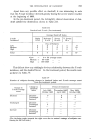
J. Soc. Cosmetic Chemists 15 609-630 (1964) ¸ 1964 Society of Cosmetic Chemists of Great Britain THE INVESTIGATION OF DANDRUFF N.J. VAN ABBE, F.P.S.* Presented at the Symposium on "Hair", at Brighton, Sussex, on 16th April 19•4. Dandruff should be regarded as a physiological abnormality involving a mild degree o• parakeratosis in the epidermis o• the scalp. The paper describes experimental studies to explore natural fluctuations in severity o• the condition and to examine the possibility o• an infectire origin. Cultural methods •or the study o• Pityrosport•rn ovale are described and the use o• ethyl oleate as a mild irritant to produce dandruff-like scaling o• mouse-skin is reported. INTRODUCTION Dandruff may be classified as a scalp condition characterized by excessive desquamation in the form of visible scales. This definition therefore implies a physiological abnormality, calling for diagnosis and investigation along the lines generally applied to pathological syndromes. Dandruff appears in the literature, often within the generic category of "seborrhoeic disorders", under several headings, such as seborrhoea sicca, seborrhoea oleosa, pityriasis capiris and pityriasis simplex. However, evidence of dis- ordered sebaceous activity as a precursor or consequence of dandruff is lack- ing even the distinction between "dry" and "greasy" forms of the condition is purely empirical. The only obvious connection is that dandruff is usually confined to regions of the skin where sebaceous activity is maximal. Before a rational approach to therapy can be contemplated, it is necessary to have more detailed information on the "natural history" of dandruff, and this paper indicates some of the avenues we have explored. THE CLINICAL PATTERN Reports on therapeutic measures against dandruff seldom include proper controls, and show little evidence of any attempt to record observations systematically or to analyse the findings statistically. In view of the apparently insurmountable difficulty of directly recording the amount of scaling, we found it necessary to devise a simple visual index for use on different subjects by a team of trained observers with demonstrable reliability. * Toiletry Division, Beecham Group Ltd., Brentford, Middlesex. 609

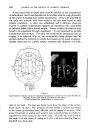
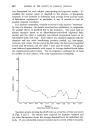
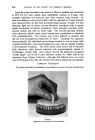
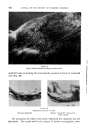
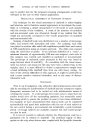
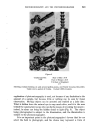
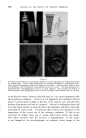
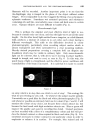
610 JOURNAL OF THE SOCIETY OF COSMETIC CHEMISTS It was impractical to spend more than 30 minutes on the examination of each subject, and it was desirable not to interfere with the scalp physically in the course of making each routine examination. Only scale attached to the scalp was assessed, since loose scales in the hair were found to defy reliable evaluation. A clinic was established and 5 full-time obse•wers trained to conduct examinations regularly on volunteers, who constituted an informal rather than a formal sample. Panels of about 20 subjects were found to be convenient for each experiment. It was important to provide standardized illumination. The scalp was examined by parting the hair at roughly • in intervals (Fig. 1), the examination being divided into 25 sections (defined by reference to certain fixed points on the head) of approx- imately equal area for a given subject, symmetrically disposed over both FIXED POINTS C: CROWN T: TEMPLES E: EARS Figure Approximate sectional areas for dandruff examination (Areas 10, 13, and 16 refer to the nape of the neck and do not show in this view). Head prepared for examination of crown areas. sides of the head. The hair was drawn back from the edges of the section under study by clips. The presence of scale within a section was noted as the extent (proportional area) affected, and the degree of severity. The scores for extent of scaling and severity were converted into an index to represent the total scaling on the whole scalp. Severity was scored within the range 1--•5 and extent of scaling as l--M5, a nil score meaning that no dandruff was observable.
Purchased for the exclusive use of nofirst nolast (unknown)
From: SCC Media Library & Resource Center (library.scconline.org)