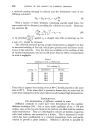
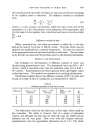
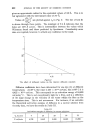
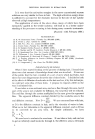
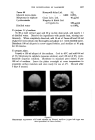
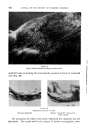
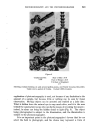
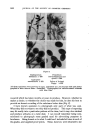
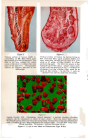
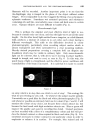
PHOTOMICROGRAPHY AND THE PHOTOMICROGRAPHER 653 saturation is lost in the specimen, this being much more evident in some subjects and with certain particular stains. The fact that the specimen is subject to intense transmitted light has a bearing on the loss of colour, and also in addition, the magnification. I mention the latter particularly because the higher the magnification the less saturated the colour becomes. It is always advisable to stain minute subjects heavily, such as bacteria. If this is not done the image will not be seen at X 2000. A few weeks ago I received through the post, from a stranger, two prepared slides of bacteria, and I was asked to reproduce them in colour. When I held the slides toward the sky and viewed them through my eyeglass I could see they were almost colourless. You will therefore appreciate that I was unable to comply with this request. However, there is the danger that an overall colour cast may appear in heavily stained subjects and this can extend to adjacent details which have a different colour. Any colour can give a cast to an intrinsically neutral, white, background. This gives the appearance that the specimen was not washed after staining. Unevenly stained, unevenly cut, and un- evenly mounted specimens, are not the best of subjects to photograph, either in colour, or in black and white. In some cases pigmentary colours are the general rule. Many butterflies and moths owe their colours to the physical structure of their wing scales, but often when these are viewed by transmitted light they are entirely colourless. Unfortunately some subjects exhibit colours only at low magnifications. The shimmering colours seen in the shells of lobsters and other similar surfaces are another example of beautiful colours, physical in origin, which are difficult to arrest through the microscope. Negative materials The selective use of the correct photographic materials deserves careful attention. The photomicrographer is expected to have the various materials ready to hand whereas the chemist or casual operator cannot be expected to have the same knowledge of the many emulsions and what each will produce. A wide range of orthochromatic material can be drawn upon in the same way that a joiner uses the right saw for a particular job. It is impossible to photograph a wide range of subjects and to get the same high quality in each on the same coating of material. Processing Photographic materials are sometimes subject to a surprising degree of carelessness in development. Plates, films or paper are often exposed to "cold" and "hot" perhaps by someone trying to do more than one job at once, as a result of which no job in hand is done properly. Absolute accuracy is essential when processing colour materials. The quahty of the negative

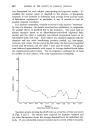
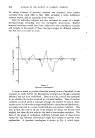
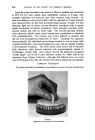
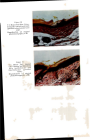
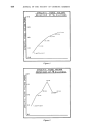
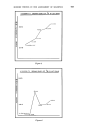
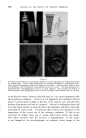
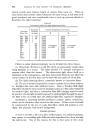
654 JOURNAL OF THE SOCIETY OF COSMETIC CHEMISTS and transparency depends essentially upon the exposure and development, and the greater the degree of accuracy the more likely we are to produce satisfactory results (Fig. 2). I am sure from your own experience you will agree that good photo- micrography is no mere "pressing of a button", any more than playing a stringed instrument is rubbing a bow across a few pieces of gut. Some 80-90 Ektachrome slides were shown by the lecturer, demonstrating the various points mentioned. (Received: 23rd March 1964.) DISCUSSION MR. B. C. PRICE: Could you tell us something about the use of electronic flash in photomicrography ? TI•E LECTURER: This is really a subject on its own and needs some bold experimenting if you are thinking of using it as a regular source. I only use electronic flash when photographing objects which I cannot arrest with coiled filament bulbs. One must have a pilot light to enable a search and the necessary focusing, and also to keep the specimen in the field of the camera format. There is no fear of a secondary image caused by the pilot light, the duration of the flash is so short. I have mentioned* several makes of flash apparatus, including one by Langham Photographic Instruments Ltd., Carshalton, but I believe the most up-to-date apparatus is made by The Honeywell Corporation, Denver, Colorado, U.S.A., who have introduced the new Honeywell Model 52A Strobonar Electronic Flash Unit. There is a tungsten bulb in the centre of the flash tube for visual positioning of the lighting unit. It is claimed that the power of the flash, rated at 90 Joules, is sufficient for maximum magnifications. The Gakushu Co. of Japan has marketed an electronic flash unit consisting of a Xenon discharge lamp, specially designed for photomicrography. The new Evatron K unit radiates the visual observation light from the same tube as the electronic flash, thus permitting an instant exposure immediately the specimen has been found and focusing carried out. The colour temperature of the flash naturally matches daylight colour film balance. The flash duration is 1/1000th second. MR. B. C. PRICE: Do you use exposure meters to determine your exposure and, if so, where is the meter position ? TI-I• LECTURER: This too could be material for a whole lecture. I do not use an exposure meter for black and white photomicrography because * D. F. Lawson, The Technique of Photomicrography 1960 (George Newnes, London).
Purchased for the exclusive use of nofirst nolast (unknown)
From: SCC Media Library & Resource Center (library.scconline.org)