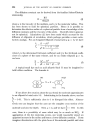
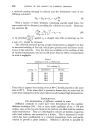
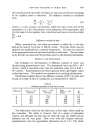
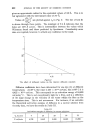
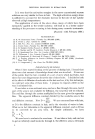
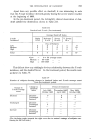
DIFFUSION PROCESSES IN HUMAN HAIR 603 It is seen that the activation energies in the more concentrated sucrose solutions are very similar to those in hair. The high activation energy alone is sufficient to account for the dramatic increase in the rate of dye uptake observed at high temperatures. The application of some of the above ideas, many of which have been extensively applied in the textile industry, will lead us to a better under- standing of the processes occurring in hair during many cosmetic treatments. (Received: 13th February 1964.) REFERENCES (1) I(. W. Herrmann Trans. Faraday Soc. 59 1663 (1963). (2) F. Perrin J. phys. radium 7 1 (1963). (3) J. Hill Proc. Roy. Soc. London B 104 39 (1928). (4) J. Crank Trans. Faraday Soc. 53 1083 (1957). (5) J. H. Skinkle Textile Research J. 25 861 (1955). (6) J. A. Medley and M. W. Andrews Textile Research J. 29 398 (1959). (7) J. B. Speakman Proc. Roy. Soc. London A 132 167 (1931). (8) H. Wilsmann J. Soc. Cosmetic Chemists 12 490 (1961). (9) J. B. Speakman, E. Stott and H. Chang J. Textile Inst. 24 T273 (1933). (10) L. J. Gosling Advances in Protein Chemistry Chapter XI 487 (1956) (Academic Press, New York) (11) L. G. Longsworth J. Am. Chem. Soc. 75 5705 (1953). Introduction by the lecturer When I first started looking at the process of dyeing hair, I found that there was a fair amount of knowledge about what was involved. It was one of the points that the hair consisted of a sort of sieve which had holes, but there was some disagreement about the size of these holes. I decided to look at the effects of diffusion of molecules in the hair and see, if by this technique, we could get some idea of these holes. I propose to expand a little on the way I calculated this. If one takes a cross-sectional area, one has a flux through this area, but if part of the area is not available for diffusion, the total flux will be reduced. The real flux through the system multiplied by the area gives the apparent flux. The apparent diffusion constant divided by the available area is the KT real diffusion constant. Now D -- We are concerned here with hair, 6•r ' so D is the diffusion constant in hair, and • the viscosity of water in hair. What we in fact determine is the apparent diffusion constant, and so D has to be corrected by an area term. By simple arithmetic, we have Dh •,v Dw •h We now have to evaluate the area term. If one takes a hole, and one has to get an infinitely small molecule through it, the effective area is obviously

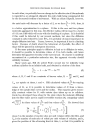
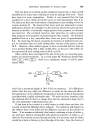
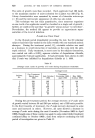
604 JOURNAL OF THE SOCIETY OF COSMETIC CHEMISTS ar z. If one has a molecule which is finite, it has to be within this area to pass through, so the centre has to be within an area of radius rh-r d. r d is the radius of the dye, r h is the radius of the hole. So the effective area is a (rd-rh) 2. We have n of these holes, and so we arrive at equation (9). This is for an infinitely thin membrane, but if one has a thick membrane, and if one has an elastic collision, molecules hitting the outside will bounce away and not pass through molecules hitting inside the hole will bounce down and eventually get through. So the effective area for a finite membrane is the same as for an infinitely thin membrane. The difficulty in determining the number, is knowing the viscosity of water in hair. This is a very difficult question to answer, but if one takes the Andrade equation for b viscosity v ---: Be g and determines what the activation energy of diffusion should be as a result of this equation, one finds that it depends upon b but not upon B. Thus knowing the activation energy of diffusion, we can evaluate b, but we cannot, at the moment, evaluate B. Since the latter is a linear relationship, it probably does not matter very much. If one allows this and evaluates b, one finds there are probably about 2.3 x 10 xz holes per cm • for ordinary hair. I was sorry that there was so little data in the paper it takes about a month to produce each point, but I have now two more points. These are :-- Diffusant Benzene sulphonic acid Naphthalene Orange G D w X 10 6 D h X 10 *z D h X 10 6 r d (cm•/sec) (cm•/sec) D w (A) 11-8 920 77.4 2.0 4.4 51.6 11.7 5.5 The intercept is now 7.9A and not 7.4. This change is, of course, quite small, and I do not think that it is of any great consequence. There are severe limitations to this work it assumes a spherical molecule, it assumes round holes, and this treatment at least assumes single-sized holes. We have calculated the apparent diffusion constant using Crank's equation which assumes a rapid irreversible reaction, and this again may not be entirely justified. Steps are being taken to correct these deficiencies. DISCUSSION DR. H. G. TROTH : Would you be prepared to divulge the structures of A, B, C, D and E (Table II). THE LECTURER: B is Neolan Black, which is the same as Acid Alizarin black, the formula of which is in the paper, premetalized with chromium,
Purchased for the exclusive use of nofirst nolast (unknown)
From: SCC Media Library & Resource Center (library.scconline.org)