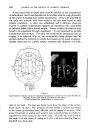
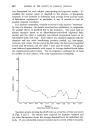
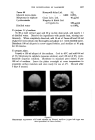
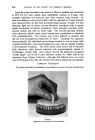
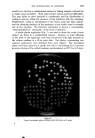
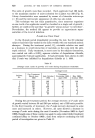
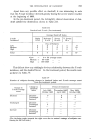
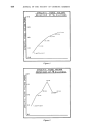
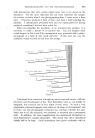
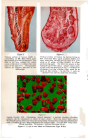
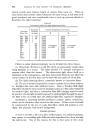
646 JOURNAL OF THE SOCIETY OF COSMETIC CHEMISTS least sixteen departments involved (Fig. •t), each preparing their own slides, different people operating the apparatus and doing the processing and printing ? A photomicrographer is of very real value when he is one of a team of investigators and he may be called upon to operate in the factory or labora- tory. He must understand his instruments and the photographic materials available. When a studio apart from the laboratory is used it is necessary, of course, to send samples through the post, and when this is the case the photomicrographer is out of touch with the laboratory, therefore implicit instructions are called for. On the other hand, the chemist himself is some- times called upon to take the photomicrographs and he, perhaps, can spend only a little time with the microscope and film. If some industries could foresee the problems which emerge in the development of their productions, they would welcome the services of a full-time photomicrographer, but more often than not the management do not imagine their problems are numerous enough to keep one busy. As I see it, there are three alternatives to this question of whether or not a photomicrographer should be employed. One is, to employ a person who, whilst qualified in the art, works at the same time as a photographer, in which case one has a photomicrographer plus. This was in fact my own experience. At first photomicrographers in the making have to struggle to survive, and in the process have to prove themselves in order to gain proper recognition. Where he has been tried and proved he has paid off dividends. I well remember having to prove the necessity for an enlarger to be purchased by making use of my private one at home for many months before my employers saw that I must have one. The second alternative is to establish a photomicrographic laboratory, and to hire a photomicrographer to carry out investigations, but this would perhaps be more of a gamble, because the specialist called upon could not be expected to know the story he was expected to tell. A specialist, however, is not always available and this would be no solution for the project in hand. A third alternative is to employ a chemist to cover photomicrography, but if this is done he has to master both photography and microscopy. MANAGEMENT AND PHOTOMICROGRAPHER Naturally the organisation wants to make the best possible use of its photomicrographer, and the photomicrographer, of course, will be en- thusiastic enough to give his best. Both the employed and the employer should realise that both have much to give. Background information on the firm's product and their ultimate ap- plication and performance should be given. The research programme will also be the concern of the man who is selected to investigate the problems which exist.

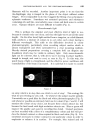
PHOTOMICROGRAPHY AND THE PHOTOMICROGRAPHER 647 If the best is to be expected of him, he should be told why he is required to do a certain job. Surely the staff photographer has the right to know the goal of his investigation when studying a sample ? Code numbers or letters in place of a named product or specimen leave one cold I have experienced working with "unnamed material", trying to photograph what the scientists wanted, and with great difficulty battling to produce a record of what to me was the unknown. Any intelligent photographer cannot do his best under a cloud of secrecy, and he should be put in the picture. At one stage during the war I was photographer to a team investigating the cause of air accidents, and whenever I attended a crash and was asked to photograph a certain piece of the remains of an aircraft I was always told the reason for doing so, and this, I always felt, was a splendid incentive and called for my best. After a little experience the photomicrographer will be in a position to assist in the interpretation and application of his results. He should also be in a position to advise on the suitability of a subject and the method of illumination, etc. The highest possible magnification, which is so often requested, is not always the most revealing, and here the photomicrographer is able to advise. It is a help to the person who made the request if he is shown what his request produced. From time to time there is perhaps a tendency to regard the photo- micrographer merely as one who "looks at things", and so, by a few, his work is considered as inferior to quantitive analysis which produce impressive figures. Obviously the man behind the camera/microscope ought to have some knowledge of organic and inorganic materials, physical chemistry and biochemistry, as well as analytical chemistry. If he cannot speak the language of a chemist he must at once familiarize himself with the language in order to become more valuable to the organisation within which he has a part. A medical photographer must be able to talk the same language as the surgeon with whom he works, and if this were not so, confusion would most certainly follow. A certain amount of discreet "advertising" of photomicrography within the company is in order, and in fact desirable, not simply as an excuse for a display of expensive apparatus and impressive instruments, but to make known to all departments the usefulness of this department. Even in these days there are scientists who are not photographically minded, and it is such as these who need to be made aware of this useful tool. If the photomicro- grapher is ignored the final end product could very well suffer. ILLUMINATION When I first took up photomicrography I was told the following: "Be sure you always get the illumination right. Then everything else will fit into its right place and the right results will follow". It is absolutely necessary
Purchased for the exclusive use of nofirst nolast (unknown)
From: SCC Media Library & Resource Center (library.scconline.org)