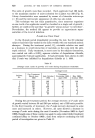
J. Soc. Cosmetic Chemists 15 631-639 (1964) ¸ 1964 Society of Cosmetic Chemists of Great Britain MODERN TRENDS IN THE ASSESSMENT OF SHAMPOOS J. Iv[. BROMLEY* Presented at the Symposium on "Hair", at Brighton, Sussex, on 16th April A method for determining foam viscosity and sl•ecific foam volume is described. It is a major d•f•erence be•een •he method described, and original suggestions, that instead of taking viscosity and sl•ecific foam volume readings at •fferent beating times, a standard beating time is used and the number of dilutions tested is extended with constant soil level. This d•f•er- entiates the l•rOdUCtS which are likely to be unsatisfactory as foaming agents under heavy soil The evaluation of shampoos has been the subject of much discussion and many papers have been presented to the various Societies of Cosmetic Chemists throughout the world. Attempts have been made to eliminate the need to use salon testing of shampoos, as such tests tend to become difficult to control even when using statistical methods for the design of experiments. Although salon testing or the use of expensive consumer panels does give valuable results, it is obviously advantageous to have a method of screening shampoos in the laboratory prior to either checking formulations in the salon or having them tested by a consumer panel. It would appear that the lather is the characteristic of a shampoo which is most important to the general public. In particular the amount, texture and the ease with which the lather is rinsed from the hair. Other aspects which are naturally taken into account when assessing shampoos in the salon or by a consumer test are the cleanliness, gloss, manageability, soft- ness, and freedom from snagging of the hair. Tests designed to assess the characteristics of any new shampoo formula- tion in a hairdressing salon must be statistically arranged, and inevitably are time-consuming particularly if the differences in performance are slight. Variations between individuals in the type of hair, the length of the hair and the amount of soil are usually considerable, and results obtained may be affected by various treatments previously carried out on the hair such as bleaching, dyeing, permanent waving, the use of cationic hair rinses, and lacquers. *Marchon Products, Ltd., Whitehaven, Cumbs. 631

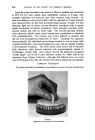
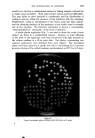
632 JOURNAL OF THE SOCIETY OF COSMETIC CHEMISTS It is for these reasons that many attempts have been made to assess the lathering characteristics of shampoos by laboratory techniques in order that formulations can be screened prior to lengthier checking in the hairdressing salon. In the early days the Ross and Miles (1) test, where a standard volume of shampoo or detergent solution was run from a burette into a measured quantity of the same solution in a glass tube--the resulting foam height being measured, was used quite widely. Unfortunately the Ross and Miles method of testing, while giving repro- ducible results, very often leads to products being assessed in an order which is not similar to the order obtained as a result of salon testing. Various other methods of assessment have been used. For example the use of a standardized shaking technique where a solution of the product under test is shaken in a stoppered measuring cylinder--the foam height being measured. Myddleton (2) devised a method of producing foam by bubbling a standard volume of air through a sintered glass disc--the rate of collapse of the foam being measured. A modification to this method has been reported by Dutton and Reinisch (3), where the use of a nylon web enclosed in a cylinder is proposed, in an attempt to overcome some of the disadvantages of other methods. In my view the most important disadvantage in any method of foam assessment using a cylinder or tube is that the foam tends to be stabilized by mechanical support and the fact that the air above the foam is of high relative humidity. There is no doubt in my mind that attempts to substitute a comprehen- sive series of laboratory tests, designed to replace the assessment of the various characteristics of shampoos in the salon, may well lead to a situation where the laboratory test methods would take as long or longer than the salon evaluation. All this probably without certain advantages which are obtained from in vivo tests. Nevertheless, some acceptable method of screening shampoos at least for their major characteristic--lathering--would be of great value to check whether or not they are worth further testing in the salon. New (4,5) has described foam assessment methods, and his principles have been adapted in our laboratories in an attempt to produce a suitable screening test for new formulations. New originally (4) suggested that foams could be categorized by measure- ment of various physical properties, and described methods of producing foams using a Sunbeam Mixmaster. The physical properties of the foams so produced were checked by measuring the specific foam volume, viscosity, the change in viscosity with the age of the foam, light transmission, and foam drainage.
Purchased for the exclusive use of nofirst nolast (unknown)
From: SCC Media Library & Resource Center (library.scconline.org)