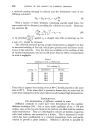
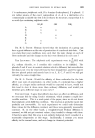
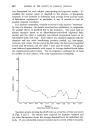
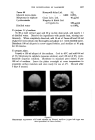
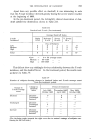
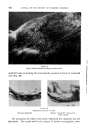
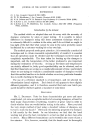
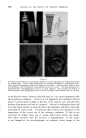
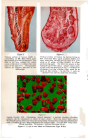
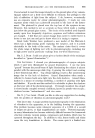
THE INVESTIGATION OF DANDRUFF 617 Tween 40 Honeywill-Atlas Ltd. 1% Glycerol mono-oleate ...... G930 0.25% $treptomycin sulphate Glaxo Labs. Ltd. 40 t•g/ml Cycloheximide Kingsley & Keith Ltd. or Upjohn Co. 250 t•g/ml Distilled water to 100% To prepare 1 l of medium. To 60 g malt extract agar and 20 g ox-bile desiccated, add nearly 1 l of distilled water. Dissolve the ingredients with gentle heat, stirring con- tinuously. When completely dissolved, add 10 ml of Tween 40 and 2.5 ml of glycerol mono-oleate, mix thoroughly and adjust to 1 1 with distilled water. Distribute 100 ml aliquots in screw-capped bottles, and sterilize at 10 psig for 15 minutes. To prepare plates. Liquefy a 100 ml aliquot of the medium. Cool to 45øC and add 0-4 ml of 1% Streptomycin sulphate (aqueous solution), and 1-25 ml of 2% cyclo- heximide (aqueous solution). Distribute in standard petri dishes, 5 per 100 ml of medium. Leave the plates overnight at room temperature to evaporate surface moisture and store ready for use at 4øC. Discard after 7 days if unused. Figure 6 Macroscopic appearance of P.ovale colonies on Dixon's medium (upper left type was most prevalent in these studies).

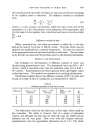
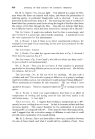
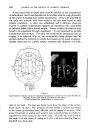
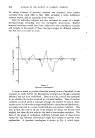
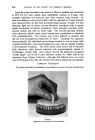
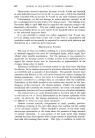
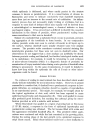
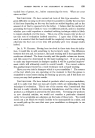
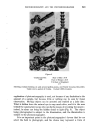
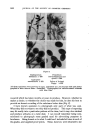
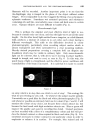
618 JOURNAL OF THE SOCIETY OF COSMETIC CHEMISTS Infected scales inoculated onto plates of Dixon's medium and incubated at 37øC for 5-7 days readily grew identifiable colonies of P.ovale, with complete inhibition of micrococci and other common scalp bacteria. At least four different colony types which could be regarded as P.ovale variants were observed (Fig. 6), the most prevalent being opaque, circular, 1-4 Inm diameter, light tan in colour, convex elevation, sometimes with a central nipple developing on further incubation, finely granular structure, fairly smooth surface and with an entire edge. The actively growing cultures had a pleasant, slightly fruity odour having some resemblance to aidehyde C.14 y-undecalactone. The colonies were rather difficult to emulsify and did not form homogeneous dispersions in water. Clumping was apparent microscopically, the individual yeasts being rounded to oval in shape, with a small terminal bud some pleomorphism was seen, but no multiple budding or development of hyphae. The other colony types (which will be reported fully elsewhere) often showed spherical cells morphologically similar to P.orbiculare, Gordon (5,6). One variant showed the distinctive elongated "bottle shape" cell of the P.ovale reference culture No. 14521 held in the American Type Culture Collection although this differed from our usual type in the shape of the cells, the colonies were closely similar macroscopically. SAMPLING TECHNIQUE The ideal method for obtaining a quantitative record of levels of infection Figure • Applicator and method of inoculation.
Purchased for the exclusive use of nofirst nolast (unknown)
From: SCC Media Library & Resource Center (library.scconline.org)