THE INVESTIGATION OF DANDRUFF {329 ß primarily to the pathological presence of androgen. Therapy often fails in seborrhoeic alopecia because there is no chemical substance able to "neutralise" pathological androgens and fats. An original treatment which I am using with success in men and women suffering from dandruff, greasy hair and alopecia, involves surgical interference with the blood supply to the scalp by reducing the arterial circulation. It is usually argued empirically that an adequate circulation must be provided for the vessels supplying the follicles. Surgical experience, however, shows that interruption of scalp circulation by trauma or neurosurgical operation is without effect on the state of the hair. Furthermore, homografts 3 to $ mm in diameter, con- taining a few hairs the follicles of which are healthy, are able to flourish in a completely bald region where the follicles are almost dying. I therefore conclude that lack of blood flow in the scalp will not increase dandruff and alopecia. I have ligatured and resected superficial temporal vessels iust above the artery in front of the ear on both sides, using local anaesthesia. 20 men and 7 women have been operated. The result has been that greasy hair lost its lipid coating after 8 days, and the scales disappeared after 2 to 6 weeks as for hair-loss, this took longer to diminish but after 10 to 12 weeks our patients lost only a few hairs or were completely cured. After 6 months we noticed no recurrence of the scales and hair-loss. THE LECTURER: I would like to emphasize that the paper avoids trying to deal with the treatment of dandruff, which is a large subject in itself. None the less, it is interesting to encounter a proposal to deal with a scientific problem by turning existing ideas upside down most authorities believe that an increase in the blood flow to the scalp is desirable and therefore the proposition to reduce the blood flow to the scalp is of considerable interest. With regard to the statement that androgens have a significant role in dan- druff, it would not be surprising if this were true but so far it is not proven. Studies on tension in the scalp throw some light on hair growth and seem to imply that there is a tendency towards starvation of blood flow to the scalp, which appears to have a relationship to baldness. This would contradict your view. If dandruff is an inflammatory condition, one of the obvious features would be vaso-dilation. It is therefore rational to expect some change in the condition if the blood flow is reduced, and this is perhaps the main effect of your surgical manoeuvre it therefore seems to be a sympto- matic treatment but may have no more profound significance than this. DR. M. CANTLE¾: IS there any information available on the relative amounts of desquamation from dandruff and normal epidermis conditions ? THE L•CTURER: No. We found it impossible to measure the total amount of scaling. For that reason we measured the amount of scale attached to the scalp. Measurements have been made in the case of ex-

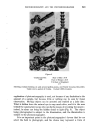
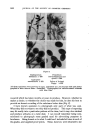
630 JOURNAL OF THE SOCIETY OF COSMETIC CHEMISTS foliative dermatitis, but this is a more serious skin abnormality, and is quite different from dandruff. DR. A. W. HO•.MF-S: Our own work on the electron microscopy of dan- druff scales has so far failed to reveal the presence of any nuclei. Are you sure that your sections are in fact revealing nuclei ? TIFF- LECTURF-R : Results of electron microscopy often disagree with those of optical microscopy, but it does not necessarily follow that the electron microscope is more truthful. You have a negative finding but we have a positive result demonstrated by two independent techniques. We have no doubt whatever that there is nuclear-staining material in dandruff scales. These are probably not functioning nuclei but are at least partly degen- erated since they are elongated in shape, they appear to be breaking down, but their presence cannot be denied. DR. F. J. EB•.•NG: There can be no doubt that androgens have an effect on the sebaceous output and probably on the superficial epidermis. But Dr. Marechal's statements did not really show a direct connection between interference with the blood supply and the cutting down of androgens. It would be quite possible to cut off the blood supply and still have ample androgens. The statement that the hair follicle has little need for a blood supply is rather misleading for if the blood supply to animal skin is inter- rupted for more than about two days, the hair follicles cease to function though the rest of the skin survives. Active hair follicles, however, provided they are in a region where blood can come, will call up the amount of blood they require. On the question of hormones, have you related the dandruff studies to age and to hormonal state, for example, possible fluctuations in dandruff during the menstrual cycle or during pregnancy ? TIFF. LF-CTURF-R: In our studies, the subjects were employees of one group of companies and were not representative of the population as a whole. They were, in a sense, a closed community. If dandruff is an infectious process, it would be wrong to draw epidemiological conclusions from such a community, owing to the special risk of cross-infection. It would be of great interest to foster a world-wide expedition to look for a tribe that either has dandruff and no P. Ovale on the scalp, or P. Ovale on the scalp and no dandruff. Our impression was that age within our groups had no particular effect, nor did we notice any marked difference between the incidence of dandruff on males and females. Regarding the possible effects of the menstrual cycle, this would not show up with our technique. We would be unable to show any such influence with a periodicity of less than six weeks, as we were conducting fortnightly observations but an effect due to the menstrual cycle is not unlikely.
Purchased for the exclusive use of nofirst nolast (unknown)
From: SCC Media Library & Resource Center (library.scconline.org)