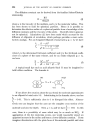
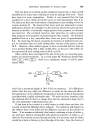
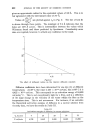
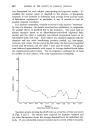
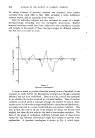
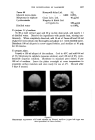
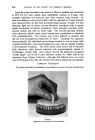
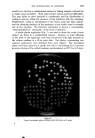
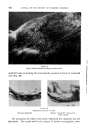
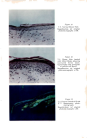
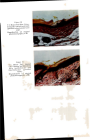
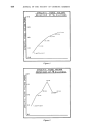
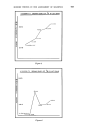
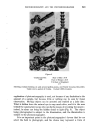
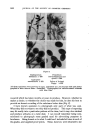
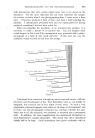
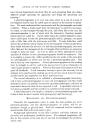
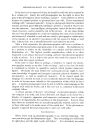
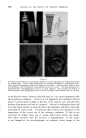
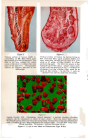
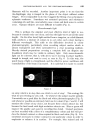
PHOTOMICROGRAPHY AND THE PHOTOMICROGRAPHER 649 filaments will be recorded. Another important point is to see that the iris-diaphragm stop is imaged in the plane of the object without colour fringes. If it is impossible to do this I suggest the fitting of an achromatic/ aplanatic condenser. Sometimes wet mounted specimens and substances containing oils and fats, unavoidably cause colour and dark zones in certain areas. Opaque subjects are more difficult to handle (Fig. $). Monochromatic light This is perhaps the simplest and most effective kind of light to use, because it contains only one colour, and thus the light waves are all the same length. On the other hand, light emitted from a tungsten, or coiled filament bulb, produces a mixture of colours in no set order, each colour having a different wavelength. This adds to the difficulties involved in colour photomicrography, particularly when recording subject matter which is almost transparent and when surrounded by a clear mounting medium. Heavily stained preparations covering a complete field can disguise any breakdown which may be visible in ordinary light. Only monochromatic light can be coherent, that is, with all its waves moving in phase together, trough to trough, and crest to crest, as seen in Fig. 6. In this way, the pencil beam of light is strengthened, and the effective power, usefulness and controllability of the beam is increased. It is said that it is easier to control Figure an army which is in step than one which is out of step ! This analogy fits what we are referring to very well. So whenever the subject matter permits I invariably use a good filter for black and white photomicrography (Fig. 3), and whenever possible an extremely faint one for colour (Figs. 7 and 8). I will mention the colours of my choice, not because these colours attract me, but because the final result with high resolution attracts me. Blue or green will improve the quality and assist in recording fine detail. Stained specimens are best recorded with a filter of a complementary colour and this will pro- duce the desired contrast so often required in black and white (Fig. 9). It is sometimes necessary to reduce contrast in one particular colour in order to emphasise or enhance it in another. For example, blue stained and red

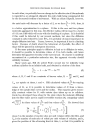
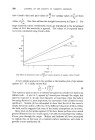
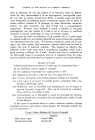
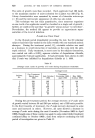
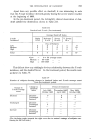
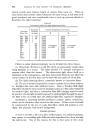
650 JOURNAL OF THE SOCIETY OF COSMETIC CHEMISTS stained specimens produce a similar density through the medium of mono- chrome photography, and in such a case as this a filter with a complementary colour must be chosen in order to create a difference in tones. COLOUR FILM We all know that colour photomicrography has a well established place in the laboratory, and it is also well known that satisfactory colour photo- micrographs can be obtained. However, the basic problems and difficulties connected with this application of photography have produced a certain amount of confusion to some, while others, perhaps professional photo- graphers, look upon this specialized field with a certain amount of misgiving. There are others, usually those who are used to taking simple colour shots while on holiday when fair results are obtained with little "knowhow", who definitely under-rate this branch of photography. It is not surprising that when such folk are working with the microscope/camera they are faced with failures, in spite of the fact that they are using materials which they are used to handling. I feel that too often we have cause for regrets, and postmortems which could be avoided, if we exercised more thought before the shutter is fired and the exposure made. Reversible and negative film Although reversible films differ from negative colour films each produces colours which are complementary to the other. Reds are green on the negative colour film and the negative-positive process enables controllable colour and black and white prints to be made, whilst the reversible colour produces slides suitable for projectors. The reversible film is usually employed when the operator does not process his own material and is not therefore in control of all the factors which determine the results. After making trial exposures, and after having them processed at a processing house, which could be the room next door, he makes adjustments, if necessary, to ensure good results. Colour of light Sensitivity of "light colour" is characteristic of reversible film, forcing us to a consciousness of colour casts, which are seen far too often in the final transparency. The results of the filament lamp when viewed by a light source of daylight colour or colour balance, often reveal that they are not too good. If the same transparency is viewed with an ordinary tungsten filament lamp the colours appear to change towards the yellow bands. What has really happened is that the colour temperature of the viewing source has changed. This so-called colour temperature of a source is expressed in degrees Kelvin(øK). This then is a measure of the light colour (Table I). Low colour temperature expresses yellowish light, while
Purchased for the exclusive use of nofirst nolast (unknown)
From: SCC Media Library & Resource Center (library.scconline.org)