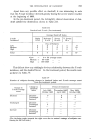
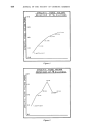
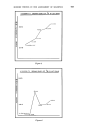
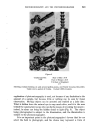
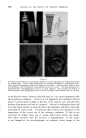
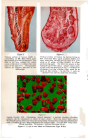
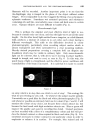
PHOTOMICROGRAPHY AND THE PHOTOMICROGRAPHER 651 high colour temperature is expressed by a bluish tint. Both of these will be encountered during the course of making colour photomicrographs, and so before venturing into this field it is advisable to determine the colour tem- perature of the light source in use. Table I The approximate colour temperature of various light-sources Candle flame (yellow light) 2,000 Incandescent Bulb 230V 60W 2,500 Microscope Bulb 6V 12W 2,800 Microscope Bulb 6V 30W 3,000 Microscope Bulb 12V 100V 3,200 Projection Bulb 3,200 Clear Flashbulb 3,400 500W Photoflood Bulb 3,450 Warm fluorescent tube 3,500 Winter sunlight 5,000 Flash tube 5,500 Haze sunlight 5,800 Blue flashbulb 6,000 Xenon lamp 6,000 Daylight, blue sky (blue light) 15,000 It can be seen from Table I! that if the colour balance of the source does not correspond with that of the colour film, it is necessary to use a correction filter (Figs. 7 and 8), and if such a filter is not used it will not be possible to produce high quality transparencies. Over the years I have discovered that 6 volt 12 and 30 watt lamps give me good results provided, of course, that all other considerations have been attended to. It should be borne in mind, however, that during the winter months voltage changes can affect the colour balance of the photomicrograph, and when this occurs it is particularly noticeable in the colour background areas, nevertheless, a constant standard can be obtained if the source is modified by the correct filter. As seen in Table I, one source will produce a blue effect, whilst another will give a yellow effect. The photomicrographer must adjust this balance and the use of filters in colour work needs much more care than in black and white. More experiments are usually called for than when filtering light for black and white work. A change of colour temperature can also be brought about in the ap- paratus itself. This is most evident when switching from low power, with- out a substage condenser, to high power, with the use of the substage. Such a change, perhaps unnoticed by the eye, is due to the many optical elements used in high power photomicrography. Theoretically, the correct filter for the particular source required may not correct the light falling on the film. Therefore, some thai exposures may be necessary. It should, of course, be borne in mind that if there is a yellow cast a blue filter is needed, and visa versa. I suggest that a strict log is kept, giving details of the

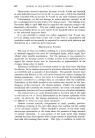
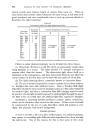
652 JOURNAL OF THE SOCIETY OF COSMETIC CHEMISTS optical system used, bellows length of camera, filter used, etc. When at some future date another subject demands the same set-up, it will then be of great assistance and save considerable time to look up previous details to determine the right treatment. Table II Conversion table for light balancing filters Exposure Colour temperature of source Wratten Increase Filter No. in stops øK øK 82C 82C 1 1/2 2,490 2,610 82C 82B 1 1/2 2,570 2,700 82C 82A 1 2,650 2,780 82C 82 1 2,720 2,870 82C 2/3 2,800 2,950 82B 2/3 2,900 Converted 3,060 Converted 82A 1/3 3,000 to 3,200 3,180 to 3,400 82 1/3 3,100 3,290 81 1/3 3,300 3,510 81A 1/3 3,400 3,630 8lB 1/3 3,500 3,740 81C 1/3 3,600 3,850 81EF 2]3 3,850 4,140 Filters in colour photomicrography can be divided into three classes. (1) Ultraviolet, Wratten 1A and 2B which are particularly useful when using daylight as a source. The latter absorbs UV strongly and gives a warmer effect than the former. The ultra-violet light shows itself as a bluishness in the transparency, and since ultra-violet filters do not affect the colour balance of the film they can be used with any make of colour film. (2) The light balancing filters, commonly known as correction filters. (3) The use of material exposed to a source contrary to its colour balance, i.e. daylight film used with artificial source. Here a Wratten 80B (light blue) filter should be used, except by daylight source on a film colour balanced for artificial light, and then a conversion filter 85B (orange) must be used. In practice, the daylight material exposed to artificial light through the use of the filter is less successful than the artificial light film, exposed to daylight. Sometimes a mounting medium produces a yellow, amber, overall hue, which can be obtrusive when viewed on the screen. If this occurs it should be counteracted by the use of a pale blue filter, which will produce a very slight, but pleasant, blue-tinted background. Stained specimen A stain in a bottle, a blot on a piece of filter paper, or a stained specimen, may appear as something quite different when reproduced in colour through the microscope. One of the reasons for this is that some of the colour
Purchased for the exclusive use of nofirst nolast (unknown)
From: SCC Media Library & Resource Center (library.scconline.org)